A long time ago, in a galaxy far, far away,
I knew nothing about high end hi-fi. Hard to believe, I know. But true. I didn't even know that the high end existed. My Magnavox boombox worked just fine. As a person grew older and gained the responsibilities and markings of an adult, I knew that his or her speakers and amplifiers grew larger and flashier and more expensive—like their houses and cars and debt—but I didn't equate those changes with better sound. I didn't even think about better sound.
I was lucky to find this job. I didn't know what I was getting into. The ad was for an editorial position in some publishing company's Hi-Tech Group. I didn't know what they meant by "Hi-Tech." I needed a job, and it was either that or Playboy.
The somewhat conservative, very Catholic uncle who I was living with at the time advised against the Playboy option. Being an editorial assistant at Playboy was sure to have its perks, but I wasn't certain that it would be the right thing for me. "You have to think about what you want for yourself," my uncle told me with a gentle smile. "How will you feel about yourself?"
Fuck, I thought, and I went in for the interview at
Stereophile. It was the only interview I'd ever had. I got the job. I was lucky to get the job. Six months later, our managing editor put in her notice. Before she left us, she purchased a small stereo system. "You should do the same," she told me. "Take advantage of the opportunity while you're here."
Five years later, I was still listening to my Magnavox. The things we discussed in the magazine—the questions, the ideas, the gear—remained foreign to me, remained dark, unobtainable, inconsequential blobs and wonders. Whatever. I was struggling to pay my rent in a roach-infested studio in Newark; I was fighting with my alcoholic father; I was in love with a married girl; I was drinking too much; I thought the band was going to make it. And then
Stereophile decided to start a blog.
There was all this talk about needing to reach a younger audience. John Atkinson thought I had some talent at writing, and so he let me at it. I would write about where I came from, I would present my view of this hobby, I would offer a younger, more innocent perspective. Sooner or later, I'd be set up with a real system, and I would document my own personal hi-fi journey. It would be called "Elements of Our Enthusiasm." I got the name from Art Dudley. I had told him about the whole blog idea, saying I'd be looking to "gain a better understanding of the audiophile heart." I'm not sure if I understood what I was talking about, but he thought I was onto something good. He said, "It will also be something we older writers can learn from—to retrace those steps, so to speak, and remind ourselves of the elements of our enthusiasm."
I figured that if I stole from Art Dudley, I'd be giving myself a bit of a head start. This was back in 2005. I was younger in so many ways, and still a bit of an asshole. More of an asshole than I am now. I had wanted the full name of this blog to be something else, something more:
Love is Double-Blind, or, the Elements of our Enthusiasm:
A Blog by Stephen Mejias.
Jon Iverson, our webmaster, had asked me to come up with a mission statement. I had always hated mission statements. Mission statements my ass. I was rejected from grad school, despite my 3.97 GPA and high praise from several respected professors, largely because of my inability to come up with an appropriate mission statement. Screw mission statements. I wrote back:
I would like for this to be an innocent look into our industry and other things, including (but not limited to): people, places, and pizza; velvet blazers; oriental rugs; claw-foot tubs; fire escapes; rainy Fridays; rooftops; sharing hot-fudge sundaes with pretty girls; and, of course, love (blind and double-blind).
I'm going to try to be smart, honest, and thoughtful. I'm going to try to make it interesting, meaningful, and fun.
I hope that people will read it, and I hope that readers will feel compelled to respond to the stories and ideas I share. Comments are fun, dialogue is fun. It'll make me so happy to hear from you, and you can feel certain that I'll accept whatever comments you might have as very special gifts. I'm still young, and I'm still new to this—all of this—and I'm sure that I'll learn a lot from you. I can't wait, really.
I guess this was good enough for Jon Iverson. The blog began that day, September 16, 2005—on my 28th birthday. It's a little bit difficult for me to go back and read some of these things. I cringe at myself, as I'll cringe at myself three years from now. Jon Iverson says you should never look back, (dude). But I think that a little peek in the rearview mirror can be good. It can remind you of who you are, where you've been, where you're going, what you've accomplished and what you've missed. For instance, I've written far too little about velvet blazers and fire escapes.
I
began the blog by mentioning music, an ex-girlfriend, an ex-band, and my Magnavox boombox. Five days later, I received an e-mail from a loudspeaker designer named John DeVore. He said a lot of things with very few words, and then he said:
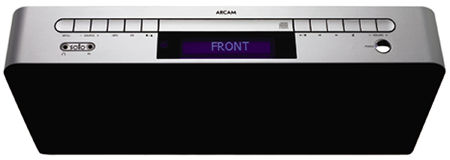
I'm shocked that, after your boombox admission, you haven't been deluged by offers of cheap or free hi-fi gear. Maybe you have. I'm certainly willing to send you a pair of my little gibbon 3s for awhile. A sort of non-reviewer exploration of a simple starter system. They could be paired with a cool entry-level piece like the Arcam Solo or something.
John Atkinson was impressed by this. "He's smart," said JA. I hadn't been deluged by offers of cheap or free hi-fi gear. I had been deluged by insults.
Why is this guy writing for this magazine? What does this self-indulgent, juvenile crap have to do with my hobby? Apparently, I was appalling. I kept at it, however, with John Atkinson, Jon Iverson, Wes Phillips, Jonathan Scull, and a few others cheering me on. Soon, I even had a few readers. Kind, encouraging e-mails started popping in among the cries of disgust. It was enough. It was more than enough. And I remember the day John DeVore came over with his little gibbon 3s, a pair of stands, and some shiny cables.
I had taken his advice on the Arcam Solo, too. It was a perfect choice, a one-piece system that looked cool and sounded good. No sense in worrying about system synergy, no reason to be concerned about the right amount of power, no need for interconnects. The Solo would take care of it all. Plug it in, connect the speakers, and listen. It had arrived about a week earlier, and I kept it in its box, in a corner of my kitchen. Every now and then, I thought I could hear it making the slightest movements inside the cardboard container, little beats and sighs of anxiety and frustration. I thought it'd be safer to wait for John DeVore. I'd let him do the unpacking, make the connections. I learned a lot from John. "Don't be afraid of the hi-fi," he told me. We listened to Calexico and drank Budweiser. I was happy.
I didn't mean to get into all of this, but there you go. I had only wanted to say that I still hold a sort of special love for the beautiful and simple Arcam Solo, before also letting you know that Arcam now offers something called the Solo Mini.