A transparent plate covers the electronics, a blue light illuminating its innards. For users who wish to listen in the dark, a solid metal top plate is provided, secured by a single thumbscrew. The plate has no effect on sound quality, Looman said. I love the blue light and never attached the plate. "I design solid state amplifiers because it's the technology I'm most familiar with," Looman said, "but I've always wanted to capture the musicality that's associated with tubes. We took a line for our Method 3 publicity from someone in an all-tube group who once exclaimed at my demo, 'I can't believe it's not tubes.'
"The amplifier design can operate in-phase or inverted, which allows bridge mode if there are two amplifier boards installed and one is in phase and the other inverted. If both amplifier boards are in phase, the amplifier can be used to drive a speaker that has separate bass and mid-high inputs." (footnote 2) ETA for the two-board version is TBD.
Each Method 3 contains its own mains filter, manufactured by Schaffner in Switzerland (footnote 3). Looman says the filter reduces interference on mains voltage lines both in and out of electrical equipment. Because the coil (choke) inside the monoblock may interfere with or exchange energy with other line-conditioning equipment and produce "unwanted behavior" when music contains fast transients, Looman advises plugging the Method 3 directly into the wall.
To make his products less sensitive to DC in the power lines, Looman says, all transformers in Infigo products are "overdimensioned. They can handle more DC than the average toroidal transformer before getting core saturation that would result in mechanical hum."
 What you see and what I did (setup)
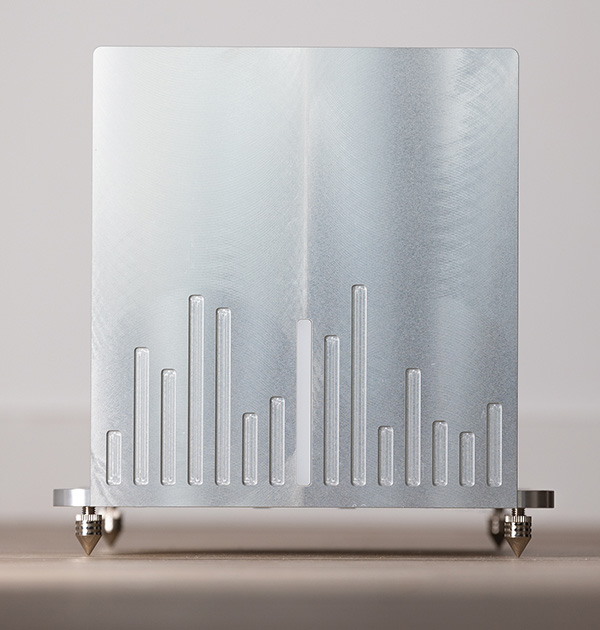
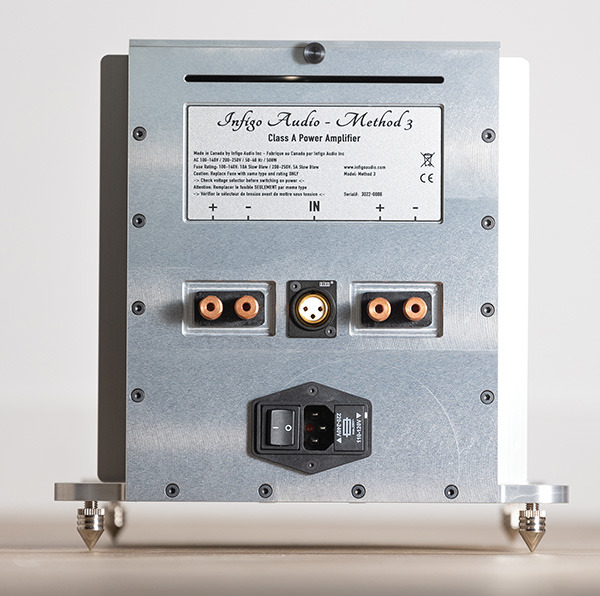
The main feature on the front of these attractive, compact amplifiers is a prominent vertical LED-illumined standby/on power bar. Push the bar once and it flashes red. Once the bar is solid red, the amp is in standby. A second push shifts illumination to blue, flashing until you hear a relay click. At that point, the Method 3's insides are bathed in blue light and the bar is solid blue. It's ready to play music, but you should wait a while for the best possible sound. Looman advised me to leave them on 24/7 so they were always ready for use. Since they draw minimal electricity, I followed his advice. The rear panel's main power switch is located to one side of and very close to the Method 3's 15-amp IEC receptacle. If you use aftermarket power cables with large connectors, you may struggle to move your finger close enough to the cord to turn the amp off. People with big fingers may curse. When Hans visited, we easily placed these monoblocks—the lightest I have reviewed in eons—on Grand Prix Monza amp stands. Each Method 3 comes with four removable spikes that can be attached to four moon-shaped spike holders that protrude from the sides of the amp. Since I customarily support amps with Wilson Pedestals, Hans suggested we use them instead of the spikes. They fit perfectly under the protruding moons.
 Because the Method 3s have built-in power conditioning, Hans urged me to plug them in to the wall. All other components were plugged in to an AudioQuest Niagara 7000, following a connection scheme proposed by AudioQuest's Garth Powell.
Heaven
Because the Method 3s have built-in power conditioning, Hans urged me to plug them in to the wall. All other components were plugged in to an AudioQuest Niagara 7000, following a connection scheme proposed by AudioQuest's Garth Powell.
Heaven
Every positive attribute I noted during my two far-too-brief auditions of Infigo electronics at audio shows came to the fore in my listening room. I began with two recordings, the Danish String Quartet's moving arrangement of Bach's chorale "Vor deinen Thron tret ich hiermit" (Before thy throne I now appear) on their latest album, Prism V (24/96 WAV, ECM 2565), and parts of the Immolation Scene from Wagner's Gotterdämmerung, sung by the great dramatic soprano Eileen Farrell with the New York Philharmonic under the loving baton of Leonard Bernstein (24/192 MQA, Sony Classical/Tidal). The only amplifier I could think of that sounded as smooth, naturally warm, and rich as the Infigo Method 3 was the tubed Octave Jubilee Mono SE.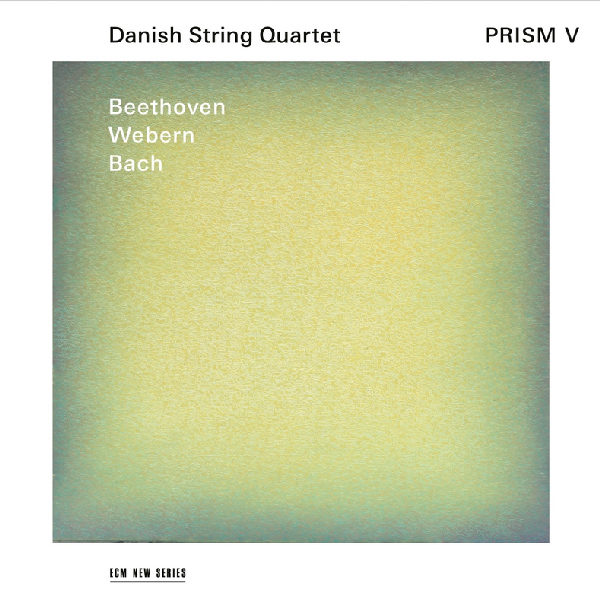 Beyond the gorgeous sound of Fredrik Schøyen Sjölin's cello on Prism V, the sacred nature of a chorale whose words the blind Bach associated with his unfinished-at-death The Art of Fugue came through in spades. In the Wagner, Farrell had never sounded so smooth and plush on my system as she did now. When, in my final listening session with my buddy Scott, I played Farrell's recording of "Der Engel" (The Angel), the first of Wagner's Wesendonck-Lieder on the same compilation, he called it the most beautiful voice I'd ever played for him. Not to be outdone, I immediately cued up lyric soprano Bidu Sayão's mono recording of Moret's "Le Nelumbo" (Tidal 16/44.1 MQA/Sony) and floored him with the bell-like high note at the song's climax. Via the Method 3s, Sayão's vibrato on that note floated out of the Wilson Alexia V's like a string of perfectly formed miniature pearls.
These amps are such a blessing to the soprano voice, and not only in the way they convey the high notes. Despite Farrell's reputation as a dramatic soprano with the biggest voice of her generation—a voice whose dynamics were attenuated during the original recording session, to prevent needles from jumping out of grooves in sheer fright—she had one of the warmest, most nurturing low and middle ranges of any soprano on record. The first time I heard "Der Engel" with these amplifiers, I ran into the living room to ecstatically tell my husband how glorious Farrell sounded.
But it's unfair to single out sopranos. After thinking about some of the greatest and smoothest male jazz vocalists I've heard, including Nat King Cole, Johnny Hartman, and Billy Eckstine, I cued up Irving Berlin's "They Say It's Wonderful" from the 1963 release John Coltrane and Johnny Hartman (24/96 FLAC, Impulse!/Qobuz). Did it sound wonderful? And then some. So did basso cantabile Ezio Pinza in his first recording of the delightful "Non più andrai" from Mozart's Le nozze di Figaro in a so-so transfer on Lebendige Vergangenheit – Ezio Pinza Vol.2 (16/44.1 FLAC, Preiser/Qobuz). Even Adele sounded great. The Beatles, too.
Beyond the gorgeous sound of Fredrik Schøyen Sjölin's cello on Prism V, the sacred nature of a chorale whose words the blind Bach associated with his unfinished-at-death The Art of Fugue came through in spades. In the Wagner, Farrell had never sounded so smooth and plush on my system as she did now. When, in my final listening session with my buddy Scott, I played Farrell's recording of "Der Engel" (The Angel), the first of Wagner's Wesendonck-Lieder on the same compilation, he called it the most beautiful voice I'd ever played for him. Not to be outdone, I immediately cued up lyric soprano Bidu Sayão's mono recording of Moret's "Le Nelumbo" (Tidal 16/44.1 MQA/Sony) and floored him with the bell-like high note at the song's climax. Via the Method 3s, Sayão's vibrato on that note floated out of the Wilson Alexia V's like a string of perfectly formed miniature pearls.
These amps are such a blessing to the soprano voice, and not only in the way they convey the high notes. Despite Farrell's reputation as a dramatic soprano with the biggest voice of her generation—a voice whose dynamics were attenuated during the original recording session, to prevent needles from jumping out of grooves in sheer fright—she had one of the warmest, most nurturing low and middle ranges of any soprano on record. The first time I heard "Der Engel" with these amplifiers, I ran into the living room to ecstatically tell my husband how glorious Farrell sounded.
But it's unfair to single out sopranos. After thinking about some of the greatest and smoothest male jazz vocalists I've heard, including Nat King Cole, Johnny Hartman, and Billy Eckstine, I cued up Irving Berlin's "They Say It's Wonderful" from the 1963 release John Coltrane and Johnny Hartman (24/96 FLAC, Impulse!/Qobuz). Did it sound wonderful? And then some. So did basso cantabile Ezio Pinza in his first recording of the delightful "Non più andrai" from Mozart's Le nozze di Figaro in a so-so transfer on Lebendige Vergangenheit – Ezio Pinza Vol.2 (16/44.1 FLAC, Preiser/Qobuz). Even Adele sounded great. The Beatles, too.
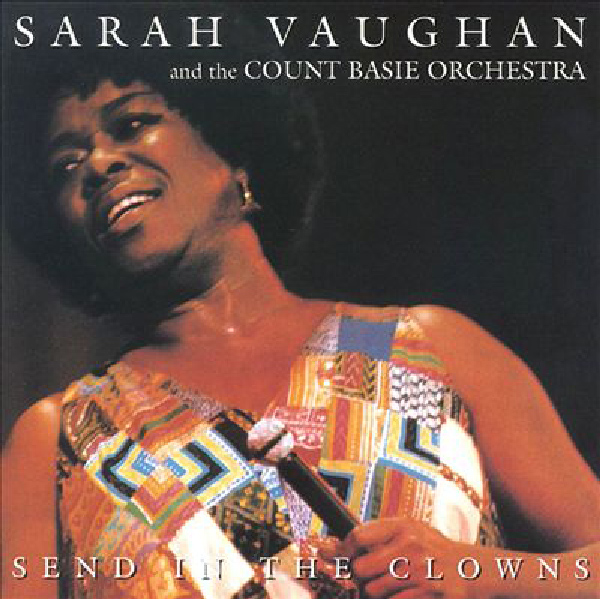 A special treat was revisiting a track I used to reference on CD: the title track from Send in the Clowns, performed by Sarah Vaughan and The Count Basie Orchestra (16/44.1 FLAC, Fantasy Records/Qobuz). The Sassy One's voice was as extraordinary as ever, with all its core warmth and remarkable elasticity there to enjoy. But there was something more. Every time I've played this recording, I've longed for the big bang I expected when the orchestra's brass and percussion let loose. Time and again, that climax disappointed, perhaps due to dynamic compression. But with this dCS Vivaldi Apex/Infigo Method 3 combo, my longing was fulfilled.
 Scott wanted to hear an old standby: Yello's "Electrified II" from Toy (24/48 FLAC, Polydor/Qobuz). For pace, soundstage width, and musicality, the Method 3s were up there with the best. The only place they came up a bit short was in the bass in this bass-heavy track. It is hardly surprising that amps with a specified output of 250Wpc into 4 ohms failed to match the bass output of the D'Agostino monoblocks, which deliver 800Wpc into 4 ohms and cost $25,000 more. In any case, where the D'Agostinos' bass is entirely solid, with a believable leading edge—"Electrified II" sounds electrifying through the Momentum MxV monoblocks—the Infigo Method 3's bass sounded a mite powdery on my Wilsons. Whether it sounds that way on other speakers, I do not know.
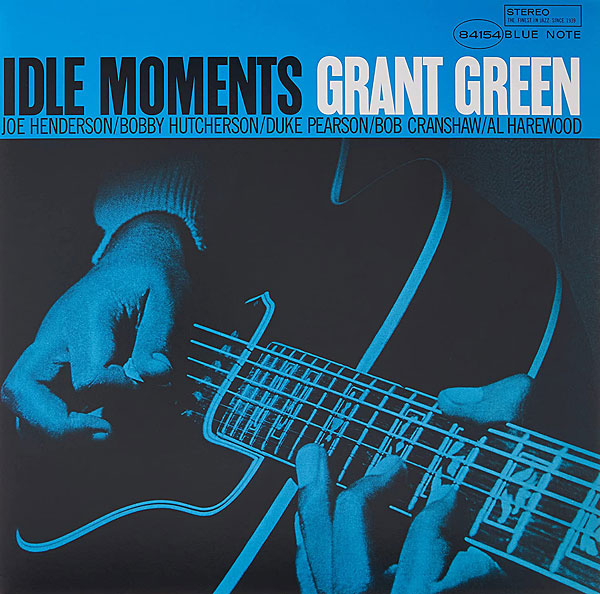 No matter: I was seduced by the Method 3's warmth, beauty, range of color, and smoothness on top. Recordings that had previously sounded too bright and edgy in my listening room were now listenable, and those that were ideally recorded sounded smoother, with more color differentiation than ever. Ever the system tuner, I played with cabling until I found the match that flattered the Method 3's whole audible range. Colors of period-instrument woods stood out for their unique timbre and beauty, as on François Xavier-Roth and Les Siècles' period instrument recording of Mahler's Symphony No.4 (24/96 WAV, Harmonia Mundi HMM 905347). Soprano Sabine Devieilhe sounded heavenly in the final movement—which, fittingly, describes a heavenly feast (footnote 4). On instruments with a wooden core—Yo-Yo Ma's cello, for example—I heard a richness so chocolaty that it was potentially damaging to my waistline. Grant Green's "Idle Moments," the title track from the 1965 album of that name (24/192 FLAC, Blue Note/Qobuz), never sounded so smooth and enticing.
Conclusion
No matter: I was seduced by the Method 3's warmth, beauty, range of color, and smoothness on top. Recordings that had previously sounded too bright and edgy in my listening room were now listenable, and those that were ideally recorded sounded smoother, with more color differentiation than ever. Ever the system tuner, I played with cabling until I found the match that flattered the Method 3's whole audible range. Colors of period-instrument woods stood out for their unique timbre and beauty, as on François Xavier-Roth and Les Siècles' period instrument recording of Mahler's Symphony No.4 (24/96 WAV, Harmonia Mundi HMM 905347). Soprano Sabine Devieilhe sounded heavenly in the final movement—which, fittingly, describes a heavenly feast (footnote 4). On instruments with a wooden core—Yo-Yo Ma's cello, for example—I heard a richness so chocolaty that it was potentially damaging to my waistline. Grant Green's "Idle Moments," the title track from the 1965 album of that name (24/192 FLAC, Blue Note/Qobuz), never sounded so smooth and enticing.
Conclusion
I've heard few amplifiers I've been as eager to return to time and time again as the Infigo Method 3 monoblocks. For smoothness, warmth, you-are-there beauty, color, and ease, they've taken me as close to my ideal sound as the best gear I've had in my system. Indeed, the Method 3 is one of the finest-sounding components I've been privileged to review. There may be amps with more powerful bass, but few so successfully combine modest energy consumption and unforced, utterly convincing musicality. Plus, they're easy to move around.
Footnote 2: Although the Method 3 has an XLR jack on the input and obviously is compatible with balanced sources—Jason used his fully balanced D'Agostino preamp—the Infigo has a single-ended input.—Jim Austin Footnote 3: See schaffner.com/product/FN390/Schaffner_datasheet_FN390.pdf. Footnote 4: "We all live in sweetest peace. / We lead an angelic existence / And so we are perfectly happy. / We dance and leap / And skip and sing / Saint Peter in Heaven looks on." It's hard for me to read this without thinking of the Talking Heads song, "Heaven."—Jim Austin
What you see and what I did (setup)The main feature on the front of these attractive, compact amplifiers is a prominent vertical LED-illumined standby/on power bar. Push the bar once and it flashes red. Once the bar is solid red, the amp is in standby. A second push shifts illumination to blue, flashing until you hear a relay click. At that point, the Method 3's insides are bathed in blue light and the bar is solid blue. It's ready to play music, but you should wait a while for the best possible sound. Looman advised me to leave them on 24/7 so they were always ready for use. Since they draw minimal electricity, I followed his advice. The rear panel's main power switch is located to one side of and very close to the Method 3's 15-amp IEC receptacle. If you use aftermarket power cables with large connectors, you may struggle to move your finger close enough to the cord to turn the amp off. People with big fingers may curse. When Hans visited, we easily placed these monoblocks—the lightest I have reviewed in eons—on Grand Prix Monza amp stands. Each Method 3 comes with four removable spikes that can be attached to four moon-shaped spike holders that protrude from the sides of the amp. Since I customarily support amps with Wilson Pedestals, Hans suggested we use them instead of the spikes. They fit perfectly under the protruding moons.
Because the Method 3s have built-in power conditioning, Hans urged me to plug them in to the wall. All other components were plugged in to an AudioQuest Niagara 7000, following a connection scheme proposed by AudioQuest's Garth Powell.
HeavenEvery positive attribute I noted during my two far-too-brief auditions of Infigo electronics at audio shows came to the fore in my listening room. I began with two recordings, the Danish String Quartet's moving arrangement of Bach's chorale "Vor deinen Thron tret ich hiermit" (Before thy throne I now appear) on their latest album, Prism V (24/96 WAV, ECM 2565), and parts of the Immolation Scene from Wagner's Gotterdämmerung, sung by the great dramatic soprano Eileen Farrell with the New York Philharmonic under the loving baton of Leonard Bernstein (24/192 MQA, Sony Classical/Tidal). The only amplifier I could think of that sounded as smooth, naturally warm, and rich as the Infigo Method 3 was the tubed Octave Jubilee Mono SE.
Beyond the gorgeous sound of Fredrik Schøyen Sjölin's cello on Prism V, the sacred nature of a chorale whose words the blind Bach associated with his unfinished-at-death The Art of Fugue came through in spades. In the Wagner, Farrell had never sounded so smooth and plush on my system as she did now. When, in my final listening session with my buddy Scott, I played Farrell's recording of "Der Engel" (The Angel), the first of Wagner's Wesendonck-Lieder on the same compilation, he called it the most beautiful voice I'd ever played for him. Not to be outdone, I immediately cued up lyric soprano Bidu Sayão's mono recording of Moret's "Le Nelumbo" (Tidal 16/44.1 MQA/Sony) and floored him with the bell-like high note at the song's climax. Via the Method 3s, Sayão's vibrato on that note floated out of the Wilson Alexia V's like a string of perfectly formed miniature pearls.
A special treat was revisiting a track I used to reference on CD: the title track from Send in the Clowns, performed by Sarah Vaughan and The Count Basie Orchestra (16/44.1 FLAC, Fantasy Records/Qobuz). The Sassy One's voice was as extraordinary as ever, with all its core warmth and remarkable elasticity there to enjoy. But there was something more. Every time I've played this recording, I've longed for the big bang I expected when the orchestra's brass and percussion let loose. Time and again, that climax disappointed, perhaps due to dynamic compression. But with this dCS Vivaldi Apex/Infigo Method 3 combo, my longing was fulfilled.
Scott wanted to hear an old standby: Yello's "Electrified II" from Toy (24/48 FLAC, Polydor/Qobuz). For pace, soundstage width, and musicality, the Method 3s were up there with the best. The only place they came up a bit short was in the bass in this bass-heavy track. It is hardly surprising that amps with a specified output of 250Wpc into 4 ohms failed to match the bass output of the D'Agostino monoblocks, which deliver 800Wpc into 4 ohms and cost $25,000 more. In any case, where the D'Agostinos' bass is entirely solid, with a believable leading edge—"Electrified II" sounds electrifying through the Momentum MxV monoblocks—the Infigo Method 3's bass sounded a mite powdery on my Wilsons. Whether it sounds that way on other speakers, I do not know.
No matter: I was seduced by the Method 3's warmth, beauty, range of color, and smoothness on top. Recordings that had previously sounded too bright and edgy in my listening room were now listenable, and those that were ideally recorded sounded smoother, with more color differentiation than ever. Ever the system tuner, I played with cabling until I found the match that flattered the Method 3's whole audible range. Colors of period-instrument woods stood out for their unique timbre and beauty, as on François Xavier-Roth and Les Siècles' period instrument recording of Mahler's Symphony No.4 (24/96 WAV, Harmonia Mundi HMM 905347). Soprano Sabine Devieilhe sounded heavenly in the final movement—which, fittingly, describes a heavenly feast (footnote 4). On instruments with a wooden core—Yo-Yo Ma's cello, for example—I heard a richness so chocolaty that it was potentially damaging to my waistline. Grant Green's "Idle Moments," the title track from the 1965 album of that name (24/192 FLAC, Blue Note/Qobuz), never sounded so smooth and enticing.
ConclusionI've heard few amplifiers I've been as eager to return to time and time again as the Infigo Method 3 monoblocks. For smoothness, warmth, you-are-there beauty, color, and ease, they've taken me as close to my ideal sound as the best gear I've had in my system. Indeed, the Method 3 is one of the finest-sounding components I've been privileged to review. There may be amps with more powerful bass, but few so successfully combine modest energy consumption and unforced, utterly convincing musicality. Plus, they're easy to move around.
Footnote 2: Although the Method 3 has an XLR jack on the input and obviously is compatible with balanced sources—Jason used his fully balanced D'Agostino preamp—the Infigo has a single-ended input.—Jim Austin Footnote 3: See schaffner.com/product/FN390/Schaffner_datasheet_FN390.pdf. Footnote 4: "We all live in sweetest peace. / We lead an angelic existence / And so we are perfectly happy. / We dance and leap / And skip and sing / Saint Peter in Heaven looks on." It's hard for me to read this without thinking of the Talking Heads song, "Heaven."—Jim Austin