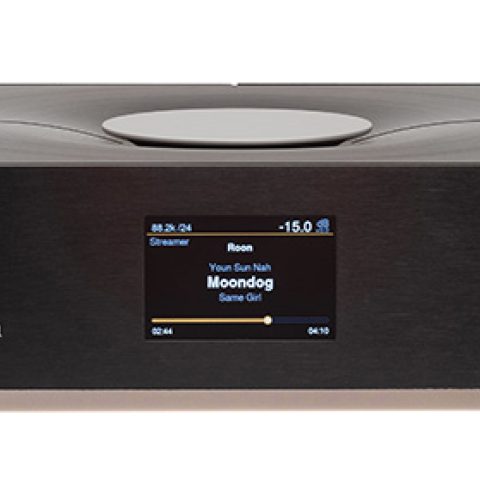
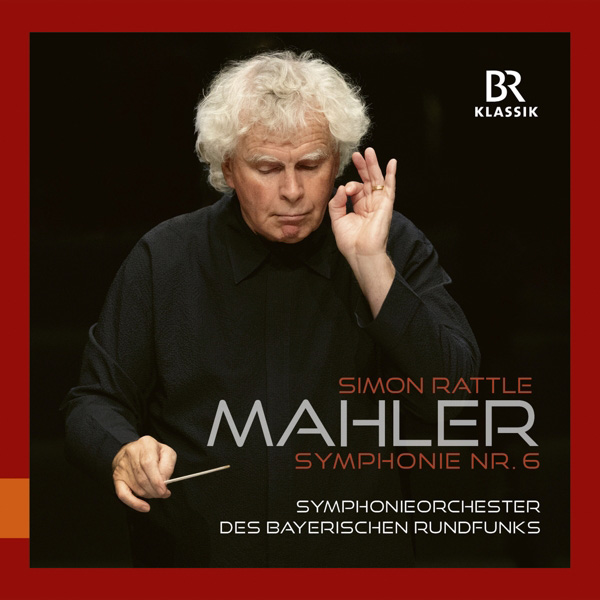
 At this point, Roon had digested all 35TB of my main music cache, so there was room to roam. I had just heard Mahler's Symphony No.6 at Carnegie Hall performed by Simon Rattle and the Bavarian Radio Symphony Orchestra, so I scanned my library and Qobuz for it. I found a 2024 recording (24/96 FLAC, Qobuz) by the same conductor and orchestra I heard live. No one would expect any system or recording to recreate what was experienced from a fifth row center seat at Carnegie Hall; I was hoping that if the playback is even marginally credible, my memory and imagination (and a good bourbon) would take me the rest of the way. No such luck.
The sound was significantly less dynamic, and there was a disappointing loss of inner detail, particularly noticeable in the pizzicati, tapping, and col legno accents with which Mahler flavors the strings. Surely, the MU2, the KEFs, or the Benchmark amps were not at fault (I hope). It must be the recording.
I will spare you the details of my search, but a 2020 performance by the Berlin Philharmonic under Kirill Petrenko (24/96 FLAC, Qobuz) cured my concerns. Here we have a closer, more dynamic and detailed presentation of the orchestra and, with generous use of the volume control, it evoked some of the same thrills and chills I got in the concert hall. I am not saying it was the same thing, but it was great. From the burnished tones of the violins in the Andante moderato, the textured richness of the lower strings (especially in the Scherzo), the hammer blows and massive perorations of the Finale through to the crushing end, one hears and feels everything. The MU2 is capable of delivering those thrills and chills—if they are in the recording.
At this point, Roon had digested all 35TB of my main music cache, so there was room to roam. I had just heard Mahler's Symphony No.6 at Carnegie Hall performed by Simon Rattle and the Bavarian Radio Symphony Orchestra, so I scanned my library and Qobuz for it. I found a 2024 recording (24/96 FLAC, Qobuz) by the same conductor and orchestra I heard live. No one would expect any system or recording to recreate what was experienced from a fifth row center seat at Carnegie Hall; I was hoping that if the playback is even marginally credible, my memory and imagination (and a good bourbon) would take me the rest of the way. No such luck.
The sound was significantly less dynamic, and there was a disappointing loss of inner detail, particularly noticeable in the pizzicati, tapping, and col legno accents with which Mahler flavors the strings. Surely, the MU2, the KEFs, or the Benchmark amps were not at fault (I hope). It must be the recording.
I will spare you the details of my search, but a 2020 performance by the Berlin Philharmonic under Kirill Petrenko (24/96 FLAC, Qobuz) cured my concerns. Here we have a closer, more dynamic and detailed presentation of the orchestra and, with generous use of the volume control, it evoked some of the same thrills and chills I got in the concert hall. I am not saying it was the same thing, but it was great. From the burnished tones of the violins in the Andante moderato, the textured richness of the lower strings (especially in the Scherzo), the hammer blows and massive perorations of the Finale through to the crushing end, one hears and feels everything. The MU2 is capable of delivering those thrills and chills—if they are in the recording.
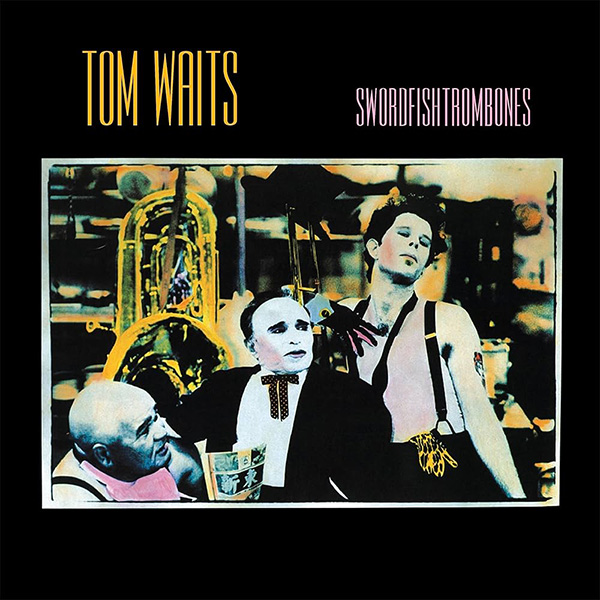 Robert Baird's deep dive into "Tom Waits's Island Records Reissues" in the May issue was a sharp reminder to me of the music I listened to decades ago, before I cuddled into my classical niche. In particular, the statement that "Neither Swordfishtrombones (engineered by Biff Dawes and Tim Boyle) nor Rain Dogs (engineered by Robert Musso) had serious, obvious sonic flaws" struck me because they are the only two Tom Waits albums I knew and loved. Those records were made with DMM (Direct Metal Mastering) and, consequently, there was little to be gained by remastering except, perhaps, a tiny gain in level. Yet: Comparing these new versions in 24/96 PCM (derived from Alex Abrash's new lacquer masters) to my original CD rips or more recent DSD reissues, the difference is striking. Whatever level gains the process may have achieved, they did not result in perceived loudness. Rather, the MU2 revealed that the new issue has less background noise. Waits's voice is its gravelly self but more clearly human. The instruments are less blowsy, with a more natural timbre, and all are better delineated as well.
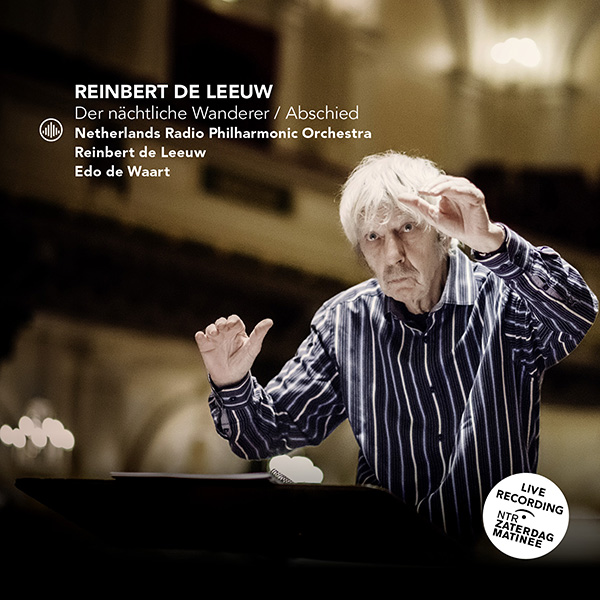 I'll move now to another recording that has been restored and remastered, in this case, from live performances not previously made public. It presents two works by Reinbert de Leeuw, heretofore known to me only as a conductor, drawn from concerts of the Netherlands Radio Philharmonic Orchestra (Dutch abbreviation RFO), performed at the Concertgebouw Amsterdam. De Leeuw completed the earlier piece "Abschied" (Farewell) in 1973 while wrestling with doubt about whether his work was of significant value. It is presented here as conducted by Edo de Waart in 2017. His next orchestral creation, "Der nächtliche Wanderer," was not created until 2013, and it appears here in a triumphant performance conducted by de Leeuw in 2017. These astounding pieces and their resurrection by Bert van der Wolf and Oude Avenhuis on Challenge Classics (DSD64 download, Challenge 72957) were enthusiastically reviewed by JVS earlier this year. His comments about the music are spot on.
But I'll pile on. As pulled from my NAS by the MU2 and delivered through my amps and speakers, this orchestral presentation is as fresh as today. On this recording, the RFO in the Concertgebouw sounds weightier than the resident RPO and that serves this dramatic music well. Moreover, these works, although recorded many years apart, are offered in a spacious and detailed presentation, framed in the generous acoustics of that storied hall. The music is full of powerful, wide-ranging emotions, and it benefits from—even demands—playback at high levels for full immersion in the listening experience.
I'll move now to another recording that has been restored and remastered, in this case, from live performances not previously made public. It presents two works by Reinbert de Leeuw, heretofore known to me only as a conductor, drawn from concerts of the Netherlands Radio Philharmonic Orchestra (Dutch abbreviation RFO), performed at the Concertgebouw Amsterdam. De Leeuw completed the earlier piece "Abschied" (Farewell) in 1973 while wrestling with doubt about whether his work was of significant value. It is presented here as conducted by Edo de Waart in 2017. His next orchestral creation, "Der nächtliche Wanderer," was not created until 2013, and it appears here in a triumphant performance conducted by de Leeuw in 2017. These astounding pieces and their resurrection by Bert van der Wolf and Oude Avenhuis on Challenge Classics (DSD64 download, Challenge 72957) were enthusiastically reviewed by JVS earlier this year. His comments about the music are spot on.
But I'll pile on. As pulled from my NAS by the MU2 and delivered through my amps and speakers, this orchestral presentation is as fresh as today. On this recording, the RFO in the Concertgebouw sounds weightier than the resident RPO and that serves this dramatic music well. Moreover, these works, although recorded many years apart, are offered in a spacious and detailed presentation, framed in the generous acoustics of that storied hall. The music is full of powerful, wide-ranging emotions, and it benefits from—even demands—playback at high levels for full immersion in the listening experience.
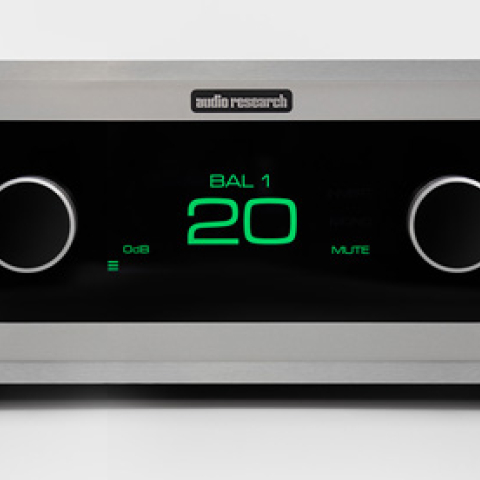
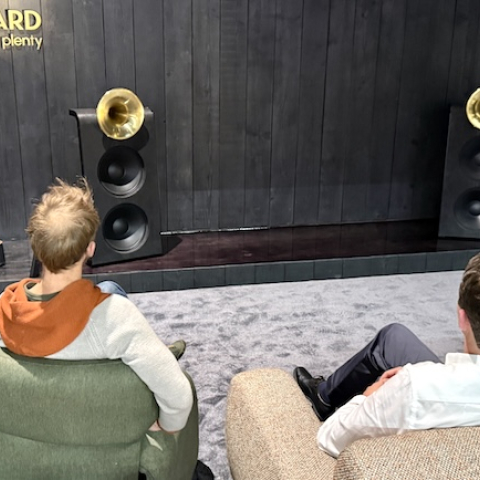
Throughout most of my listening with the Grimm MU2, I used it in the obvious way with the Roon as the source, controlled from my iPad, feeding power amplifiers and speakers via its balanced (XLR) analog outputs. But that's not the half of it. Despite what I wrote earlier—that a player with such a sophisticated DAC doesn't need digital outputs—the MU2 does have one, in the form of its Ethernet connection. Roon shows all the audio devices on your network that it can utilize; I was surprised at how many it saw. I saw my KEF LS60 Wireless speakers, which are connected to my home network both by CAT6 and Wi-Fi. With a click, the MU2 diverted the soundstream to the LS60s; they became a very enjoyable new stereo output device for Roon.
 Conclusions
The Grimm MU2 is a bang-up success. It combines cutting-edge digital processing and digital-to-analog conversion with a Roon Core and a remarkably transparent volume control and input/ output selector. It would be an ideal central element in a sophisticated stereo system in which streaming and file playback are the most important music sources but where other sources, analog or digital, are supported without compromise. The MU2 is not inexpensive, but it offers completely satisfying sound and flawless ergonomics. It is worthy of the very best amplifiers, speakers, and critical listeners.