According to Matuszak, output power into 32 ohms is about approximately 9.5Wpc balanced. It's around 8.3W into 50 ohms and 2W into 300 ohms, both balanced (footnote 2).
On the left of the OOR's front panel is a four-pin XLR headphone output; to its right is a ¼" (6.3mm) output jack followed by a flat knob switch for choosing the RCA or XLR input; that's followed by another knob switch for choosing –4dB, +6dB, or +16dB of balanced gain or, in single-ended mode, –10dB, 0dB, or 10dB of gain. With the Susvara and Abyss headphones, I used balanced at +16dB.
Listening to OOR
I began my OOR auditions using its standard wire-wart supply, and because the fully balanced OOR has two rear-panel inputs (RCA and XLR) and two Outputs (XLR and RCA), I used it as a preamp, connecting my record player (via RCA) and my dCS Bartók DAC (via XLR) to the inputs. I connected the OOR's balanced outputs to the Parasound Halo A21+, driving my BFF Falcon Gold Badge LS3/5a loudspeakers.
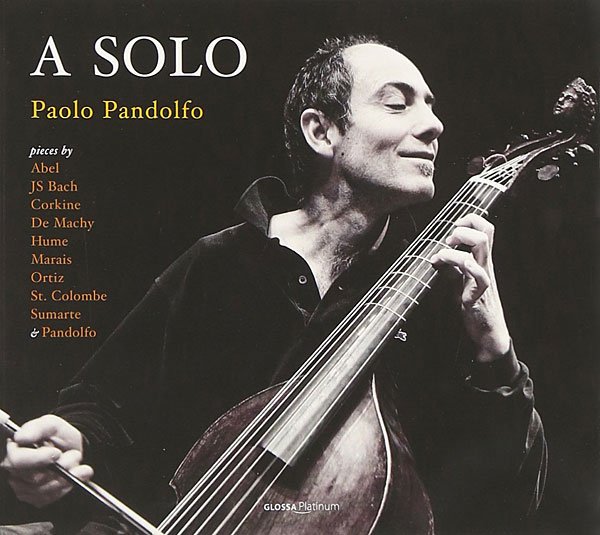 On the last track, "A Solo (Tombeau)," of the first recording I tried, Paolo Pandolfo's recital of the same name (A Solo, 16/44.1 FLAC, Glossa/Tidal), I could hear the hollow, wood-ribbed inners of Pandolfo's gamba, which repeatedly gave out growls that sounded like wild creatures.
Using the OOR as a preamp in my reference system allows me to isolate and better assess the sound character of its all-important first stage, switching, and volume control. However those essential components affect or color the sound of my reference system, that is how they will color the sound of the headphone outputs.
Used as a preamp, the OOR reminded me of a middleweight boxer landing quick hard jabs; in music (not boxing), this quality emphasized tempo changes, plucked notes, and short pauses in the performance stream. In my listening notes, I described what I heard as solid state at its best. I observed a solid state amplifier dancing, swaying, and darting about rhythmically, like Kentucky clog dancers. The OOR presented recordings with a directness of force and a spirited momentum I rarely encounter with my tube amp alternatives.
On the last track, "A Solo (Tombeau)," of the first recording I tried, Paolo Pandolfo's recital of the same name (A Solo, 16/44.1 FLAC, Glossa/Tidal), I could hear the hollow, wood-ribbed inners of Pandolfo's gamba, which repeatedly gave out growls that sounded like wild creatures.
Using the OOR as a preamp in my reference system allows me to isolate and better assess the sound character of its all-important first stage, switching, and volume control. However those essential components affect or color the sound of my reference system, that is how they will color the sound of the headphone outputs.
Used as a preamp, the OOR reminded me of a middleweight boxer landing quick hard jabs; in music (not boxing), this quality emphasized tempo changes, plucked notes, and short pauses in the performance stream. In my listening notes, I described what I heard as solid state at its best. I observed a solid state amplifier dancing, swaying, and darting about rhythmically, like Kentucky clog dancers. The OOR presented recordings with a directness of force and a spirited momentum I rarely encounter with my tube amp alternatives.
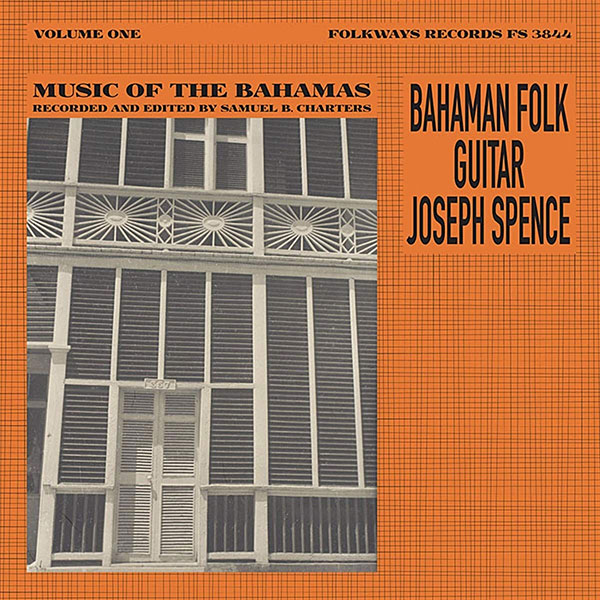 I especially enjoyed how the OOR made the Falcons growl, so I switched music genres and played "Coming in on a Wing and a Prayer" performed by the king of grumble'n'growl, Bahaman folk singer–guitarist Joseph Spence, specifically his Bahaman Folk Guitar: Music of the Bahamas, Vol.1 (24/96 FLAC Smithsonian Folkways Recordings/Tidal). I love this artist, and I have long enjoyed the direct and unprocessed sound of this recording. It makes me feel "right there" with Spence, as though I can see his thumb and fingers on the strings and his head thrown back, vocalizing to the heavens. "Coming in ..." is nothing more than Spence plucking and singing, but with the OOR driving the A21+ it sounded like pirate opera, and then, alternatively, like quick, syncopated British jazz I could dance to. (If you are not familiar with Joseph Spence's preternatural guitar playing, this album is a good place to start.)
With its standard power supply, the OOR preamp emphasized beat, tempo, and pace. It presented Spence with an agreeable but slightly grayed transparency that deemphasized (or eliminated) some portion of the richness, air, and harmonic overtones I experience with the Rogue RP-7 preamp or with the dCS Bartók driving the A21+ directly.
I tried the balanced headphone output next, listening to Joseph Spence performing the traditional "Face to Face That I Shall Know Him" and listening with HiFiMan's Susvara.
Recently, a friend told me that my Falcon Gold Badge LS3/5a loudspeakers sound like headphones. Maybe that explains it: With the Susvara headphones powered by the OOR amplifier, I thought the Susvara sounded like the Falcons powered by the Parasound A21+. That's a compliment to the OOR.
With Ferrum's OOR connected to its standard switching supply, the sound (driving the Susvara) was bold and copiously detailed but never delicate, atmospheric, or voluptuous.
Since I discovered it in GD #36, Linear Tube Audio's $6950 Z10e headphone and 10W speaker amp only leaves my system when it has to. It pleases me in so many ways. It has become my daily-driver studio amplifier. The Z10e drives electrostatic headphones (!), and it effectively powers the HiFiMan Susvara from its HI-power output; every other headphone can be driven from its LO-power output. Plus! On top of all that headphone usefulness, the Z10e pleases me very well when driving my LS3/5a.
Listening via the Susvara, tracks from my Roon playlists sounded consistently more spacious, vibrant, and voluptuous with LTA's Z10e than they did with the much less expensive OOR. The Z10e put some spark'n'glow tube wonder into every recording. The OOR countered with a stronger sense of pace, rhythmic pull, and timing.
In my studio, driving the Susvara, the $1995 OOR was more vigorous and exciting than the $3500 Pass Labs HPA-1 headphone amp/preamp but drier and less relaxed-sounding than the Z10e. Of the three, the Pass Labs amp was the most neutral and not-there transparent. The OOR was the most fit and hard-bodied. The LTA was the most nuanced and colorful.
Whenever I want to know what some sound hidden in the backspace of a recording is, whenever I want to make out every lyric in a blues song, whenever I want to know how good a headphone amp really is, I use the most accurate transducer I'm aware of: JPS Labs Abyss AB-1266 Phi TC. These Joe Skubinski–designed, 47 ohm, 88dB/mW sensitive, planar-magnetic open-back (open-front?) headphones make me say Wow! every time I use them.
Normally, I drive the Abyss from the output of my "blown-and-injected" 25W (into 8 ohms) Pass Labs XA-25 loudspeaker amplifier ($4900). This super-transparent, hyper-dynamic, pure class-A amp really lights up the sound when driving the Phi TC. All I can reasonably ask from the much less expensive OOR is that it dance in the same ballroom with the same debutantes.
I especially enjoyed how the OOR made the Falcons growl, so I switched music genres and played "Coming in on a Wing and a Prayer" performed by the king of grumble'n'growl, Bahaman folk singer–guitarist Joseph Spence, specifically his Bahaman Folk Guitar: Music of the Bahamas, Vol.1 (24/96 FLAC Smithsonian Folkways Recordings/Tidal). I love this artist, and I have long enjoyed the direct and unprocessed sound of this recording. It makes me feel "right there" with Spence, as though I can see his thumb and fingers on the strings and his head thrown back, vocalizing to the heavens. "Coming in ..." is nothing more than Spence plucking and singing, but with the OOR driving the A21+ it sounded like pirate opera, and then, alternatively, like quick, syncopated British jazz I could dance to. (If you are not familiar with Joseph Spence's preternatural guitar playing, this album is a good place to start.)
With its standard power supply, the OOR preamp emphasized beat, tempo, and pace. It presented Spence with an agreeable but slightly grayed transparency that deemphasized (or eliminated) some portion of the richness, air, and harmonic overtones I experience with the Rogue RP-7 preamp or with the dCS Bartók driving the A21+ directly.
I tried the balanced headphone output next, listening to Joseph Spence performing the traditional "Face to Face That I Shall Know Him" and listening with HiFiMan's Susvara.
Recently, a friend told me that my Falcon Gold Badge LS3/5a loudspeakers sound like headphones. Maybe that explains it: With the Susvara headphones powered by the OOR amplifier, I thought the Susvara sounded like the Falcons powered by the Parasound A21+. That's a compliment to the OOR.
With Ferrum's OOR connected to its standard switching supply, the sound (driving the Susvara) was bold and copiously detailed but never delicate, atmospheric, or voluptuous.
Since I discovered it in GD #36, Linear Tube Audio's $6950 Z10e headphone and 10W speaker amp only leaves my system when it has to. It pleases me in so many ways. It has become my daily-driver studio amplifier. The Z10e drives electrostatic headphones (!), and it effectively powers the HiFiMan Susvara from its HI-power output; every other headphone can be driven from its LO-power output. Plus! On top of all that headphone usefulness, the Z10e pleases me very well when driving my LS3/5a.
Listening via the Susvara, tracks from my Roon playlists sounded consistently more spacious, vibrant, and voluptuous with LTA's Z10e than they did with the much less expensive OOR. The Z10e put some spark'n'glow tube wonder into every recording. The OOR countered with a stronger sense of pace, rhythmic pull, and timing.
In my studio, driving the Susvara, the $1995 OOR was more vigorous and exciting than the $3500 Pass Labs HPA-1 headphone amp/preamp but drier and less relaxed-sounding than the Z10e. Of the three, the Pass Labs amp was the most neutral and not-there transparent. The OOR was the most fit and hard-bodied. The LTA was the most nuanced and colorful.
Whenever I want to know what some sound hidden in the backspace of a recording is, whenever I want to make out every lyric in a blues song, whenever I want to know how good a headphone amp really is, I use the most accurate transducer I'm aware of: JPS Labs Abyss AB-1266 Phi TC. These Joe Skubinski–designed, 47 ohm, 88dB/mW sensitive, planar-magnetic open-back (open-front?) headphones make me say Wow! every time I use them.
Normally, I drive the Abyss from the output of my "blown-and-injected" 25W (into 8 ohms) Pass Labs XA-25 loudspeaker amplifier ($4900). This super-transparent, hyper-dynamic, pure class-A amp really lights up the sound when driving the Phi TC. All I can reasonably ask from the much less expensive OOR is that it dance in the same ballroom with the same debutantes.
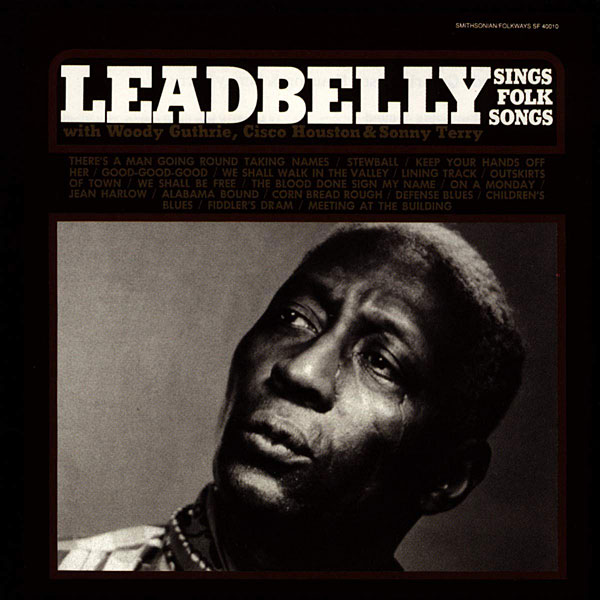 I started my OOR-Abyss auditions with my beloved Huddie Ledbetter singing his hell-arious, sarcastic composition "(Ain't You Glad) The Blood Done Signed My Name" (Lead Belly Sings Folk Songs—16/44.1 FLAC, Smithsonian Folkways/Tidal). The sound of Huddie's voice and guitar was taut, well-defined, and clear as clear can be. Lead Belly's layered irony was framed by the OOR's dynamic, articulate, unadorned manner. My only complaint: The normally rich, wet-tongued timbre of Ledbetter's voice was now a bit dry and gray.
OOR + HYPSOS
I started my OOR-Abyss auditions with my beloved Huddie Ledbetter singing his hell-arious, sarcastic composition "(Ain't You Glad) The Blood Done Signed My Name" (Lead Belly Sings Folk Songs—16/44.1 FLAC, Smithsonian Folkways/Tidal). The sound of Huddie's voice and guitar was taut, well-defined, and clear as clear can be. Lead Belly's layered irony was framed by the OOR's dynamic, articulate, unadorned manner. My only complaint: The normally rich, wet-tongued timbre of Ledbetter's voice was now a bit dry and gray.
OOR + HYPSOS
The moment I switched it on, the HYPSOS's front-panel screen lit up indicating it recognized the OOR. After about 10 seconds, the display indicated that it was fully stabilized at the correct voltage and current for the OOR amplifier.
I did not realize it, but Roy Feldstein had preprogrammed the HYPSOS for the OOR. Normally, users would be directed by the display to scroll through a long menu-list of products that can mate with the HYPSOS and select the Ferrum OOR or another product of their choice. (Alternatively, the output voltage and polarity can be set manually.) I started my OOR + HYPSOS auditions playing Lead Belly's mind-twister, "The Blood Done Signed My Name," followed by every Joseph Spence guitar recording and cello and gamba recording I could find.
The difference in sound character was immediately apparent: The HYPSOS brought new glow, space, and atmospheric vibrancy to everything I played. These enhancements were most recognizable from the upper bass through the top of the female vocal range. Lead Belly got spit back on his tongue. Guitar strings expelled more overtones. The sound felt more relaxed.
If any among you think two roughly electrically equivalent power supplies should sound roughly the same, think again. The OOR's standard wire-wart supply was never expansive, atmospheric, or colorful. Reverb tails felt stunted. Colors appeared muted. With the HYPSOS powering the OOR, the sound got broader, taller, rounder, more three-dimensional, more brilliant and expansive. The HYPSOS did not make the sound softer or tubelike; it just mitigated the unnatural hardness of the stock supply and passed more low-signal color and texture information.
Used as a preamp through my Parasound-Falcon setup, as well as when powering the HiFiMan Susvara and Abyss Phi TC headphones, the OOR + HYPSOS combination made the sound feel more unlimited. Unconstrained. Musical energy rose and fell with more apparent ease. Best of all, the HYPSOS retained most of the switching supply's firm punch and alluring density but delivered it inside a more nuanced and vibrant presentation. Perhaps this is the virtue of hybrid supplies?
So folks ...
Maybe this Ferrum HYPSOS Hybrid Power System will be the start of a whole new category of Recommended Components? Maybe more audiophiles will realize that audio amplification is about adding clean, natural energy to signals—and most importantly, that properly energized amplification makes recorded music sound denser, more vibrant, and more plausible. Ferrum's first two products do exactly as their advertising claims: The HYPSOS + OOR will drive any headphones effortlessly while preserving the soul and essence of the music they amplify.
Footnote 2: Stereophile's sister magazine Hi-Fi News published the Ferrum OOR's measured performance here.—John Atkinson.
I began my OOR auditions using its standard wire-wart supply, and because the fully balanced OOR has two rear-panel inputs (RCA and XLR) and two Outputs (XLR and RCA), I used it as a preamp, connecting my record player (via RCA) and my dCS Bartók DAC (via XLR) to the inputs. I connected the OOR's balanced outputs to the Parasound Halo A21+, driving my BFF Falcon Gold Badge LS3/5a loudspeakers.
On the last track, "A Solo (Tombeau)," of the first recording I tried, Paolo Pandolfo's recital of the same name (A Solo, 16/44.1 FLAC, Glossa/Tidal), I could hear the hollow, wood-ribbed inners of Pandolfo's gamba, which repeatedly gave out growls that sounded like wild creatures.
Using the OOR as a preamp in my reference system allows me to isolate and better assess the sound character of its all-important first stage, switching, and volume control. However those essential components affect or color the sound of my reference system, that is how they will color the sound of the headphone outputs.
Used as a preamp, the OOR reminded me of a middleweight boxer landing quick hard jabs; in music (not boxing), this quality emphasized tempo changes, plucked notes, and short pauses in the performance stream. In my listening notes, I described what I heard as solid state at its best. I observed a solid state amplifier dancing, swaying, and darting about rhythmically, like Kentucky clog dancers. The OOR presented recordings with a directness of force and a spirited momentum I rarely encounter with my tube amp alternatives.
I especially enjoyed how the OOR made the Falcons growl, so I switched music genres and played "Coming in on a Wing and a Prayer" performed by the king of grumble'n'growl, Bahaman folk singer–guitarist Joseph Spence, specifically his Bahaman Folk Guitar: Music of the Bahamas, Vol.1 (24/96 FLAC Smithsonian Folkways Recordings/Tidal). I love this artist, and I have long enjoyed the direct and unprocessed sound of this recording. It makes me feel "right there" with Spence, as though I can see his thumb and fingers on the strings and his head thrown back, vocalizing to the heavens. "Coming in ..." is nothing more than Spence plucking and singing, but with the OOR driving the A21+ it sounded like pirate opera, and then, alternatively, like quick, syncopated British jazz I could dance to. (If you are not familiar with Joseph Spence's preternatural guitar playing, this album is a good place to start.)
With its standard power supply, the OOR preamp emphasized beat, tempo, and pace. It presented Spence with an agreeable but slightly grayed transparency that deemphasized (or eliminated) some portion of the richness, air, and harmonic overtones I experience with the Rogue RP-7 preamp or with the dCS Bartók driving the A21+ directly.
I tried the balanced headphone output next, listening to Joseph Spence performing the traditional "Face to Face That I Shall Know Him" and listening with HiFiMan's Susvara.
I started my OOR-Abyss auditions with my beloved Huddie Ledbetter singing his hell-arious, sarcastic composition "(Ain't You Glad) The Blood Done Signed My Name" (Lead Belly Sings Folk Songs—16/44.1 FLAC, Smithsonian Folkways/Tidal). The sound of Huddie's voice and guitar was taut, well-defined, and clear as clear can be. Lead Belly's layered irony was framed by the OOR's dynamic, articulate, unadorned manner. My only complaint: The normally rich, wet-tongued timbre of Ledbetter's voice was now a bit dry and gray.
OOR + HYPSOSThe moment I switched it on, the HYPSOS's front-panel screen lit up indicating it recognized the OOR. After about 10 seconds, the display indicated that it was fully stabilized at the correct voltage and current for the OOR amplifier.
Maybe this Ferrum HYPSOS Hybrid Power System will be the start of a whole new category of Recommended Components? Maybe more audiophiles will realize that audio amplification is about adding clean, natural energy to signals—and most importantly, that properly energized amplification makes recorded music sound denser, more vibrant, and more plausible. Ferrum's first two products do exactly as their advertising claims: The HYPSOS + OOR will drive any headphones effortlessly while preserving the soul and essence of the music they amplify.
Footnote 2: Stereophile's sister magazine Hi-Fi News published the Ferrum OOR's measured performance here.—John Atkinson.