Screen graphics and more
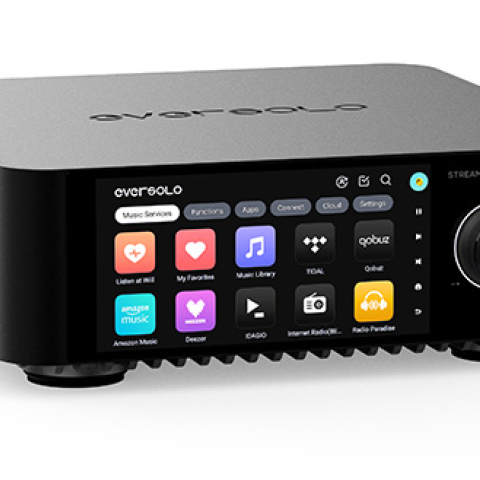
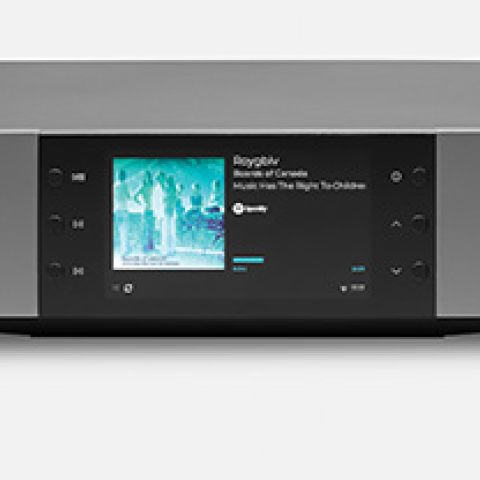
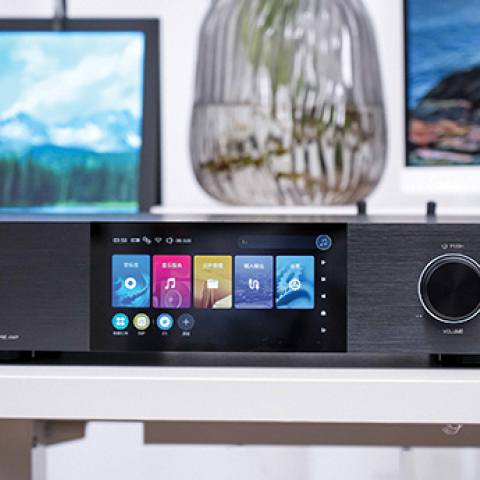
The A8's touchscreen is tastefully designed, not garish. It does look a little less contrasty than the swish, enormous screen on the HiFi Rose RS520. On the A8 home screen, a row of five colored digital tiles fills most of the area. They are, from left to right: Music (where you can create a library); Streaming (including Tidal, Qobuz, HighResAudio, Amazon Music, Apple Music, Deezer, and—unusually—Soundcloud); Files (where things like Alarms and Audiobooks are stored), Source, and Settings. Firing up the unit for the first time produces an animated Eversolo logo on the screen; about 25 seconds later, you're able to begin customizing, starting with setting language, time zone, choosing your network, and entering your Wi-Fi password. The next screen says "Phone Control" and shows you scannable QR codes to download and set up the app. Signing into Qobuz, Amazon Music, and Tidal produced no drama. For each of the music services, there's a mostly hidden virtual drawer on the left of the A8 display. Tap on it, and you get options to access your favorite genres and playlists and to discover new music curated by the streaming service in question. The A8's screen is not quite as responsive as the average new smartphone's, but the lag is very slight and no cause for complaint.
 Now listen here
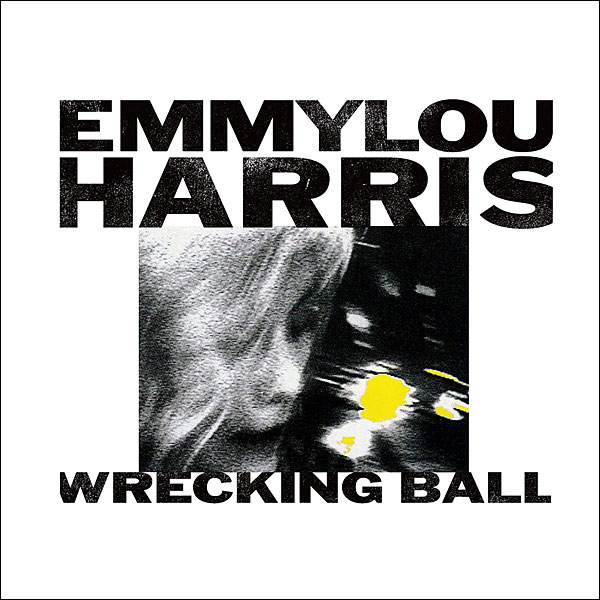
In 2024, discerning the sonic differences among well-designed digital components is not a straightforward affair. For me, DACs and streamers now tend to be as close in sonic quality as varieties of mineral water: they're substantially alike, and personal taste plays an outsized role. Just as it's unlikely that being served a non-favored bottle of water will spoil your meal, it's conceivable but improbable that a carefully built digital source will make or break your listening experience. That said, I'll gladly describe what I heard from the Eversolo DMP-A8. The news is overwhelmingly good. Through my Focal Utopia Scala Evo reference speakers powered by a Krell FPB200c amplifier or an Anthem STR integrated, instruments popped in 3D fashion and voices had great presence, solidity, and timbre. Harmonic textures were rich but not especially warm. We'll get to that. I started with Emmylou Harris's Wrecking Ball (24/44.1 FLAC, Nonesuch/Qobuz). Thanks to producer Daniel Lanois, it's one of the most gorgeous-sounding 1990s albums I know, but it will test your equipment. The treble can sound splashy, and there's a hint of sibilance on some of Harris's vocals. On the A8, straight out of the box, the region above 6kHz or 7kHz sounded a smidge hot at first, but the unit settled into crisp and controlled within minutes.
 Later, I played Philip Glass's "North Star," performed by Slagwerk Den Haag (16/44.1 FLAC, Orange Mountain Music/Qobuz). About two minutes in, one of the group's percussionists hammers on a toy piano. It's a sharp, aggressive sound (intended to be so, I think). In a direct comparison, the A8 rendered it with just a touch more bite than the Aurender A20 or the HiFi Rose RS520. On the whole, the A8 sounds a sliver brighter than what I'd consider strictly neutral—or anyway, than what I'm used to. On some recordings, the Eversolo can emphasize the metal jingles of a tambourine while obscuring the sound of the player's palm on the instrument's wood or plastic shell.
 On Big Star's "Thirteen," from the band's first album, #1 Record (16/44.1 FLAC, Stax/Qobuz), during the acoustic guitar solo that starts at 1:29, the triads played on the G, B, and high E strings aren't sharp sounding or strident per se, but neither would I call them fluid or relaxed. Have I heard better? The Aurender A20 sounds half a click mellower and less forward—more "analog" if you will. But I only picked this up during direct A/B listening, and I had to repeat it to make sure it wasn't my imagination. Considering the $13,000 price difference between the Eversolo and Aurender, pointing fingers at the former would make me feel a bit dopey. And anyway, the player's onboard digital filters and EQ let users customize the sound. It's hard to overstate the level of versatility this provides. You can even apply your own FIR filter coefficients (footnote 1), which you can create in REW or similar software.
During many a critical-listening session, I'll cue up the late Lhasa de Sela's "My Name," off The Living Road (16/44.1 FLAC, Audiogram/Qobuz). The recording starts with a brutally deep bass drum and a delicate two-tone chime—beast and beauty. It sounded convincing, even riveting, through the A8. The same was true for the reverb-heavy bass drum and the massed finger snaps on Lorde's "Royals," from Pure Heroine (16/44.1 FLAC, Universal/Qobuz).
On Big Star's "Thirteen," from the band's first album, #1 Record (16/44.1 FLAC, Stax/Qobuz), during the acoustic guitar solo that starts at 1:29, the triads played on the G, B, and high E strings aren't sharp sounding or strident per se, but neither would I call them fluid or relaxed. Have I heard better? The Aurender A20 sounds half a click mellower and less forward—more "analog" if you will. But I only picked this up during direct A/B listening, and I had to repeat it to make sure it wasn't my imagination. Considering the $13,000 price difference between the Eversolo and Aurender, pointing fingers at the former would make me feel a bit dopey. And anyway, the player's onboard digital filters and EQ let users customize the sound. It's hard to overstate the level of versatility this provides. You can even apply your own FIR filter coefficients (footnote 1), which you can create in REW or similar software.
During many a critical-listening session, I'll cue up the late Lhasa de Sela's "My Name," off The Living Road (16/44.1 FLAC, Audiogram/Qobuz). The recording starts with a brutally deep bass drum and a delicate two-tone chime—beast and beauty. It sounded convincing, even riveting, through the A8. The same was true for the reverb-heavy bass drum and the massed finger snaps on Lorde's "Royals," from Pure Heroine (16/44.1 FLAC, Universal/Qobuz).
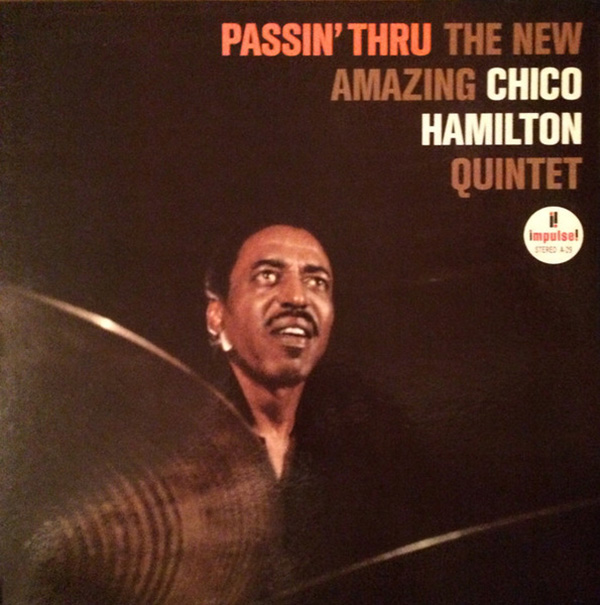 Another great test track is the Chico Hamilton Quintet's "Passin' Thru," from the album of the same name (16/44.1 FLAC, Impulse!/Qobuz). Listening to it is its own pleasure, but I'll often focus on the ride cymbal. Hamilton plays it with a brush. On lesser gear, the brushed cymbal taps don't really register as separate time events; they become a mess of white noise. The A8 had no such problems.
When a sixth cup of coffee seems unwise, but I need a dose of energy, Korean rapper Beenzino delivers. His 2015 single "Break" (16/44.1 FLAC, Genie/Qobuz) is raw, wild, and raucous in the best life-affirming way. The A8 reproduced the track enthusiastically, proving that it can go beyond prim and subtle into full party-animal mode.
Wrap It. Wrap It Good.
Another great test track is the Chico Hamilton Quintet's "Passin' Thru," from the album of the same name (16/44.1 FLAC, Impulse!/Qobuz). Listening to it is its own pleasure, but I'll often focus on the ride cymbal. Hamilton plays it with a brush. On lesser gear, the brushed cymbal taps don't really register as separate time events; they become a mess of white noise. The A8 had no such problems.
When a sixth cup of coffee seems unwise, but I need a dose of energy, Korean rapper Beenzino delivers. His 2015 single "Break" (16/44.1 FLAC, Genie/Qobuz) is raw, wild, and raucous in the best life-affirming way. The A8 reproduced the track enthusiastically, proving that it can go beyond prim and subtle into full party-animal mode.
Wrap It. Wrap It Good.When Jim Austin reviewed the Magico A5, he concluded, "These could be my musical companions for a long, happy life." That's a plaudit that, simple as it is, I don't think I'd ever deeply considered.
Footnote 1: See tinyurl.com/3mwd5kme.