 His thoughts on power products are more nuanced. "We don't like power conditioners because they add dirt to a properly controlled power supply. Most well-designed circuits don't need conditioners. There's nothing to be gained when you do it right in the front end of the power supply. If I needed all that stuff, I would take the whole design and review it again, because there's something wrong with it."
The Stromtank, though, is different. "The Stromtank runs a separate AC signal with a precision frequency stability of 60Hz, and the sinewaves are satin smooth. Those things are nice and will not ever harm the sound. But if you have reasonable power coming from the wall, our power supplies will be very happy."
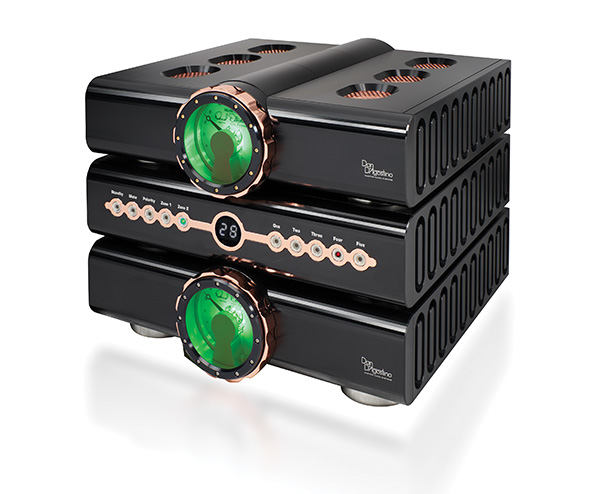
Toward the end of our chat, I asked Dan what he most wanted Stereophile readers to understand about the Relentless preamp. "After our success with the Momentum HD preamp, we envisioned what we were looking for next. We went through eight or nine prototypes—that's a lot of prototype money out the door—until we achieved circuit stability and everything behaved as we wanted. With the harmonious transfer between input, line, control, and output, we have a very different configuration in the Relentless from what came before. Ultimately, we achieved something better than what we had hoped to create. It's very, very unique and musically correct.
His thoughts on power products are more nuanced. "We don't like power conditioners because they add dirt to a properly controlled power supply. Most well-designed circuits don't need conditioners. There's nothing to be gained when you do it right in the front end of the power supply. If I needed all that stuff, I would take the whole design and review it again, because there's something wrong with it."
The Stromtank, though, is different. "The Stromtank runs a separate AC signal with a precision frequency stability of 60Hz, and the sinewaves are satin smooth. Those things are nice and will not ever harm the sound. But if you have reasonable power coming from the wall, our power supplies will be very happy."
Toward the end of our chat, I asked Dan what he most wanted Stereophile readers to understand about the Relentless preamp. "After our success with the Momentum HD preamp, we envisioned what we were looking for next. We went through eight or nine prototypes—that's a lot of prototype money out the door—until we achieved circuit stability and everything behaved as we wanted. With the harmonious transfer between input, line, control, and output, we have a very different configuration in the Relentless from what came before. Ultimately, we achieved something better than what we had hoped to create. It's very, very unique and musically correct.
I'm convinced that the Relentless preamp needs no special power treatment. Nonetheless, as a Senior Contributing Editor to Stereophile who often reviews five- and six-figure products, it behooves me to do everything within my means to build the most revealing and musical reference system I can. So, when Edward DeVito of Audio-Ultra (footnote 2) offered to help me further upgrade my dedicated electrical lines, I bit. After many hours of work—supervised by Ed to ensure all grounding, polarity, and connections were implemented properly—I now have five dedicated circuits. Each of my monoblocks has its own dedicated circuit, my front end has its own, and my two Wilson Loke subwoofers have their own. Three circuits use twisted, direction-controlled 10-gauge wire, and all wall outlets are now AudioQuest Edison.
With power addressed, we hoisted the Relentless preamp's three pieces onto the top shelf of my Grand Prix Monza rack and installed four appropriate-sized Wilson Audio Pedestals beneath the stack. (The other part of "we" was Hans Brackmann of Definitive Audio Bellevue, who drove the preamp to my house.) We attached XLR cables from the dCS Vivaldi Apex DAC to the preamp and from the preamp to either the D'Agostino Momentum M400 MxV monoblocks or the Accuphase A-300 monoblocks. Attaching the subwoofers via their XLR interconnects was just as easy. After separating interconnects and speaker cables from power cables and lifting all the cabling off the floor, I commenced listening with assurance that I had done all I could to ensure that the system was functioning at the highest level.
 Part 4: Sound beyond words
At the risk of receiving multiple missives (missiles?) from readers who disapprove of such language, I feel impelled to speak honestly. My first listens generated a host of "holy f*cks!" The first came when I introduced Brackmann to one of my favored demo tracks, the first movement of Mahler Symphony No.5 performed by Rafael Payare and L'Orchestre symphonique de Montréal (24/96 FLAC download, Pentatone). Bernstein's 1988 recording with the Vienna Philharmonic (16/44.1 FLAC, Deutsche Grammophon/Tidal) may go deeper than Payare's—Bernstein's bleak opening funeral march is considerably more threatening and emotionally devastating, his plasticity of tempo more expressive, his phrasing more heartbreaking—but the Pentatone recording quality is far superior.
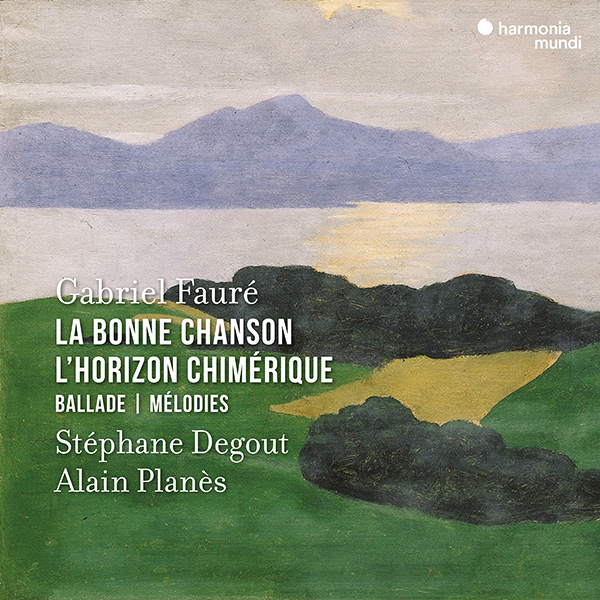 Sticking to French repertoire, I decided to celebrate the Fauré centennial by reviewing Gabriel Fauré: La Bonne Chanson, L'Horizon Chimérique, Ballade, Mélodies by baritone Stéphane Degout and pianist Alain Planès (24/96 WAV download, Harmonia Mundi). There was no mistaking Planès's 1892 Pleyel "Grand Patron" for either a modern Steinway D or a brighter érard.
 You may recall last month's Recording of the Month, Danny Elfman's Percussion Concerto and Wunderkammer with Colin Currie and the Royal Liverpool Philharmonic Orchestra under JoAnn Falletta (24/96 WAV download, Sony). I had no point of reference for this recording. I only knew that color, percussion, and imaging were fabulous. As I listened, my mind overflowed with images and feelings as vivid as every percussive impact. I don't think any recording I've ever previously played conjured up so many wild images, including one of an extremely large man in a duck costume waddling through a carnival with outsized webbed feet.
 Scott and I then switched amplifiers, to the Accuphase A-300 monoblocks, which I'd already warmed up. We confirmed once again that on Payare's Mahler recording, we could hear substantially more definition and texture and feel more turmoil when everything got going.
For what I thought were my final listens before I'd begin to write this review, I invited our 23-year-old dog walker and her similarly aged fiancé to play music of their choice. They chose the 2017 modified reissue of Cody Jinks's "Hippies & Cowboys" from Less Wise (24/44.1 FLAC, Late August Records/Qobuz), the Moderato from Tchaikovsky's Swan Lake performed by the London Symphony Orchestra under Andre Previn (24/44.1 FLAC, Warner Classics/ Qobuz), and Luke Combs & Billy Strings's "The Great Divide" (24/96 FLAC, River House Artists/Columbia Nashville/Tidal). They were blown away.
Scott and I then switched amplifiers, to the Accuphase A-300 monoblocks, which I'd already warmed up. We confirmed once again that on Payare's Mahler recording, we could hear substantially more definition and texture and feel more turmoil when everything got going.
For what I thought were my final listens before I'd begin to write this review, I invited our 23-year-old dog walker and her similarly aged fiancé to play music of their choice. They chose the 2017 modified reissue of Cody Jinks's "Hippies & Cowboys" from Less Wise (24/44.1 FLAC, Late August Records/Qobuz), the Moderato from Tchaikovsky's Swan Lake performed by the London Symphony Orchestra under Andre Previn (24/44.1 FLAC, Warner Classics/ Qobuz), and Luke Combs & Billy Strings's "The Great Divide" (24/96 FLAC, River House Artists/Columbia Nashville/Tidal). They were blown away.
 A second visit with Scott—"Scott, you've got to find the time to hear this thing again"—ended when, upon hearing a bit of the Craft Recordings 24/192 reissue of Art Pepper Meets the Rhythm Section streamed from Qobuz, Scott exclaimed, "Wow, listen to that. The percussion is fabulous!" I again began pondering my power cable connection scheme with an intensity of focus that resembled that of Hassidic scholars pondering Talmudic texts over multiple millennia. Moving some power cables around delivered a richer midrange, smoother top, and tighter bottom end, enticing me to listen deeply. When Ed DeVito surprised me with another visit, we cued up two of his references: "In the Wee Hours" from Junior Wells's Chicago Blues Band from Buddy Guy's Hoodoo Man Blues (16/44.1 FLAC, Delmark/Tidal) and Hans Zimmer's "Dream of Arakis" from Dune (24/48 FLAC, WaterTower Music/Qobuz). I'd previously chided DeVito for using as a reference Guy's "Red Book" recording, with its limited dynamics and soundstage width and depth. This time, I sat seduced by the warmth, texture, color, and musicality contained in its slowly sampled 16 bits.
But words we gotta use
A second visit with Scott—"Scott, you've got to find the time to hear this thing again"—ended when, upon hearing a bit of the Craft Recordings 24/192 reissue of Art Pepper Meets the Rhythm Section streamed from Qobuz, Scott exclaimed, "Wow, listen to that. The percussion is fabulous!" I again began pondering my power cable connection scheme with an intensity of focus that resembled that of Hassidic scholars pondering Talmudic texts over multiple millennia. Moving some power cables around delivered a richer midrange, smoother top, and tighter bottom end, enticing me to listen deeply. When Ed DeVito surprised me with another visit, we cued up two of his references: "In the Wee Hours" from Junior Wells's Chicago Blues Band from Buddy Guy's Hoodoo Man Blues (16/44.1 FLAC, Delmark/Tidal) and Hans Zimmer's "Dream of Arakis" from Dune (24/48 FLAC, WaterTower Music/Qobuz). I'd previously chided DeVito for using as a reference Guy's "Red Book" recording, with its limited dynamics and soundstage width and depth. This time, I sat seduced by the warmth, texture, color, and musicality contained in its slowly sampled 16 bits.
But words we gotta useThe problem with audiophile jargon is not in its expressive power but its overuse. Words and phrases intended to convey unquantifiable journeys into music's inner sanctum are too often reduced to clichés in which spiritual listening epiphanies devolve into assemblages of words devoid of comparable or analogous magic. As elusive and indescribable as an audiophile's pilgrimage to musical truth may be, our words cannot harm the joy at the center of the pursuit. The D'Agostino Master Systems Relentless preamplifier has enabled me to bathe in the connection to greater truths that music offers to extents I never thought possible. It won't replace your favorite spiritual text or SNL skit, but you'll likely return to it with equal (or more) anticipation, fervor, and glee. It's that good. Giving it an A+ only begins to indicate the gifts it can bestow.
Footnote 2: See audio-ultra.com.