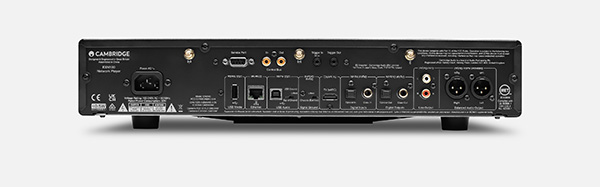
 Many connections
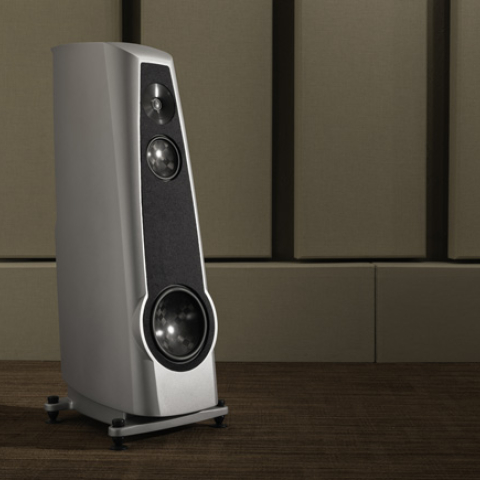
After leaving it running for a few days in the office, I moved the EXN100 upstairs into my reference system. My usual Bowers & Wilkins 808 speakers were not installed; instead I was using a pair of Amphion Krypton3X's; look for my review in the June issue. The big Amphions have the same sharp-focus top end and midrange as their baby cousins down in my office, plus a big, full, fast low end courtesy of their 10" woofers and large floorstanding cabinets. Upstairs, I tested various connections to the EXN100. I plugged in a USB flash drive stick filled with music and test-tone files. I was able to quickly navigate to the drive via the StreamMagic app and play any file I chose. Then I connected my Oppo UDP-203 universal player (Blu-ray, SACD, CD, DVD), using, alternately, both RCA and TosLink S/PDIF connections. I spun a few favorite CD tracks and compared with Qobuz streams of the same tracks. I didn't hear any clear differences (and might well have imagined whatever tiny differences I might have heard) between the digital connections and streaming, except in one case: a CD which is old and a bit scuffed but still readable. In that case, neither digital connection produced skips or digital blips or clicks, meaning error correction was overcoming whatever laser-read errors were occurring. But the Qobuz stream version sounded better, less gritty and metallic in the top end. So did streaming that album from my NAS server, which contains a verified accurate rip from the same disc. Back to ephemeral media. I tested the EXN100 with Spotify Connect, in which the Spotify app is used to choose and play music but the EXN100's computer is connected directly to Spotify's servers, bypassing phone or tablet or whatever you're using to run the StreamMagic app. This experience solidified my current feeling about Spotify: frustration. I'm frustrated that the streaming service with the most users (by far) won't offer CD resolution or better audio quality. Why, in 2025, must a plurality of streaming be lossy? Spotify's lossiness, the hollowed-out and processed sound quality, was easily audible through the EXN100 connected to my reference system. The Spotify app is easy to use, and the variety of podcasts, audiobooks, and millions of playlists created by the huge community of Spotify users has no match in the smaller world of audiophile streaming services such as Qobuz—yet, frustration, because Spotify's sound quality through a full-range system is so freakin' lousy!
In my reference system, I connected the EXN100 to my Benchmark LA-4 preamp first via balanced XLR cables, then with unbalanced RCA cables. In both cases, I had EXN100's Preamp mode turned off, meaning it was operating at full line-level output. I didn't hear any difference between the two analog output connections, and I heard no hum, hash, buzz, or anything else when I cranked the Benchmark's volume control to full. This leads me to believe Cambridge did their usual excellent job of circuit board layout and grounding/shielding inside the chassis. John Atkinson's measurements will say if my beliefs are grounded in reality. Next, I connected the EXN100's electrical S/PDIF digital output to my dCS Bartók streaming DAC. In this setup, the Cambridge is acting as streamer with the Bartók as the DAC and analog line buffer after conversion. I noticed right away that the Bartók brought that extra degree of reality to the sound, a few more degrees of life force, a brighter spotlight on the sounds featured in a given song, and a more complete sound picture.
 But this is an unfair comparison; the Bartók costs about 15 times as much as the EXN100. The Bartók is better, but I wouldn't say its sound is 15 times as good. If I hadn't heard the Bartók, I wouldn't have known that a higher level of clarity and authority existed than the EXN100 produced. The EXN100 still did well conveying the point and purpose of the music, and the instrumental tonality was akin to that of the Bartók, perhaps a shade less rich.
Stop thinking, surrender to music
But this is an unfair comparison; the Bartók costs about 15 times as much as the EXN100. The Bartók is better, but I wouldn't say its sound is 15 times as good. If I hadn't heard the Bartók, I wouldn't have known that a higher level of clarity and authority existed than the EXN100 produced. The EXN100 still did well conveying the point and purpose of the music, and the instrumental tonality was akin to that of the Bartók, perhaps a shade less rich.
Stop thinking, surrender to musicA few days before I had to send the EXN100 on its way, I received the February issue of Stereophile with the annual Records to Live For (R2L4) list. Almost all the albums on the list stream on Qobuz. I compiled a playlist of those that stream (footnote 5), with not quite 47 hours of music, much of it new to me.
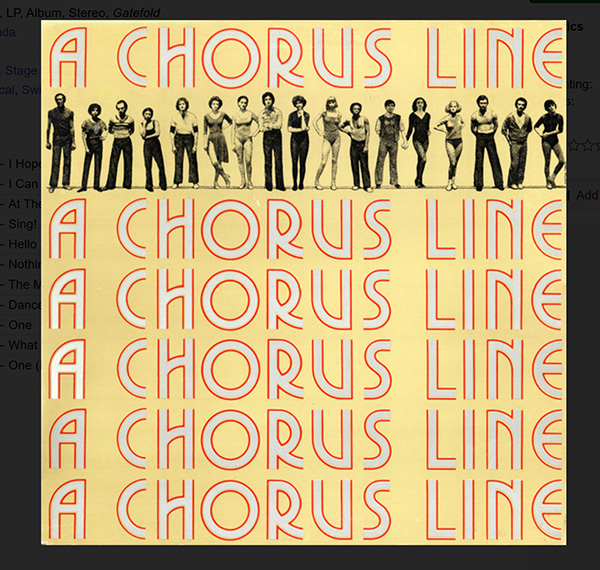
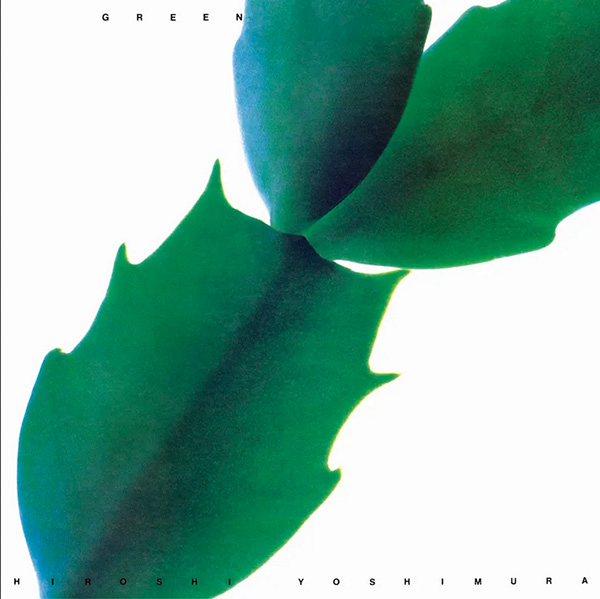 The playlist has become a sunny road to music discovery. So far, it's been cool to segue from a track on Hiroshi Yoshimura's spacey Green (chosen by Robert Baird) to Sviatoslav Richter tearing through the solo piano version of Mussorgsky's Pictures at an Exhibition in tight-focus mono from a 1958 recital in Sophia, Bulgaria (chosen by Larry Greenhill) to the bawdy "Gimme the Ball" from the original cast recording of A Chorus Line (also chosen by Larry). Another shuffle play mashed up PJ Harvey (chosen by Michael Trei) with a movement from a Brahms piano/violin sonata (Kalman Rubinson) with Franz Ferdinand (Julie Mullins). I plan to keep pecking at this playlist. Cross-genre shuffle-playing is a bit like throwing dice or spinning the roulette wheel: The outcome is unknown and may be glorious or disappointing, and there's a thrill in taking the chance to find out.
 Despite some reservations about the demise of the CD, I've been all-in with streaming since its wild and wooly early days. If you don't stream but love music and have a sneaking feeling you haven't heard all of it you might like, sign up for a free trial to the streaming service of your choice (footnote 6). Streaming is the future. Like all new things, it scrambles the context (I miss liner notes and wish the streamers and record labels would do metadata better) and is a shift away from the long familiar. Eyes wide open to all that, I say it's a good change. Given its quick rise to becoming the dominant mass medium, I think most who have tried it prefer it.
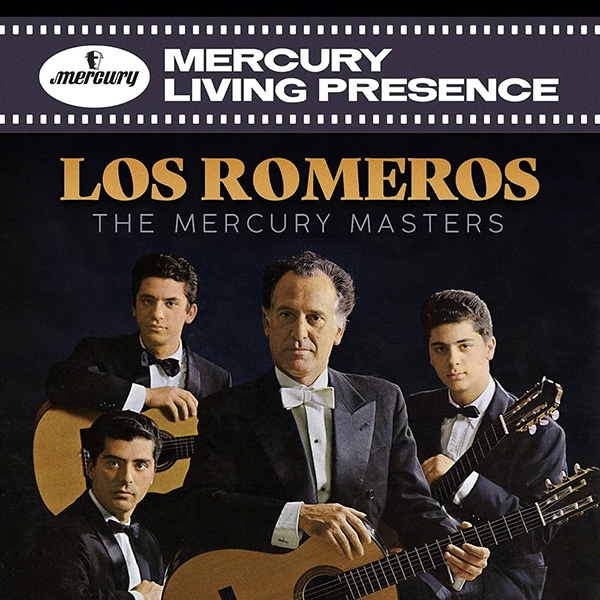
Footnote 4: See open.qobuz.com/album/y10hwdl8z0v2b. Here's a Qobuz playlist of the entire box set Los Romeros - The Mercury Masters: open.qobuz.com/playlist/19291088. Footnote 5: See open.qobuz.com/playlist/28334472. Footnote 6: Qobuz is by far the most audiophile-aware. Qobuz and Tidal, both of which stream lossless FLAC, are the best choices for getting the music into your hi-fi system, except perhaps for Spotify Connect, and Spotify is still lossy. I recently canceled my Tidal account to save money. I'm all-in with Qobuz.—Jim Austin