 StreamMagic is similar enough to dCS's Mosaic app, which I use all the time with my Bartók streaming DAC, that it didn't take long to figure out. The Library tab lists all the streaming sources, and the app connects transparently to MinimServer running on my NAS, same as Mosaic. I started playing files from my digital library, with the MXN10 connected to a McIntosh MA6500 integrated amplifier in my old-school office system; its only permanently connected digital component is a Rega Jupiter CD player. This system usually plays CDs and vinyl, but can also connect to my office computer via a Grace m900 DAC/preamp.
With the StreamMagic app, I had no problem exploring and navigating networked storage. To search for an artist, click the Artists tab in the NAS library top display and a search box appears at the top of the list. (Roon users may scoff at this, and I'll admit that Roon's primary strength is its robust and universal search function, which ties together your library and your Qobuz and Tidal accounts. Roon, though, costs $15/month; the StreamMagic app is free.)
My next move was to sign into my Qobuz account in StreamMagic. Once that was done, integration between the streaming service and the Cambridge app was seamless. I assume the same is true with Tidal and Deezer accounts.
StreamMagic is similar enough to dCS's Mosaic app, which I use all the time with my Bartók streaming DAC, that it didn't take long to figure out. The Library tab lists all the streaming sources, and the app connects transparently to MinimServer running on my NAS, same as Mosaic. I started playing files from my digital library, with the MXN10 connected to a McIntosh MA6500 integrated amplifier in my old-school office system; its only permanently connected digital component is a Rega Jupiter CD player. This system usually plays CDs and vinyl, but can also connect to my office computer via a Grace m900 DAC/preamp.
With the StreamMagic app, I had no problem exploring and navigating networked storage. To search for an artist, click the Artists tab in the NAS library top display and a search box appears at the top of the list. (Roon users may scoff at this, and I'll admit that Roon's primary strength is its robust and universal search function, which ties together your library and your Qobuz and Tidal accounts. Roon, though, costs $15/month; the StreamMagic app is free.)
My next move was to sign into my Qobuz account in StreamMagic. Once that was done, integration between the streaming service and the Cambridge app was seamless. I assume the same is true with Tidal and Deezer accounts.
I noticed down in the office system, including listening through headphones, that the MXN10's built-in DAC sounds damn good. I tried playing a CD in the Rega Jupiter and streaming the rip of that CD from my NAS library, switching back and forth on the McIntosh amplifier. The output levels sounded about the same and looked the same with the McIntosh's trademark blue analog meters, so I figured it was a legitimate comparison. I heard no difference, through speakers or headphones. Both the CD itself and the stream of its rip sounded great. I have always liked the Rega's built-in DAC, so the MXN10's matching its good sound impressed me. After a few days playing with the MXN10 in the office, I took it upstairs and connected it to my main system. I ran coaxial S/PDIF to my dCS Bartók and the MXN10's analog outputs to my Benchmark LA-4 preamplifier. I carefully matched levels of the Bartok's balanced outputs to the MXN's unbalanced outputs using pink noise and a level meter; the MXN10 analog output had to be set 6dB lower than the Bartók to achieve equal output. With all adjusted, switching back and forth between the full MXN10 sound (streamer plus DAC, analog output) and the MXN10 with the Bartók (via the MXN10's S/PDIF output) was simple and level neutral.
 I was in a jazz mood, so I streamed 192/24 recent remasters of three different albums: Yusef Lateef's 1961 album Eastern Sounds (Craft Recordings' new reissue of Prestige/Moodsville MVST 22); Herbie Hancock's Crossings, from 1972 (Rhino, HD reissue of Warner Brothers BS 2617); and Ornette Coleman's 1960 album Change of the Century (Rhino, HD reissue of Atlantic 1327). I had recently spun the new all-analog reissue LPs of the Lateef from Craft's Original Jazz Classics series and the others from Rhino's High Fidelity Vinyl series. I heard differences between the MXN10's analog output and the output from the MXN10-Bartók combo. The Bartók's soundstage was more clearly defined, each sound or instrument in sharp focus, the dense mix on the Hancock album better sorted. From the MXN10's built-in DAC, the focus was a touch hazier. Also, the boomy part of the low end was a bit more pronounced with the MXN10 performing DAC duties, especially with Charlie Haden's bass on the Coleman album.
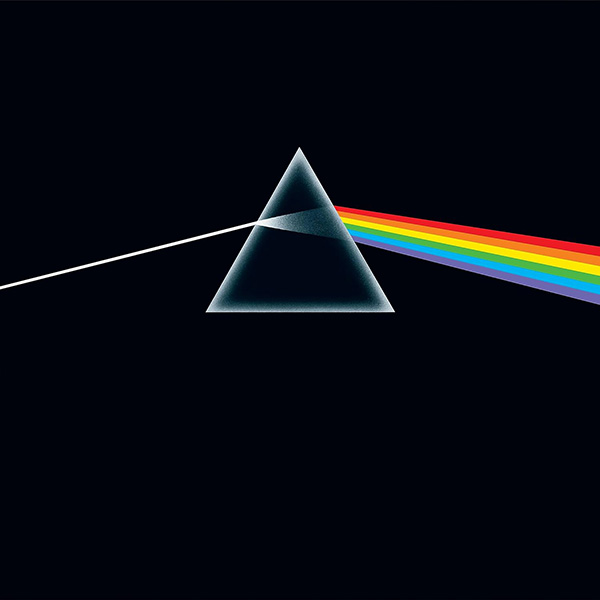 I am not impressed with the latest, 50th-anniversary reissue; it sounds like the master tape is worn out and the top end is gone. I compared the 24/96 Qobuz stream to several versions on my server: a rip of a run-of-the-mill Capitol/EMI CD from the 1980s; a rip of the Mobile Fidelity Gold CD; a rip of the CD layer of the 2003 25th Anniversary hybrid SACD; and my needle drop of the Mobile Fidelity LP. I favored all the earlier versions over the latest, the 2003 CD and the MoFi LP standing out as favorites. My two favorites sounded different from each other—the MoFi LP has a suck-out of the midrange, and the 2003 CD is louder—but both were pleasing, and there was plenty of top end. In comparison, the old Capitol and MoFi CDs sounded washed-out and thin. These sonic differences were clearly audible through the MXN10, and I enjoyed spending careful-listening time with one of my all-time favorite albums.
Now I returned to switching back and forth between the MXN10's DAC and the MXN10's digital output converted by the Bartók DAC, streaming the Qobuz playlist Total Grunge (footnote 6), which contains tracks of different resolutions. The dCS would mute for a moment when the sample rate or bit depth changed. This didn't happen with the built-in DAC or when music was streamed directly through the Bartók. Apart from that, this grunge-rock playlist peeled the paint in a satisfying way, with a slight sonic edge to the much more expensive Bartók DAC for clarifying these 1990s all-loud-all-the-time mixes.
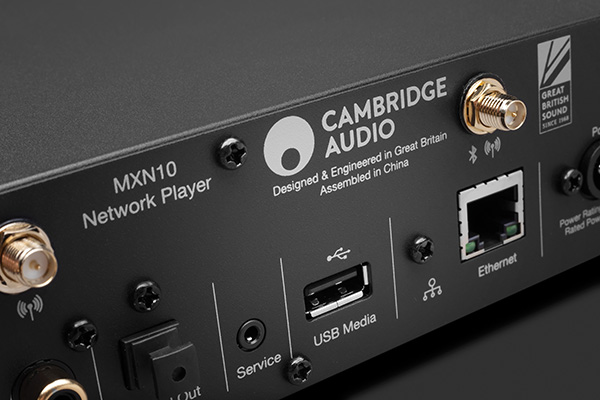
My final test was to play files via the MXN10's USB connection. Cambridge's Simon Osborne-Walker, head of global PR, told me that the USB socket provides up to an ampere of current, twice the USB standard for computers. That means that any bus-powered drive should work fine and not overtax the MXN10's power supply.
I am not impressed with the latest, 50th-anniversary reissue; it sounds like the master tape is worn out and the top end is gone. I compared the 24/96 Qobuz stream to several versions on my server: a rip of a run-of-the-mill Capitol/EMI CD from the 1980s; a rip of the Mobile Fidelity Gold CD; a rip of the CD layer of the 2003 25th Anniversary hybrid SACD; and my needle drop of the Mobile Fidelity LP. I favored all the earlier versions over the latest, the 2003 CD and the MoFi LP standing out as favorites. My two favorites sounded different from each other—the MoFi LP has a suck-out of the midrange, and the 2003 CD is louder—but both were pleasing, and there was plenty of top end. In comparison, the old Capitol and MoFi CDs sounded washed-out and thin. These sonic differences were clearly audible through the MXN10, and I enjoyed spending careful-listening time with one of my all-time favorite albums.
Now I returned to switching back and forth between the MXN10's DAC and the MXN10's digital output converted by the Bartók DAC, streaming the Qobuz playlist Total Grunge (footnote 6), which contains tracks of different resolutions. The dCS would mute for a moment when the sample rate or bit depth changed. This didn't happen with the built-in DAC or when music was streamed directly through the Bartók. Apart from that, this grunge-rock playlist peeled the paint in a satisfying way, with a slight sonic edge to the much more expensive Bartók DAC for clarifying these 1990s all-loud-all-the-time mixes.
My final test was to play files via the MXN10's USB connection. Cambridge's Simon Osborne-Walker, head of global PR, told me that the USB socket provides up to an ampere of current, twice the USB standard for computers. That means that any bus-powered drive should work fine and not overtax the MXN10's power supply.
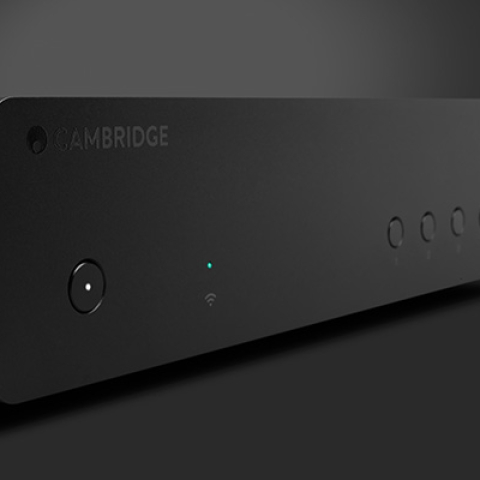
The Cambridge Audio MXN10 packs a lot of functionality and high-quality audio into a small, inexpensive box. It's a streamlined way to add streaming to just about any system, no matter how old-school. The StreamMagic app is well designed and allows access to a range of streaming services and files stored locally, connected directly or on your local network. The MXN10 works perfectly with the robust and powerful Roon app, assuming you have an account and a Roon server in your network. Its built-in DAC offers high-fidelity sound and because there's a DAC built in, the MXN10 mates well with even a predigital sound system. In short, the MXN10 is a thoughtfully considered, high-performance bridge to the future-present, at a price that's friendly to most budgets. Once you get your feet wet with streaming, you might find it's like the river of whiskey in the old blues tune: You'll dive to the bottom and never want to come up.
Footnote 6: See open.qobuz.com/playlist/3291132.