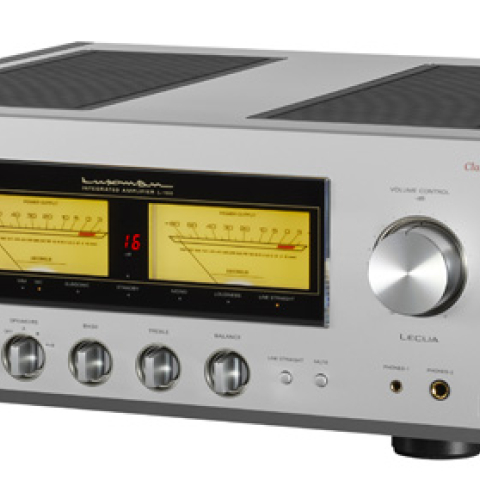
Herb Reichert reviewed the Bel Canto e.One REF600M in September 2017 (Vol.40 No.9):
During the listening for my review of Dynaudio's Contour 20 loudspeaker in the April 2017 issue, it became embarrassingly obvious to me that I needed a reasonably priced high-power amplifier that could look down the barrel of a 4-ohm loudspeaker impedance and not flinch or buckle. I needed said amp to be light and small enough that I could lift it and move it about with ease—something, perhaps, based on Bruno Putzeys's well-regarded NCore class-D module, and with a well-regarded audio pedigree. I needed an amplifier that sounded rich and colorful, in that Herb-the-Artist sort of way. I needed something that could drive my Magnepan .7 speakers, which, despite their modest price ($1400/pair), need an amp that doubles its power each time the load impedance is halved, down to an impedance of 2 ohms.
I had serious doubts that all of those attributes could be delivered by any class-D amp.
But Michael Fremer's review of Bel Canto Design's Black amplification system in the July 2015 issue, and Kal Rubinson's review of Bel Canto's e.One REF600M monoblocks ($4995/pair) in the October 2016 issue, combined to suggest that I keep an open mind about class-D. I called Michael McCormick, President of Bel Canto (footnote 1).
Previously, my Magnepan .7s had thrived on the juice provided by Rogue Audio's Sphinx integrated amplifier, a hybrid design using tubes and class-D circuits; by Schiit Audio's Ragnarok integrated; and by Emotiva's XPA Gen3 modular class-AB amplifier. But hooked up to the cold-from-the-boxes Bel Canto REF600Ms, the Maggies were sounding metallic, compressed, and colorless. Concerned, I called Sphere, one of my two lifestyle consultants, and asked what I should do.
"Calm down, Herb. Break in the amps for at least 100 hours."
As always, Sphere was right. Each day for five days, I connected the REF600Ms to a different pair of speakers. Each day, the sound opened up a bit more, relaxed, and, little by little, became more colorful.
Then, one morning, I received my copies of the 13 volumes of folklorist Alan Lomax's Southern Journey, field recordings made in 1959–60 (13 CDs, Rounder 1701–1713). It just so happened that I had the Bel Cantos, which can put out 300W into 8 ohms, hooked up to the supersensitive Zu Audio Soul Supremes (JA measured 91.5dB/2.83V/m). Ridiculous, right? I did this because I wanted to hear if the $4500/pair Zu Souls, with their benign load of 16 ohms, would do better with the class-D Bel Cantos than they had with Emotiva's XPA Gen3, with which they'd sounded hard and etched.
Next thing I know, I'm shuffling around my crib, singing along with the likes of Mrs. Sidney Carter ("Didn't Leave Nobody but the Baby") and Ervin Webb and the Prisoners ("I'm Goin' Home") (footnote 2) and suddenly I'm stopped dead in my tracks. What the hay? Most of these recordings, painstakingly remastered to 20-bit digital, feature a cappella singing or a single instrument—banjo, fiddle, or guitar. But almost every song is driven along by improvised percussion: a tapped foot, clapped hands, etc. As I mopped the floor in front of the speakers, I realized I'd never heard leather shoes, wood floors, and fleshy hands clapped together sound so palpably real.
The combo of Bel Canto amps and Zu Soul speakers not only showed me leather shoes on wood floors, it exposed the approximate volume of the space under those floors. The entire world around Lomax's single microphone seemed to be reproduced with the texture, weight, and viscosity of real life. I was intrigued.
I knew that class-D amps played bass octaves with corporeal authority, but the unprecedented verity of the foot taps I was hearing was happening from the deepest, floor-moving bass all the way up through the midrange, to maybe 3kHz or so. Driven by the Bel Canto REF600Ms, the Zu Soul Supremes produced an uncannily intelligible midrange that focused my attention on the wood, metal, and glass of bottleneck guitar and picked banjos, the warm flesh of real hands. I couldn't remember my favored low-power amplifiers being that revealing. I'd never imagined that class-D could let recordings sound more vivid and alive than high-bias class-A. Sears Roebuck banjos, Harmony archtop guitars, Acme washboards—all sounded as real as the ever-present tapped feet. The articulation of solo voices and the separation of individual voices in choirs were apparition-like.
I love the sound of class-D in the morning
But only if class-D gets me closer to the feeling of real life. To my surprise, the Bel Canto REF600M monoblocks did exactly that, but mostly through the bottom seven octaves. The REF600M's clarity and presence through the bass and upper midrange, up to around 3kHz, were almost unique in their strength and resolution. I listened carefully with the Technics SB-C700 ($1699/pair) and KEF LS50 ($1500/pair) minimonitors, hoping to grasp the precise character of the REF600Ms' treble, but all I could come up with was that the Bel Cantos' top octaves seemed slightly blunt. With these speakers, the REF600Ms were strong, transparent, well sorted—but in some way their sound was incomplete. I'm not sure why, but Stirling Broadcast's LS3/5a V2s ($1695/pair) brought back all that missing upper-octave information. The Stirlings also pulled from the Bel Cantos the most flesh-and-blood heartbeat. While not sounding as big and forward as the Zu Soul Supremes, the Stirling LS3/5a V2s were, overall, the Bel Cantos' most completely satisfying partners.
Back to the Maggies . . .
. . . and my Southern Journey, this time with fiddler Hobart Smith playing "Devil's Dream" (footnote 3)..With the Bel Canto REF600Ms driving the Magnepan .7 planar magnetics, the top three octaves seemed fully fleshed out—and beautiful. The notes and overtone structure of Smith's fiddle were all there, with plenty of air and texture. Boogie and momentum were sensational. I'd never heard the .7s sound more precise, powerful, or three-dimensional. Nevertheless, I didn't grasp the full measure of the Magnepan–Bel Canto combo until I played a different sort of field recording: Dhyanam/Meditation: South Indian Vocal Music (LP, Nonesuch Explorer H-72018), with its droning tamboura, bone-chattering mridangam percussion, and the soul-lifting violin playing of Carnatic music master V.V. Subramaniam. This is a demonstration-quality recording, and the vocal art of K.V. Narayanaswamy is worth long study and deep appreciation. With this music, the Bel Canto REF600Ms made the Magnepan .7s sound like classic electrostatic speakers: the top octave was rolled off, but overall, the highs were sumptuous and elegantly described. With the Bel Canto amp, the Maggies' lower octaves were stronger and more resolved than ever. Is there an argument against class-A?
The Bel Canto Design REF600M's strongest trait was its uncanny ability to make simply recorded music sound hauntingly real. With every loudspeaker I tried, the Bel Cantos offered up weight, body, punch, and crystalline detail better than some of the most expensive amplifiers I know.
But don't forget that class-D amplifiers are not created to sound better than class-A. Class-D exists only to deliver more watts at a lower price, in a cooler, lighter, smaller package that's easier to manufacture. As Bruno Putzeys says, class-D amps "sound good not because they're class-D, but in spite of it" (footnote 4).
Bel Canto Design's REF600M monoblock may not be as subtle, feminine, or rich in tone as Herb the Artist might prefer, but it sounds extremely refined, authoritative, and lifelike. It's also precisely what I've been looking for to power low-impedance speakers and upgrade my review practice. Thank you, Kal Rubinson. Thank you, Bel Canto Design.—Herb Reichert
Footnote 1: 13 Bel Canto Design, 221 N. First Street, Minneapolis, MN 55401. Tel: (612) 317-4550. Fax: (612) 359-9358. Web: www.belcantodesign.com.
Footnote 2: Both tracks are from Alan Lomax's Southern Journey, Volume 3—61 Highway Mississippi: Delta Country Blues, Spirituals, Work Songs & Dance Music (CD, Rounder 1703).
Footnote 3: From Alan Lomax's Southern Journey, Volume 6—Sheep, Sheep Don'tcha Know the Road: Southern Music, Sacred and Sinful (CD, Rounder 1706).
Footnote 4: See Bob Ankosko's interview with Putzeys for Sound & Vision here.
But only if class-D gets me closer to the feeling of real life. To my surprise, the Bel Canto REF600M monoblocks did exactly that, but mostly through the bottom seven octaves. The REF600M's clarity and presence through the bass and upper midrange, up to around 3kHz, were almost unique in their strength and resolution. I listened carefully with the Technics SB-C700 ($1699/pair) and KEF LS50 ($1500/pair) minimonitors, hoping to grasp the precise character of the REF600Ms' treble, but all I could come up with was that the Bel Cantos' top octaves seemed slightly blunt. With these speakers, the REF600Ms were strong, transparent, well sorted—but in some way their sound was incomplete. I'm not sure why, but Stirling Broadcast's LS3/5a V2s ($1695/pair) brought back all that missing upper-octave information. The Stirlings also pulled from the Bel Cantos the most flesh-and-blood heartbeat. While not sounding as big and forward as the Zu Soul Supremes, the Stirling LS3/5a V2s were, overall, the Bel Cantos' most completely satisfying partners.
. . . and my Southern Journey, this time with fiddler Hobart Smith playing "Devil's Dream" (footnote 3)..With the Bel Canto REF600Ms driving the Magnepan .7 planar magnetics, the top three octaves seemed fully fleshed out—and beautiful. The notes and overtone structure of Smith's fiddle were all there, with plenty of air and texture. Boogie and momentum were sensational. I'd never heard the .7s sound more precise, powerful, or three-dimensional. Nevertheless, I didn't grasp the full measure of the Magnepan–Bel Canto combo until I played a different sort of field recording: Dhyanam/Meditation: South Indian Vocal Music (LP, Nonesuch Explorer H-72018), with its droning tamboura, bone-chattering mridangam percussion, and the soul-lifting violin playing of Carnatic music master V.V. Subramaniam. This is a demonstration-quality recording, and the vocal art of K.V. Narayanaswamy is worth long study and deep appreciation. With this music, the Bel Canto REF600Ms made the Magnepan .7s sound like classic electrostatic speakers: the top octave was rolled off, but overall, the highs were sumptuous and elegantly described. With the Bel Canto amp, the Maggies' lower octaves were stronger and more resolved than ever. Is there an argument against class-A?
The Bel Canto Design REF600M's strongest trait was its uncanny ability to make simply recorded music sound hauntingly real. With every loudspeaker I tried, the Bel Cantos offered up weight, body, punch, and crystalline detail better than some of the most expensive amplifiers I know.
Footnote 1: 13 Bel Canto Design, 221 N. First Street, Minneapolis, MN 55401. Tel: (612) 317-4550. Fax: (612) 359-9358. Web: www.belcantodesign.com.