Tube Preamp Reviews

Sort By:  Post Date TitlePublish Date

Conrad-Johnson Premier Seven preamplifier

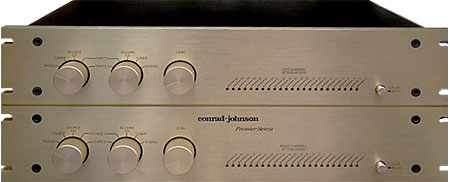
Whenever an audio high-ender thinks about tubes, he usually thinks about Audio Research. This is only natural, because Audio Research Corporation was almost single-handedly responsible for saving tubes from oblivion in the early '70s when everyone else switched to solid-state. But ARC was soon joined in its heroic endeavor by an upstart company called Conrad-Johnson, which entered the fray in 1977 with its PV-1 preamp, priced at an affordable (even then) $500.

Conrad-Johnson PV9 preamplifier

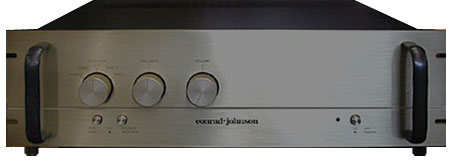
As I write, it is garage-sale season here again in Santa Fe, and a recent sign near my home advertised "Over 3000 LPs, good condition, low prices." To my surprise, the seller wasn't a yuppie enamored of his new CD player but a true collector discarding the duplicates and dogs from his collection. 30 minutes later, many LPs heavier—including a mint Flanders & Swan At the Drop of a Hat (footnote 1)—and not too many dollars lighter, I returned to a great night's listening courtesy of the black vinyl disc.

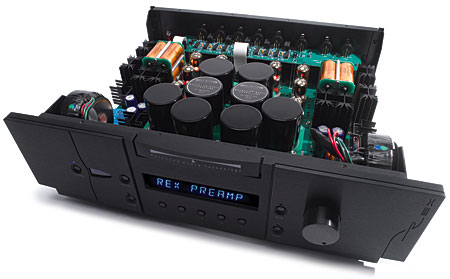
Balanced Audio Technology Rex line preamplifier

If any single link in the audio chain should be free of sonic personality, it's the preamplifier. Though a preamplifier's basic job description is "source selector with volume control," from hi-fi's earliest days preamps have been the designated dashboard: the more dials, switches, and lights, the better. All that control came at the cost of quiet, transparency, and tonal neutrality. Still, the quixotic quest for the mythical "straight wire with gain" continued to lead to minimalist designs, including impractical unbuffered "passive" preamps, in which cable length, thus capacitance, affected frequency response.

Woodside SC26 preamplifier

I had been sent a sample of the Woodside SC26 tube preamplifier during my June 1994 review of Woodside's MA50">http://www.stereophile.com/tubepoweramps/694wood">MA50 monoblock amplifier (Vol.17 No.6). Although I used a number of preamplifiers during that review, I was most impressed with the MA50s' spacious, three-dimensional soundstage when driven by the SC26. At the time, I had an impression that the SC26's sonics combined a midrange richness with a good dynamic range. Although I had to return the Woodside MA50s to the importer after I reviewed them, I continued listening to the SC26.

Conrad-Johnson Premier 7A preamplifier

Conrad-Johnson launched the all-tube Premier 7 in 1988 as an all-out sonic assault on the state of the preamplifier art. A great deal has happened since then. For starters, C-J has gotten a great deal of feedback from customers, dealers, and reviewers. None other than J">http://www.stereophile.com/interviews/66">J. Gordon Holt (Stereophile, November 1988, Vol.11 No.11) concluded that: "It appears that nothing which could possibly have improved its sound had been omitted....It is, in fact, about as close as any tubed preamp has come to being perfectly neutral in sound—in nearly all respects." In the now-defunct Sounds Like... (issue 3), Sam Burstein concluded that "It is, with certain reservations, absolutely delightful to one's musical senses." And, speaking of absolutes, even Harry Pearson gave the Premier 7 a rave in the first round of his preamplifier survey (TAS, issue 58). As icing on the cake, John Atkinson (Stereophile, Vol.12 No.8) concluded that the 7 had "the requisite degree of sonic magic to make it a Class A recommended preamplifier."

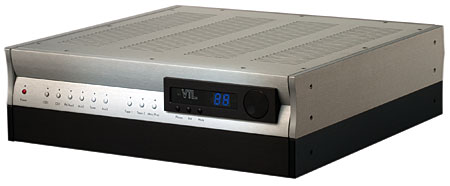
VTL TL-6.5 Signature line preamplifier

I've long admired Vacuum Tube Logic's line of amplifiers and preamplifiers. Owners Luke">http://www.stereophile.com/interviews/153">Luke Manley and his wife Bea">http://www.stereophile.com/interviews/607vtl">Bea Lam routinely appear at the Consumer Electronics and Home Entertainment shows with luxurious, microprocessor-controlled tube gear, soothing new music, good-sounding rooms, and a friendly, unhurried manner. Their show setups are dialed in so well that I often find myself taking refuge there, sitting and listening for hours with other Stereophile writers.

Audio Research Reference 3 line preamplifier

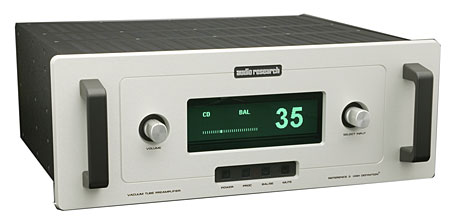
In any category of product or service, there is a gold standard—one company that epitomizes the best in its field of endeavor. Consider the Rolex watch, the Ferrari sports car, the Steinway piano, the Dunhill pipe. All of these artisanal manufacturers have spent decades, even centuries, earning their names' cachet with their histories of consistent excellence. While high-end audio boasts no names with a 60-year pedigree, such as Ferrari's—much less Steinway & Sons' +150 years—there is one firm whose storied past stretches back to the very emergence of the concept of high-end audio itself: Audio Research Corporation.

Cary Audio Design SLP 05 preamplifier

RCA's time-honored 6SN7 may be the coolest tube of all. The octal-based dual-triode has its own Wikipedia entry—something not even the 2A3 or 300B can boast—along with its own websitehttp://www.6SN7.com">website;. The 6SN7 is chunky, rugged, and handsome. Best of all, it's available, probably because people keep coming up with very good uses for it. In that sense, the 6SN7 is the Campbell's Cream of Mushroom Soup of the tube world.

Advertisement
Advertisement
Advertisement