Tonearm Reviews

Sort By:  Post Date TitlePublish Date

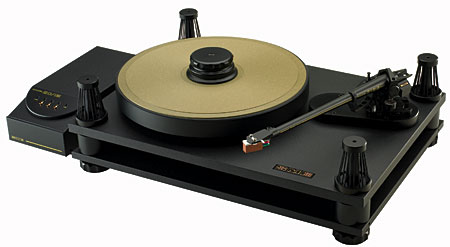
SME Model 20/12 turntable & 312S tonearm

Much has happened in the analog world since I reviewedhttp://www.stereophile.com/analogsourcereviews/796">reviewed; SME's flagship Model 30/2 turntable for the March 2003 Stereophile (footnote 1). Back then, spending $25,000 on a turntable (without tonearm) was an odd extravagance intended only for those seriously committed to the format, and who already owned large LP collections. Although new LPs were being pressed in growing numbers, the resurgence of vinyl was still spotty, and the long-term prognosis for the old medium remained in question.

Listening #67

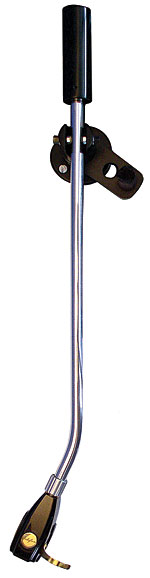
I can't help wondering: how did the mainstream audio press, cheered Dynaco and Marantz and McIntosh and Quad for switching to transistors a couple of generations ago, greet the first tube-revival products from Audio Research and the like? What was the reaction when moving-coil cartridge technology, considered all but dead by the early 1970s, became the perfectionist hi-fi norm just a few years later? And what would the same people make of the fact that a high-mass, transcription-length pickup arm—with interchangeable pickup heads, no less—is one of the most recommendable phono products of 2008? The mind boggles.

Rega P3-24, RB301, & Elys 2 turntable, tonearm, & phono cartridge

It's now been eight years since a Rega P3 turntable passed through my listening room. While the new P3-24 superficially resembles the P3 (and virtually every other Rega 'table), the company has made some significant changes, including upgrading to the high-quality, low-voltage (24V), electronically adjusted motor used in the more expensive P5, P7, and P9. As in those models, an electronic circuit trims the phase angle of the P3-24's motor coils, thus substantially reducing motor vibrations. In 1998, during a factory tour, a Rega engineer demonstrated the circuit's effectiveness to me. As he adjusted the circuit board's pot, vibrations from the motor dramatically decreased, until it was difficult to tell if the motor was spinning or not. Back then, this "hand-trimmed" motor technology was available only in the P9. The P3-24 uses a less sophisticated version of the same basic idea.

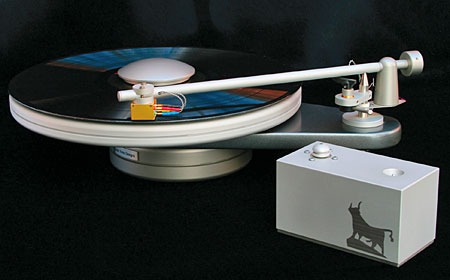
Simon Yorke Designs Series 9 turntable & tonearm

Simon Yorke is an artist, a machinist, an electronics wiz, and a political idealist. He's also an analog enthusiast who melds aesthetic and technical considerations into eye-catching, densely packed, compact record-playing devices that are ruggedly built and functionally elegant. His turntables' smooth, matte-gray, metallic finishes and efficient lines make them among the most visually pleasing ever made.

Linn Ekos SE tonearm, Keel LP12 subchassis, & Trampolin turntable base

Visit www.stereophile.com and look at the Vote">http://cgi.stereophile.com/cgi-bin/showvote.cgi?522">Vote Results for June 17, 2007: You'll see that when we asked our readers to name the one audio product that's spent the greatest amount of time in their systems, the most common answer by far was the Linn">http://www.stereophile.com/turntables/1103linn">Linn Sondek LP12 turntable (footnote 1). Little wonder that Scotland's most famous record player endures as an object of attention for various and sundry commercial tweaks.

Kuzma Stabi XL turntable & Air Line tonearm

Almost immediately on entering the analog marketplace in 1982, Franc Kuzma, a mechanical engineer based in Slovenia, then part of the former Yugoslavia, established a reputation for manufacturing finely engineered, high-performance products that sold at reasonable prices. Kuzma's early industrial designs, however, while serviceable, looked less than distinguished.

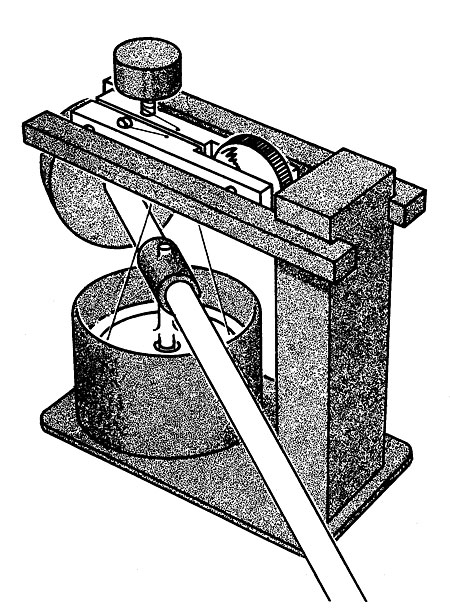
The Well-Tempered Arm

Remember Rube Goldberg? He was a cartoonist during the late 1920s to early 1950s who specialized in devising the most outlandish and ingenious devices ever conceived by man, before or since. A Rube Goldberg mousetrap, for example, would occupy an entire small room. In taking the bait, the mouse would tip a balance beam, dropping a steel ball into a gutter, down which the ball would roll to strike a paddle whose spin would wind up a string that hoisted a weight into the air until it reached a trigger at the top, which would then release the weight to drop onto the unsuspecting mouse. Splat!

Graham Engineering Phantom B-44 tonearm

The Graham">http://www.stereophile.com/tonearms/400">Graham Engineering 1.5 tonearm, originally introduced in 1990, was a thoughtfully executed design that logically addressed all of the basics of good tonearm performance—geometry, resonance control, rigidity, dynamic stability—with effective, sometimes ingenious ideas, while providing exceptional ease and flexibility of setup. Over time, designer Bob Graham came up with ways to significantly improve the 1.5's performance, including the replacement of its brass side weights with heavier ones of tungsten, an improved bearing with a more massive cap, various changes in internal wiring, a far more rigid and better-grounded mounting platform, and a new, sophisticated ceramic armwand. (The original wand had hardly been an afterthought: its heat-bonded, constrained-layer-damped design consisted of an inner tube of stainless steel and an outer tube of aluminum.) The arm's name changed from the 1.5 to the 1.5t (tungsten), then the 1.5t/c (ceramic), and on to the 2.0http://www.stereophile.com/tonearms/401">2.0;, 2.1, and 2.2http://www.stereophile.com/tonearms/401/index7.html">2.2;.

Wilson Benesch Full Circle turntable, ACT 0.5 tonearm, & Ply MC cartridge

"Hello, I'd like to apply for a Federal Grant? For what? Oh, to design and build a new, high-tech, very expensive turntable. What's that? It plays records. Yes, that kind of turntable. Of course they still make records. Why? How much time do you have? Oh, I forgot—you're a federal employee, you have all day! Well, I didn't mean to insult you. It was a joke....No, I'm serious about the turntable. You do? What kind of music? When are they from? RCA Record Club? Classical Music? 1950s and '60s? Yes. I'll give you $5 each. I know it's generous, but... How much money do I want for the grant? Coupla hundred thousand dollars. No, our turntables will never be used to play Marilyn Manson records—Marilyn doesn't do vinyl. It's in the mail? Thank you. I'll come get the LPs tonight."
Advertisement
Advertisement
Advertisement