Solid State Preamp Reviews

Sort By:  Post Date TitlePublish Date

Ayre KX-R line preamplifier

I can't think of a product that was as eagerly anticipated as was Ayre's KX-R preamplifier ($18,500). Following in the footsteps of Ayre's MX-R">http://www.stereophile.com/solidpoweramps/407ayre">MX-R monoblock amplifier, a Stereophile 2007">http://www.stereophile.com/features/1207poty/index9.html">2007 Product of the Year, and milled, like the MX-R, from a 75-lb billet of aluminum, the KX-R also shares with its monoblock stablemate the Ayre ethos of zero feedback and fully balanced operation. But what really caused the buzz was the declaration by Ayre founder and chief designer Charles">http://www.stereophile.com/interviews/610">Charles Hansen that the KX-R, with its use of a technology he calls Variable Gain Transconductance (VGT) to control the volume, would set new standards for signal/noise ratio.

MBL 6010 D preamplifier

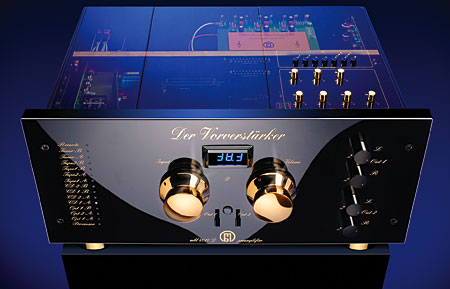
Don't be confused by the MBL 6010 D's oddly baroque, even retro looks. Behind all the glitz—the oversize, perfectly finished, black-lacquered faáade; the two big, solid brass knobs plated with 24-karat gold; the ornate lettering; and the incongruous digital volume display—resides a thoroughly modern, remote-controlled, unusually versatile, and well-thought-out solid-state preamplifier. Not that the 6010 is a new design. It's been around for a long time, and the current "D" iteration is at least five years old.

Hafler Iris preamplifier

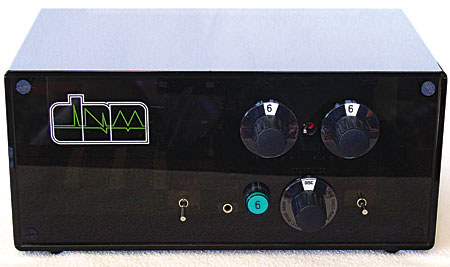
When David">http://www.stereophile.com/news/11661">David Hafler sold his Hafler and Acoustat companies to in-car audio manufacturer Rockford-Fosgate a year or so back, things went quiet for a while as the new owners made arrangements to transfer production of both brands to their Arizona facility and took stock of where their new acquisitions stood in the marketplace. Then, at the 1989 CES in Las Vegas, the company made a reasonably sized splash with the first in a new range of Hafler products intended to lift the brand out of the hobbyist-oriented identity it had, perhaps inadvertently, adopted in the last few years.

Linn LK1 preamplifier & LK280 power amplifier

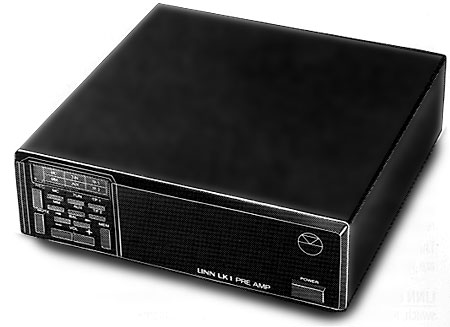
This review should have appeared more than a few months ago. When I reviewed Linn's">http://www.stereophile.com/phonocartridges/987linn">Linn's Troika cartridge back in the Fall of 1987, in Vol.10 No.6, Audiophile Systems also supplied me with a sample of the Linn LK1 preamplifier and the LK2 power amplifier, which I had intended to review in the due course of things. As it transpired, however, I was less than impressed with the LK2, finding, as did Alvin Gold back in Vol.9 No.2, that while it had a somewhat laid-back balance, it also suffered a pervasive "gray" coloration, which dried out recorded ambience and obscured fine detail.

Listening #63

I'm old enough to remember my family's first table radio that was made out of plastic. It was cream-colored, and it sat on the rearmost edge of our kitchen table: a less-than-timeless design in its own right, destined to be discarded at the end of one era and treasured again at the dawn of another, for more or less the same reason. But in 1958, a cream-colored plastic radio looked fresh, clean, and right, and its cheap wooden predecessor seemed dowdy and sad by comparison. That would all change in later years, of course. Then it would all change again.

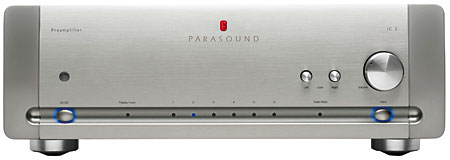
Parasound Halo JC 2 line preamplifier

My very first review of a preamplifier, for British magazine Hi-Fi News & Record Review in May 1984, was of the Audio Research SP-10. In my opening to that review, I wrote that, "more than any other component," a preamplifier "should approximate to the late Peter">http://www.stereophile.com/news/121503walker">Peter Walker's 'Straight Wire with Gain.'" By this I meant that a preamplifier should not be in the business of effecting dramatic changes, and in any case, dramatic changes are not the kind that prove to be of lasting value. However, I also wrote back then that what I became increasingly aware of while using the SP-10 "was the fact that 'neutrality' is a positive virtue rather than just an absence of aberration."

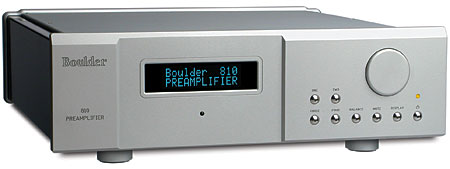
Boulder 810 line preamplifier & 860 power amplifier

Boulder Amplifiers, named after the Colorado town where the company has resided since its founding 23 years ago, makes some of the most elegant-looking solid-state amps around. Chassis are anodized, aircraft-grade aluminum with rounded edges, machined and finished in-house. The two models reviewed here, the 810 line preamplifier and the 860 power amplifier, each have a sleek, compact build—stacked atop each other, the two stand just over a foot high—owing to extremely efficient packing of the circuitry inside. These are the company's "entry-level" electronics, but there's nothing cheap about them—the preamp retails for $6900, the amp for $8500—and for all their economical size, they look like luxury goods as well.

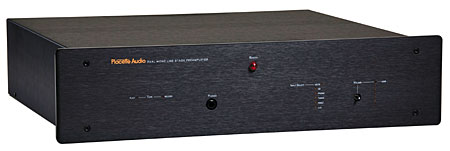
Placette Active Linestage preamplifier

A friend once described my audio ethos as "records, tubes, big amplifiers, and really big speakers"—I always picked warmth and musicality over antiseptic neutrality, even if the former came with a few extra colors in the tonal palette. Had I listed my criteria for an audio component, transparency wouldn't have been near the top, and might not have been listed at all.

Krell KRC-2 line preamplifier

There's always a certain amount of jockeying for position at the very top of the High End. Every few months, a new star burns brightly, getting all the attention. While the constant turnover at the cutting edge helps to define the state of the art, audiophiles should keep their eyes on the longer term. It's a company's track record—examined over a period of years—which defines its position in the market and the credibility of its products.

Advertisement
Advertisement
Advertisement