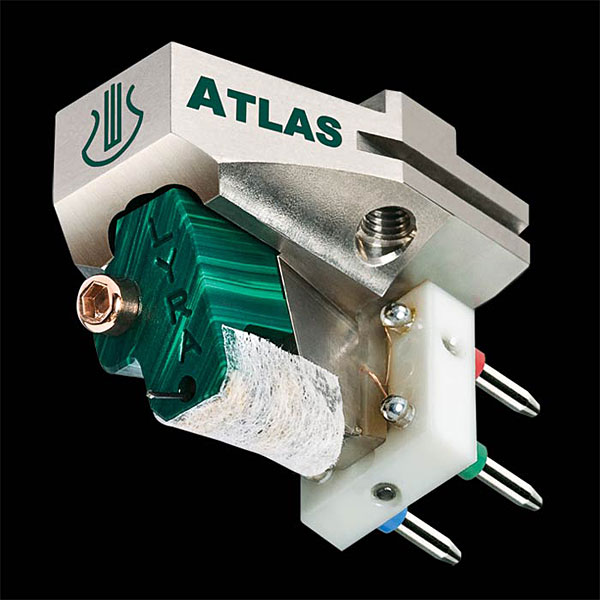
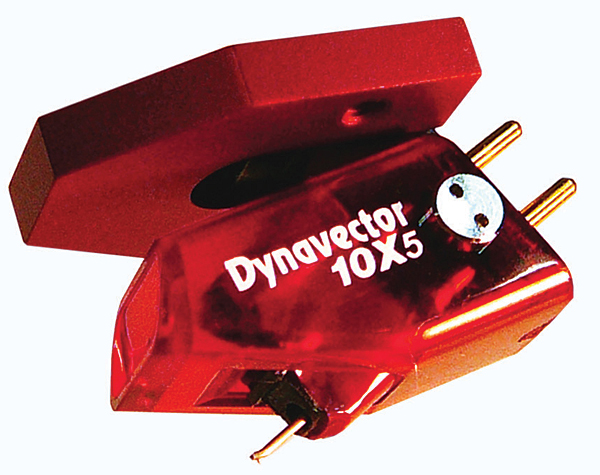
So, audiophiles, riddle me this: What does a DAC actually look like? I don't mean the box it hides inI mean the little doodad that does the actual converting from digital to analog. Is it bigger than a phono cartridge? Is it made of rain-forest wood, gemstone, or porcelain? Do people show it to their friends, who gawk in awe and envy? Does it have an exotic, geisha-sounding name like Jasmine Tiger, Koetsu Onyx, or Miyajima Takumi? When it breaks, does a watchmaker type rebuild it for a not-insubstantial fee? Do people hoard them in vaults, like NOS tubes? Can you trade a DAC for a rose-gold Rolex Oyster Bubbleback ca 1945?


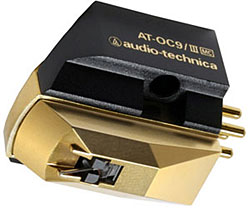 While the AT-OC9 bears the Audio-Technica logo, you won't find a sample of this moving-coil cartridge at your friendly Audio-Technica dealership. The US distributor of Audio-Technica products has apparently decided that their market does not include high-end cartridges. A quick perusal of the latest Audio directory issue (October 1988) lists the most expensive AT cartridge at $295, with no moving-coils in sight. When I first heard of the AT-OC9, the only reasonably accessible source, short of Japan, was Audio-Technica in the UK. A quick phone call and follow-up letter resulted in a review sample. Since that time, Music Hall in the US importers of the Epos loudspeakers, among other items) has begun importing the AT-OC9 (along with the less-expensive AT-F5). Mail-order company Lyle Cartridges also stock it, I believe.


 Koetsu. Kiseki. Keebler. Products from all of these firms are shrouded in at least a bit of mystery. Do I believe that Koetsu cartridges are hand-built by an octogenarian samurai swordsmith, or that Kisekis are imported from the planet Vulcan, or that Keebler's cookies are baked by elves? Not really. But it does help to liven up the domestic audio scene.
"Look, sonsee what Scottie just beamed down."
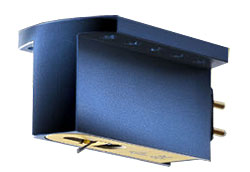
"Gee, Dad, it's big and blue with a gold spot on the front, and it kind of looks like a cartridge."
"Nice guess, son. No ordinary cartridge, this one. Let me tell you about the Vulcan analog freak in Hong Kong..."
Koetsu. Kiseki. Keebler. Products from all of these firms are shrouded in at least a bit of mystery. Do I believe that Koetsu cartridges are hand-built by an octogenarian samurai swordsmith, or that Kisekis are imported from the planet Vulcan, or that Keebler's cookies are baked by elves? Not really. But it does help to liven up the domestic audio scene.
"Look, sonsee what Scottie just beamed down."
"Gee, Dad, it's big and blue with a gold spot on the front, and it kind of looks like a cartridge."
"Nice guess, son. No ordinary cartridge, this one. Let me tell you about the Vulcan analog freak in Hong Kong..."