Phono Cartridge Reviews

Sort By:  Post Date TitlePublish Date

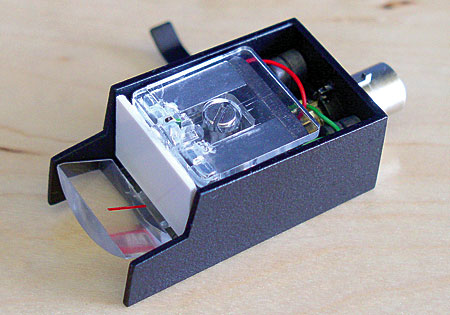
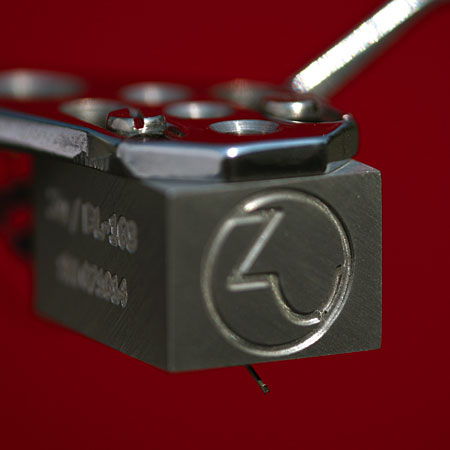
Zu Audio DL-103 MC phono cartridge

In 1962, when tennis rackets were made of wood, newspeople were known for challenging the government, and the off-Broadway musical The Fantasticks was in its second year (the show closed in 2002), Nippon Columbia's Denki Onkyo (or Den-On) division introduced to the professional audio world a brand-new moving-coil phono cartridge. Developed in cooperation with the Japan Broadcasting Corporation, the DL-103 was one of the first attempts at making a truly wide-bandwidth stereo cartridge that nonetheless could withstand the rigors of back-cueing. The DL-103 was a nearly instant success with broadcasters, and its popularity spilled over into the world of domestic audio.

AudioQuest 7000 Fe5 MC phono cartridge

You know what's the first thing they teach you in dental school? Don't ever say "Oops!" Even if you stick one of those hooked teeth scrapers through the patient's cheek, you don't say "Oops!" "Don't move!"? Yes. "Oops!"? No. That's the big day-one lesson—and given the cost of medical malpractice insurance today, a damn good one.

Allaerts MC2 Finish Gold phono cartridge

These are great times for analog, and I'm happy to have played a small part in the revival, but recently the demand for some products has outstripped supply; getting review samples has been next to impossible. I've requested an Audio Research PH7 phono preamplifier for literally years now, but ARC can't build them fast enough, so they don't need a review. The more they sell, the greater the buzz, and the greater the buzz, the more e-mails I get from readers asking for a review. It's not nice to not be needed.

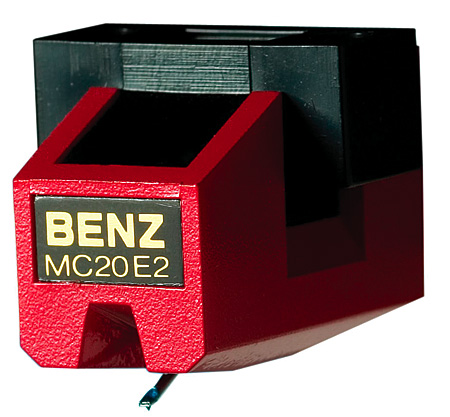
Benz-Micro MC20E2-L MC phono cartridge

The ceiling remains, but the floor has changed: Benz-Micro continues to offer a selection of rather expensive phono cartridges, including their well-established LP Ebony ($4700) and Ruby 3 ($3000) models. But in recent years, my attention has been drawn by the succession of budget Benzes: first, the Gliders ($795), then the ACEs ($550), and now the MC20E2-L ($199).

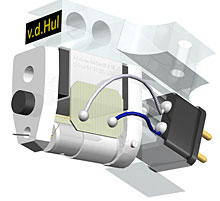
van den Hul Grasshopper IV phono cartridge

If you think I burned out cartridge-wise at the end of my and JE's It's A Mad Mad Mad Mad World cartridge survey at the beginning of the year (Vol.18 Nos.1 & 2), you're wrong. If you think I ought to burn out and give it a rest, you'll be disappointed. If you think analog doesn't matter anymore, you have my semi-sincere condolences. But if you think, as I do, that analog is enjoying a resurgence of epic proportions (twilight or no), and that LP playback has reached a new zenith of musical wonder, then hang on—here I go again!

Koetsu Black MC phono cartridge

Every two or three years my family and I travel to Disney World in Orlando, Florida—one of those places I used to think I'd hate, but which I always enjoy in spite of myself. No such trip would be complete without visiting the Mitsukoshi department store at Epcot Center, which represents the pinnacle of Japanese consumer culture. At the Epcot Mitsukoshi store—the 430-year-old company's only US location—one can buy the finest of everything, including the rarest and most expensive writing papers and inks, the most exquisitely crafted pottery, and the loveliest freshwater pearls on Earth. Young shoppers are accommodated with the latest toys, trends, and technology—but there's nothing frantic or cheap about the manner in which they're offered. The watchword at Mitsukoshi is quality, and the presentation borders on being artistic.

van den Hul Black Beauty MC phono cartridge

A.J. van den Hul calls the Black Beauty a phono cartridge "just for friends." In a way, this Black Beauty was made specially for me—it's been tweaked for an undamped linear-tracking arm. Says so right here on the box: "Forsell Version." But before you explode, know that Mr. van den Hul will be pleased to do the same for you. He'll adjust the suspension of any Black Beauty– or Grasshopper-series cartridge for your arm and 'table. Or, should you specify, for "the preamp and load impedance, a particular brand of records to be played, the type of music generally played (jazz being more dynamic and classical more spacious and detailed), and other personal/sound preferences."

Lyra Skala moving-coil phono cartridge

Back in 2000, when Lyra introduced the Helikon moving-coil cartridge, which replaced the then six-year-old Clavis D.C., the company inexplicably retained the Clavis D.C.'s retail price of $2000. This was inexplicable because the Helikon's revolutionary design was new from the ground up, and because audiophiles—like most, if not all, consumers—perceive price to be a reflection of quality and performance.

Advertisement
Advertisement
Advertisement