Phono Cartridge Reviews

Sort By:  Post Date TitlePublish Date

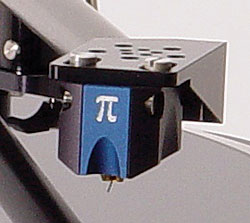
Brinkmann Pi phono cartridge

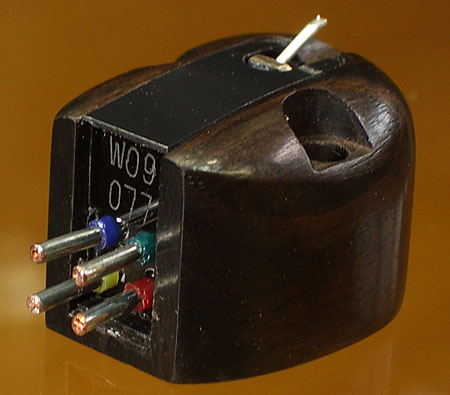
The Brinkmann Pi cartridge's Benz-Micro heritage was obvious from the get-go. The motor is built to Brinkmann's specifications by Benz-Micro and includes a Micro-Ridge stylus. The cantilever material is not specified. The Pi's output is approximately 0.25mV, and its compliance is moderate at 15µm/mN. Recommended are a tracking force of 1.8–2gm, a VTA of 23°, and a resistive load of 600 ohms.

Helmut Brinkmann says he tweaked the Pi's design for a year and a half before he achieved the results he desired, including making the tiny set screws out of various materials. The Pi, with a body of machined aluminum designed to control the dissipation of resonant energy, weighs a hefty 14gm. Brinkmann supplies aluminum screws and titanium washers, which, he claims, in combination with special damping between the cartridge body and headshell, have been "sonically tuned to create a unique musical instrument."

Soundsmith Strain Gauge SG-200 phono cartridge system

Strain-gauge phono cartridges are rarely made and seldom heard; for most vinyl fans, they are more myth than fact. Panasonic once made one, as did Sao Win, but those were decades ago. I've heard about those two models for years but have never seen, much less heard one.

As if he's not got enough to do building his extensive lines of moving-iron cartridges, preamplifiers, amplifiers, and speakers, Soundsmith's Peter Ledermann also makes a full line of strain-gauge cartridge systems available with a choice of six user-replaceable stylus profiles. I believe the Soundsmith is the only strain-gauge cartridge currently made anywhere in the world. Ledermann says it takes him a full day to build one.

Ortofon MC-2000 MC phono cartridge

Although the idea of a $1000 moving-coil cartridge no longer shocks audiophiles, it is still not exactly what I'd call "Mainstream Hi-Fi." Audio magazine's 1984 Equipment Directory—the most complete such compendium published in the US—lists only 10 models in this price range, not counting the Kiseki Lapis Lazuli at a whopping three-and-a-half grand! I have not tested most of these, nor have I tried any of the current models from the Japanese Koetsu firm, which was first with the gall to put a $1000 price tag on a cartridge. But I have tested a couple of one-granders during the past few years, and was sufficiently unimpressed to be hesitant about testing any more samples of what were beginning to look like nothing more than monumental ripoffs. So when Ortofon sent us the MC-2000, I was naturally less than enthusiastic about trying it.

Grado Prestige Gold1 phono cartridge

In the early to mid-1980s, I read every high-end hi-fi magazine I could get my hands on. Among the consequences was my discovery that the Grado Signature Seven phono cartridge—which was better and cheaper than the Signatures One through Six—was the cartridge that God wanted me to have. So I cut back on all manner of luxuries, saved every dollar I could save, and a few months later brought a walletful of cash to Harvey Sound in midtown Manhattan, where an unpleasant man with a bad comb-over handed me a little pill bottle of a plastic tube.

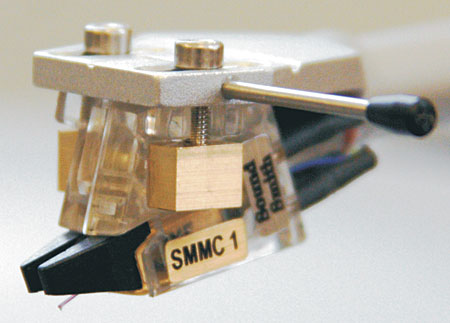
Soundsmith SMMC1 moving-iron phono cartridge

The audio industry may have lost a legend and a prolific innovator in Henry">http://www.stereophile.com/news/11260">Henry Kloss a few years back, but it still has another affable, creative eccentric in Peter">http://blog.stereophile.com/ces2008/011008smith/">Peter Ledermann. In the mid-1970s, Ledermann was director of engineering at Bozakhttp://www.stereophile.com/historical/1005bozak">Bozak;, where, with Rudy Bozak, he helped develop a miniature bookshelf speaker and a miniature powered subwoofer. Before that, Ledermann was a design engineer at RAM Audio Systems, working with Richard Majestic on the designs of everything from high-power, minimal-feedback power amplifiers and preamplifiers to phono cartridge systems. He was also an award-winning senior research engineer at IBM, and the primary inventor of 11 IBM patents.

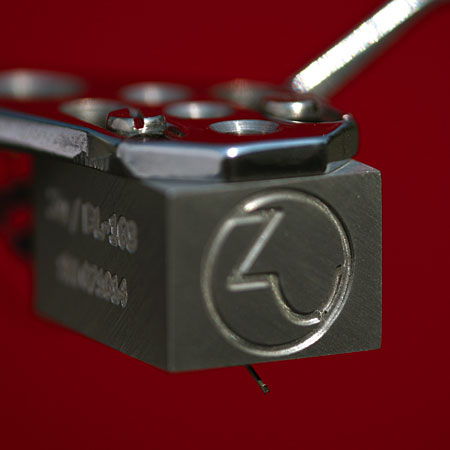
Zu Audio DL-103 MC phono cartridge

In 1962, when tennis rackets were made of wood, newspeople were known for challenging the government, and the off-Broadway musical The Fantasticks was in its second year (the show closed in 2002), Nippon Columbia's Denki Onkyo (or Den-On) division introduced to the professional audio world a brand-new moving-coil phono cartridge. Developed in cooperation with the Japan Broadcasting Corporation, the DL-103 was one of the first attempts at making a truly wide-bandwidth stereo cartridge that nonetheless could withstand the rigors of back-cueing. The DL-103 was a nearly instant success with broadcasters, and its popularity spilled over into the world of domestic audio.

AudioQuest 7000 Fe5 MC phono cartridge

You know what's the first thing they teach you in dental school? Don't ever say "Oops!" Even if you stick one of those hooked teeth scrapers through the patient's cheek, you don't say "Oops!" "Don't move!"? Yes. "Oops!"? No. That's the big day-one lesson—and given the cost of medical malpractice insurance today, a damn good one.

Allaerts MC2 Finish Gold phono cartridge

These are great times for analog, and I'm happy to have played a small part in the revival, but recently the demand for some products has outstripped supply; getting review samples has been next to impossible. I've requested an Audio Research PH7 phono preamplifier for literally years now, but ARC can't build them fast enough, so they don't need a review. The more they sell, the greater the buzz, and the greater the buzz, the more e-mails I get from readers asking for a review. It's not nice to not be needed.

Advertisement
Advertisement
Advertisement