Interviews

Sort By:  Post Date TitlePublish Date

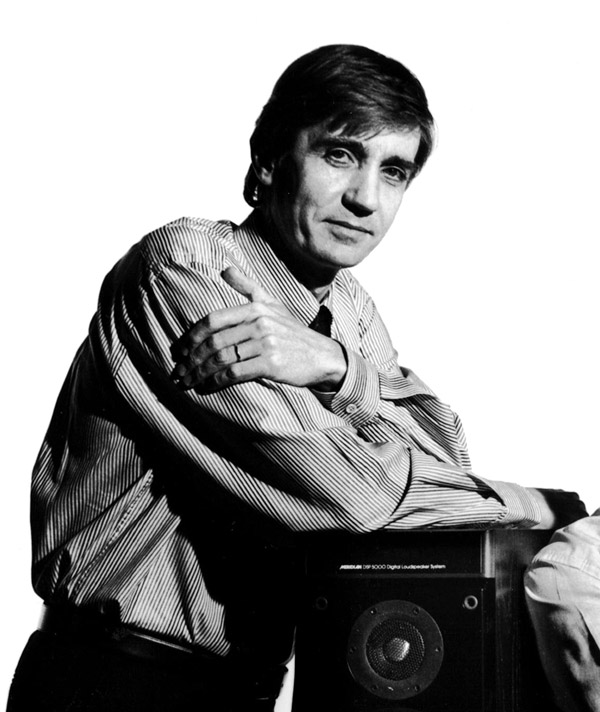
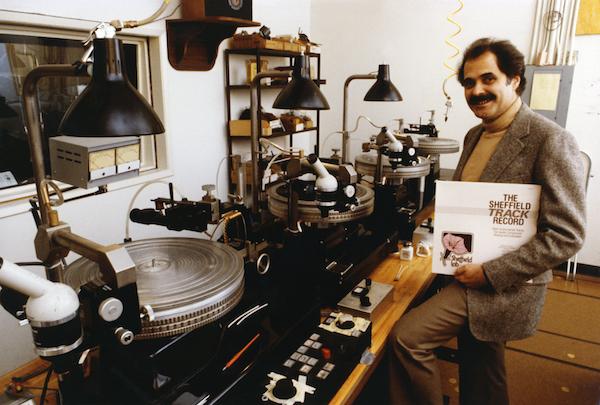
Doug Sax: From Direct-Cut to Compact Disc

As reported by Michael Fremer on AnalogPlanet.com, legendary mastering engineer and co-founder of Sheffield Lab, Doug Sax, passed away on April 2. Doug had been suffering from cancer and would have been 79 on April 26.

Coincidentally, we had just posted J. Gordon Holt's October 1982 review of the Sheffield Track Record, which Doug had cut direct-to-disc. This reminded me that Robert Harley had interviewed Doug in the October 1989 issue of Stereophile; rereading that interview reminded me that in September 1984, I had published an interview with Doug in the magazine Hi-Fi News, which I edited at that time.

So, in tribute to Doug, here is my 1984 interview, reprinted with the kind permission of Hi-Fi News editor Paul Miller.—John Atkinson

Keith O. Johnson: Reference Recordings

Keith Johnson is the man responsible for the records issued by Reference Recordings, from Professor Johnson's Astounding Sound Show through Tafelmusik—not to mention upcoming releases of Your Friendly Neighborhood Big Band and Respighi's Church Windows. As is frequently the case, Johnson's astounding recordings result from his intimate (molecular-level) knowledge of the process with which he deals and his ingenious adaptations to squeeze the most out of available (and not so available) technology. He is also one of the few critics of digital recording who has actually used a digital recorder, who has run tests to specifically identify digital's problems, and who would welcome a digital format that works as perfectly as the claims would have us believe the current system works.—Larry Archibald

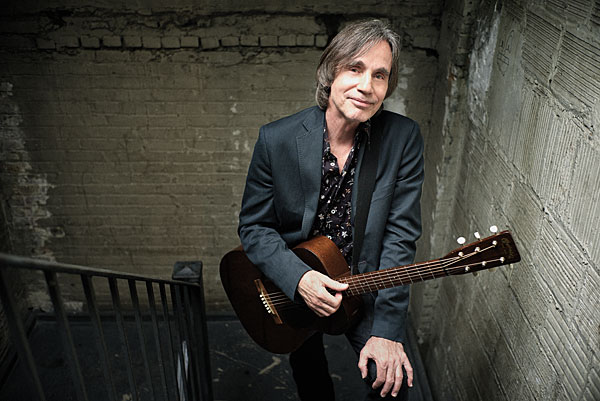
Jackson Browne: Enter The Natural

For famously civilized and jaded New York City, the crowd at the resplendent Beacon Theatre is uncommonly involved. Loud requests, many in tangled liquor dialects, boom from the balcony:

"'REDNECK FRIEND'!"

Onstage, Jackson Browne smiles and shakes his head.

"'COCAINE'!"

"I could do that, but it would have to be the rehab version." [crowd roars]

"'FOR A DANCER'!"

Oh, wait—I'm yelling that.

Aerial Acoustics' Michael Kelly Reveals Some Trade Secrets

Aerial Acoustics, the speaker firm that Michael Kelly conceived a quarter-century ago with David Marshall, is headquartered north of Boston, not far from the Merrimack River Valley region that once produced textiles and shoes by the trainload. Kelly, though, is quick to equate Aerial with far more distant firms. His industrial models are in Germany, where he lived for a while when his father, a US Army officer, was based there, and where he later spent time as a vice-president of a/d/s/, which had been founded by a German-born and -educated scientist, Godehard Günther, who died last October. They're small-to-midsize specialty firms that together constitute a category called Mittelstanden, and they're as accomplished as they are narrowly focused. They're artisan enterprises, and it's only natural that someone as dedicated as Kelly is to building state-of-the-art loudspeakers would embrace them as examples.

Norman Chesky of HDtracks and Chesky Records

Both Chesky Records and HDtracks have a pair of co-founding partners, but the music-minded press has perpetually focused on one of them, pianist and composer David Chesky, while ignoring his younger brother, Norman. Mainstream reporters and photographers did converge on Norman Chesky once, when they spotted him rolling a bulky, rough-hewn, wooden artifact from the 2009 auction at which Bernard Madoff's personal effects were sold for the benefit of bilked investors. Leading newspapers ran photos of Norman with the tree-trunk table he'd bought after happening on the sale, and the New York Times identified him as "a music executive from Manhattan." As the exchange that follows shows, that description was a glaring oversimplification.

Regina Carter: A Family Affair

Making a recording is always a personal journey—everyone has a story to tell. Jazz violinist Regina Carter's latest, Southern Comfort, is an eloquent musical expression of Carter tracing the roots of her paternal lineage back five generations. For the project's sound engineer, Joe Ferla, it's the final project of a engineering career, and the beginning point of his new life as a practicing musician. The entwining of these journeys gives the album's music and sound a rare honesty.

Guy Clark: For the Sake of the Song

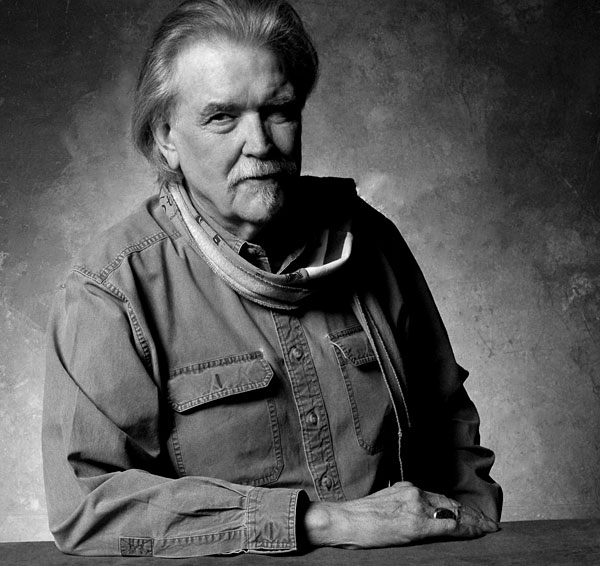
As songwriters go, Guy Clark has been touched by the muse more than most. Unfortunately, in recent years he's also been visited by illness and heartache. In June 2012, his wife of 40 years, Susanna Clark, who was both a songwriter ("Easy from Now On") and an artist (the cover of Willie Nelson's Stardust), died in Nashville. In the past several years Clark, 72, has battled lymphoma, had his knees replaced, and undergone an arterial replacement in one leg. He was being treated for skin cancer when I visited his home, south of Nashville, in October 2013.

Meet Mat Weisfeld, President of VPI Industries

Earlier this month, our all-analog coverage counterpart AnalogPlanet announced the release of the Nomad, a brand new entry-level turntable from American hi-fi manufacturer VPI Industries. For $995, The VPI Industries Nomad turntable includes a built-in phono preamplifier, unbalanced output, a set of Grado Labs iGrado around-the-neck headphones, headphone output, and an Ortofon 2M Red cartridge. This instant listening package was the brainchild of Mat Weisfeld, son of company founder Harry Weisfeld. Mat Weisfeld is now the President of VPI Industries. I had the opportunity to visit the factory and ask Weisfeld a few questions just before the official announcement of the Nomad.

Audio Beginnings

My e-mailbox fills up with press releases announcing new products and new companies, and that always makes me wonder: Where does all this stuff come from?

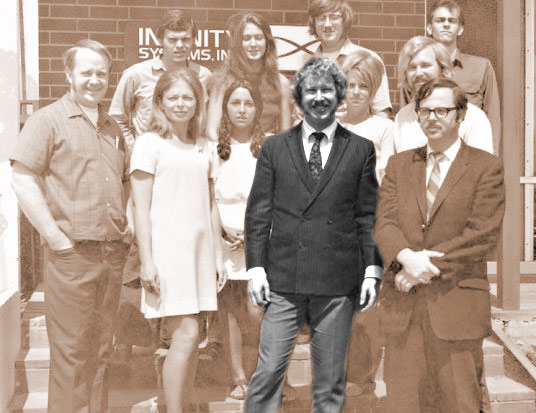
I mean, I have lots of ideas—I feel like Butch Cassidy: "I have vision, and the rest of the world wears bifocals." But there's a huge gap between having a good idea and starting a company that successfully gets that idea out in front of the public. And, I suspect, there's an even greater gulf between getting a product out there and actually making a living at it.

Advertisement
Advertisement
Advertisement