Floor Loudspeaker Reviews

Sort By:  Post Date TitlePublish Date

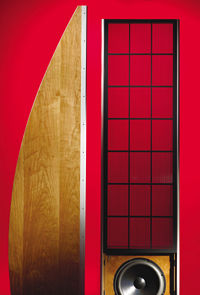
Innersound Kaya Reference loudspeaker

New experiences are some of the most pleasurable parts of being an audio reviewer. Despite being involved with the High End for longer than I care to think about, I had never had the experience of owning, living with, or reviewing a pair of electrostatic speakers, be they full-range or hybrid. I'd heard various Quads plenty of times at shows and in the homes of audio buddies, but in my own listening cave? Never.

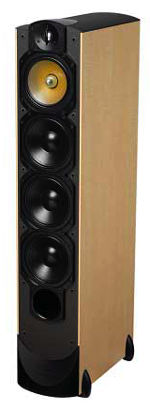
Paradigm Reference Studio/60 v.3 loudspeaker

I am biased in favor of Paradigm loudspeakers. I've used them for 10 years; they offer good sound and good value, properties they share with a number of other Canadian makes who have taken advantage of Canada's National Research Council facilities in Ottawa. In fact, the first components I bought specifically for what is now my multichannel system were Paradigm Esprit/BP speakers, which had impressed me at a Stereophile show. When I took the step into multichannel and found that there wasn't a matching center-channel speaker for the Esprits, I replaced them with Paradigm's Reference Studio/60 v.2s. But while the smaller Reference">http://www.stereophile.com/loudspeakerreviews/628">Reference Studio/20, and the larger Studio/100http://www.stereophile.com/loudspeakerreviews/252">Studio/100; have both been reviewed in Stereophile, the Studio/60 had not. The release of the v.2's successor, the Reference Studio/60 v.3 ($1699/pair), was an opportunity to fill that gap.

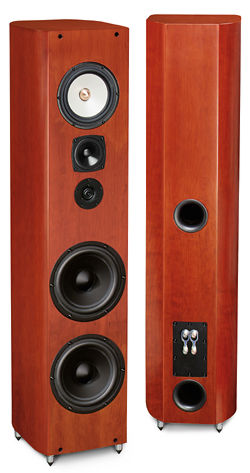
Bohlender-Graebener Radia 520i loudspeaker

Loudspeaker cabinet design has been strongly influenced by home theater. Large floorstanding cabinets, required for reproduction of bass frequencies, are being replaced by tall, graceful towers with small footprints. While these slim speakers fit more easily into home décor and living spaces, to fill out their bass response they depend on being used with the subwoofers that are standard in multichannel systems.

Krell Resolution 1 loudspeaker

Sometimes you have to make peace with a loudspeaker. You have to accept it on its own terms rather than ask it to bend to your sonic wishes, or to be something it's not. This is especially true when you're auditioning a seemingly endless succession of them, as I have this year. Like beauty-pageant contestants parading across the stage, all different-looking yet all enticing in one way or another, each speaker I've listened to of late has sounded different from the rest, and each has had a unique combination of strengths and weaknesses—yet each has been sufficiently "in the pocket" to paint a credible musical picture. Nonetheless, some required more bending on my part than did others, in order for me to believe the musical portraits they were attempting to create.

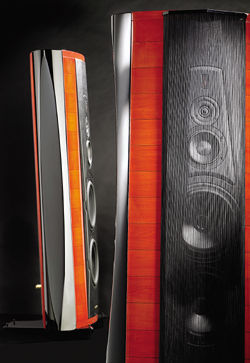
mbl 101E Radialstrahler loudspeaker

Back in the late 1980s, when I was writing for The Abso!ute Sound and couldn't afford any of the audio gear I was reviewing, my system consisted of an Oracle turntable with Magnepan unipivot arm, a pair of Spica TC-50 loudspeakers, and a heavily modified Hafler DH-200 power amp and DH-101 preamp. It was a fun system that imaged like hell, but my fondest audio memories of that time were of visiting fellow TAS reviewer Dr. Michael Gindi, who lived on Manhattan's West End Avenue, and listening to his mbl speakers. (With his shrink's paycheck, he could afford them.)

ProAc Response 4 loudspeaker

Reviewing audio equipment has always been a blast. With each passing month, some potentially wonderful new piece of audio gear finds its way into my system. But as an audiophile, I don't want to be constantly changing the equipment in my system—I want to put together the best setup I can and spend my time optimizing its performance. In spite of the revolving equipment door, I try to listen to the majority of music on my own equipment.

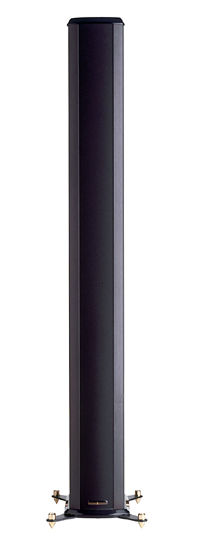
Rockport Technologies Merak II loudspeaker & Sheritan II subwoofer

No one has ever accused Rockport Technologies' Andy Payor of under-engineering a product, and this set of gleaming black beauties is no exception. The system is available in two configurations: as the two-way Merak II for $19,500/pair, including sturdy custom cradle-stands with integrated crossover; and as the Merak II/Sheritan II, a three-way, two-box floorstander that, to afford them at $29,500, will reduce some to living in the speakers' shipping crates. You could do worse for housing than checking into the Sheritan Rockport: The wooden crates are almost exquisitely finished.

Spendor S5e loudspeaker

I'm never more conservative than when the subject turns to home audio. And at the end of the day, I want little more than to preserve the hobby's finest institutions: Alnico magnets. Parchment cones. Mono. Sonata form. Ballads that actually tell stories. Give me tubes. Give me vinyl. Give me thin-walled hardwood cabinets, obsolete tweeters, and handmade polypropylene woofers. Give me the Spendor BC1.

Gershman Acoustics Opera Sauvage loudspeaker

At last January's Consumer Electronics Show, one of the more musically satisfying rooms I visited in Las Vegas' Alexis Park Hotel was hosted by Canadian magazine Inner Ear Report. I had visited the room ostensibly to take a look at the Audiophile APS AC regeneration system, but I also wanted to give a listen to the Gershman Acoustics Opera Sauvage speakers that I had agreed to review for Stereophile—not just the speakers in the abstract, but the very samples that, after CES, were going to make the trek to my Brooklyn listening room.

Advertisement
Advertisement
Advertisement