Floor Loudspeaker Reviews

Sort By:  Post Date TitlePublish Date

Listening to the Wilson WAMM Master Chronosonic

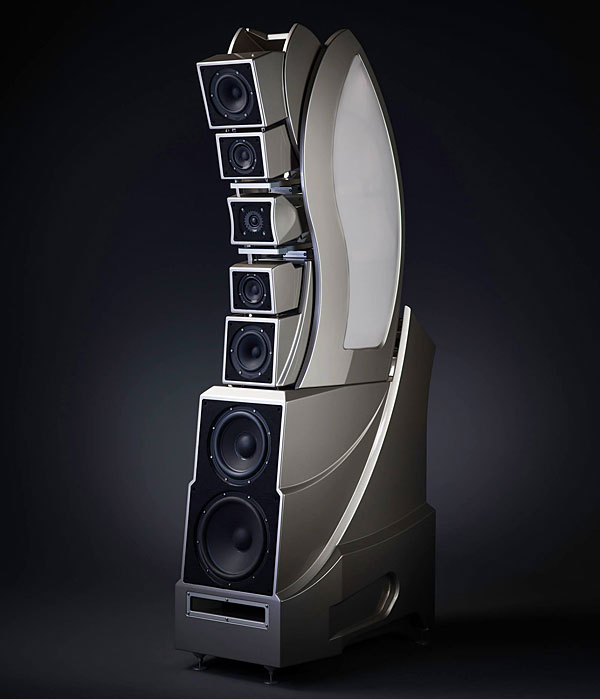
Earlier this year, I had the opportunity to spend a couple of afternoons listening to a system built around the late David Wilson's magnum opus, the Wilson Audio WAMM Master Chronosonic loudspeaker ($685,000/pair), which Jason Victor Serinus reported on in December 2016. In addition to the joy of simply listening to music on such exotic speakers, the experience provided insight into just how well the Master Chronosonics would work in a relatively normal-sized listening room—in this case, one measuring 21.5 feet long by a little over 18 feet wide, with a ceiling height of a little over 9.5 feet: not small in an absolute sense, but a lot smaller than the sort of space usually associated with speakers this large.

Wilson Audio Specialties Yvette loudspeaker

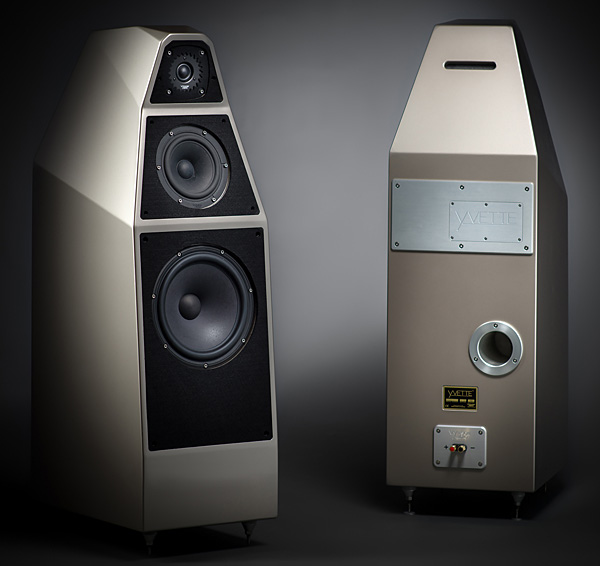
Wilson Audio Specialties considers the Yvette ($25,500/pair) to be the replacement model for the Sophia Series 3. I would argue that the Yvette is an entirely different animal. There are obvious similarities between the Yvette and Sophia. Each is a floorstanding, three-driver, three-way design. Each comprises a single box with a separate internal chamber for each driver. The Sophia's woofer and midrange chambers are ported; the Yvette's are respectively ported and vented. The two models are about the same size and, from the back, look a lot alike.

Emotiva Audio Airmotiv T2 loudspeaker

Visit any consumer audio show these days and you'll see rooms full of systems costing from six to seven figures. Manufacturers like to put their best foot forward, and demoing systems with loudspeakers designed to sell for $50,000/pair and up (often up) seems an obvious way to go.

It's also common for an audio company to launch its flagship models first, and only later release more affordable products, for a wider range of buyers. The hope is that the promotional shine of the dream products will be reflected onto the budget models.

Linaeum Model 10 & Center-Channel loudspeakers

666linneumIt's been a long time since we've seen a really new tweeter design. Only five basic types have ever been developed: cones, domes, panels, ribbons, and ionic plasmas. And the most recent of these—the long-defunct DuKane "blue-glow" Ionovac—was introduced 40 years ago. Since then, tweeter development has been more evolutionary than revolutionary, a series of refinements that has made them more efficient, more reliable, and smoother and more extended in response.
Magnepan MG2.6/R loudspeaker

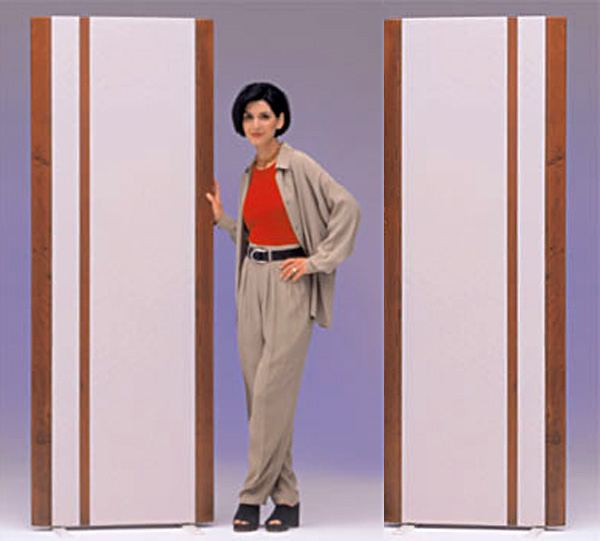
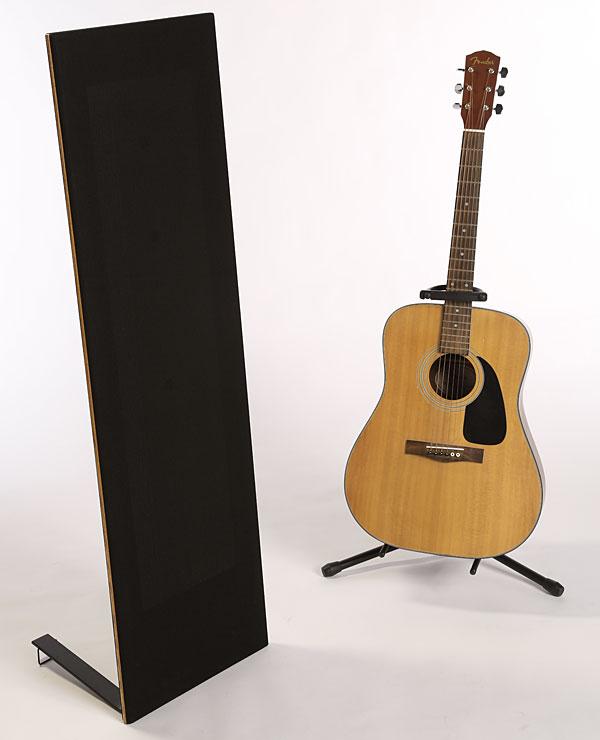
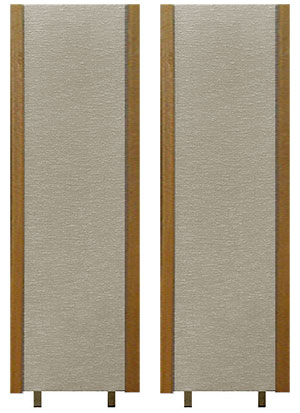
91maggie26rAsk anyone in the street what they think of when they hear the word "loudspeaker" and odds are they'll describe a wooden box with moving-coil drivers sitting in its front. But ask a Stereophile reader and it's quite possible that he or she'll describe a large, flat panel reminiscent of a room divider: in our 1989 reader survey, the most widely represented brand of loudspeaker was Magnepan, with a significant lead over Infinity and Vandersteen, the second and third most common speaker brands. This represents considerable commercial success in a generally conservative marketplace for a company whose products are so different from the norm.
Spendor A7 loudspeaker

As Stereophile's lone New York City bachelor, I sometimes search for amore on Internet dating sites. One such encounter led me to Park Slope, Brooklyn, where I met a woman who, I soon learned, was at the top of the food chain of Manhattan's gold-encrusted arts community.

The single child of an upper-Westchester family, Jane So (not her real name) assists her employer in curating fine art for the city's premier galleries and museums. Her job also includes gifting her employer's millions to charitable organizations and the like. But in her off hours, when the boss isn't watching, Jane enjoys a bit of kink. As she told me over dinner, "Ken, I'm not looking for anything serious. I have several men who visit me during the week."

It dawned on me: I had stumbled into New York's subterranean sex world.

Q Acoustics Concept 500 loudspeaker

Q Acoustics was founded in the UK in 2006, but has appeared on the radar of US buyers only in the last few years. Until recently, Q has aimed its efforts at the budget sector, earning enthusiastic reviews and commercial success.

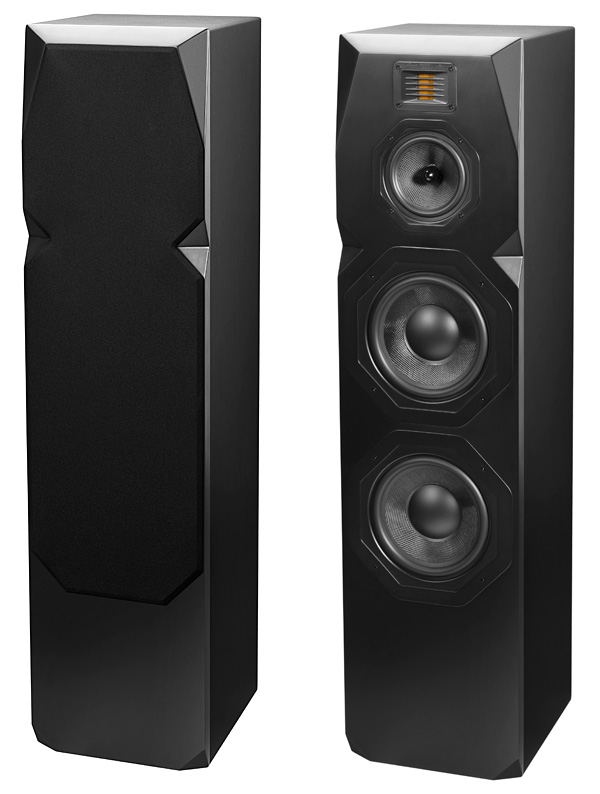
But during that time the company also been quietly working on a product considerably more upscale, though still affordable in a marketplace now glutted with products at if-you-have-to-ask prices. The result is the Concept 500 ($5999.99/pair), first seen in the UK in 2017 and recently made available here. But you won't find it at your local audio shop (if you still have one); in the US it's currently sold only online, through Q Acoustics' US website, with a 30-day, money-back guarantee that includes shipping costs—both ways.

DeVore Fidelity Gibbon X loudspeaker

In 2008, a pair of DeVore Fidelity's Gibbon Nine loudspeakers arrived at my home for a Follow-Up review. Within weeks, I wrote a check for them. That put me in good company: Several other reviewers who reviewed the Nines also bought their review pairs.

Ten years later, the Gibbon Nines are still my main speakers. That's the longest I've ever kept a pair of speakers in my main system, not counting the Polk Audio 7Bs I bought in 1980, when I was 16.

Revel Performa F228Be loudspeaker

I had a moment of revelation in 2000, when I first set up a pair of Revel's original Ultima Studio loudspeakers in my living room. It wasn't just my awareness that Revel's next-to-top-of-the-line loudspeaker was outstandingly good—it seemed to perfectly match my space and my ears. From the first day, I knew these would be keepers and I purchased the review samples.

Revel's Ultima Studio2 arrived in 2008, and though it performed even better than the original, the impression it made on me wasn't quite revelatory, and my praise was somewhat restrained—something for which Fred Kaplan justly chided me in his enthusiastic Follow-Up review in December 2009. To this day, the Ultima Studio2 and Revel's top model, the Salon2, remain Revel's standard bearers. Meanwhile, I wonder when there will be a Studio3.

Elac Adante AF-61 loudspeaker

German manufacturer Elac had a significant North American presence in the 1960s and '70s, primarily with its Miracord automatic turntables. While it eventually disappeared from the US market, Elac never ceased to be a player in Europe, where it eventually shifted its primary focus from turntables to loudspeakers.

When Elac decided to reenter the US market a few years ago, its success was hardly assured. Faced with hundreds of brand names and thousands of models fighting for attention, it hired veteran speaker guru Andrew Jones to improve the odds. In his previous work, first for KEF and then for TAD and Pioneer, Jones had built a solid reputation on designing well-received, cost-no-object speakers as well as high-value budget designs.

Advertisement
Advertisement
Advertisement