Floor Loudspeaker Reviews

Sort By:  Post Date TitlePublish Date

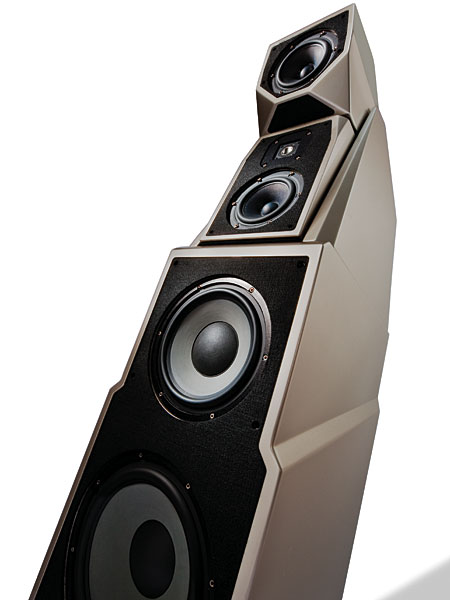
Wilson Audio Specialties MAXX Series 3 loudspeaker

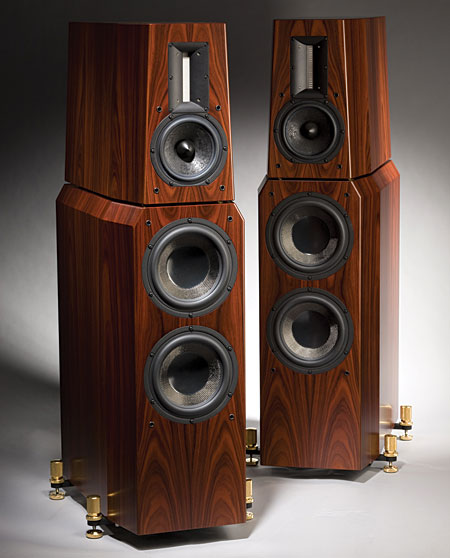
Though taller, narrower, deeper, more gracefully sculpted, and even more mantis-like than the MAXX Series 2 that I reviewedhttp://www.stereophile.com/floorloudspeakers/805wilson">reviewed; in the August 2005 Stereophile, at first glance the Wilson Audio Specialties MAXX Series 3 seems little more than a minor reworking of its predecessor with a major increase in price: from $44,900 to $68,000 per pair. But first looks can be deceiving. Take a closer, longer gaze—or, better yet, spend some time listening (especially if you've spent time with the MAXX 2)—and you'll quickly realize that while the familiar Wilson design concepts remain in play, the MAXX 3 is far more than a minor reworking of an older model.

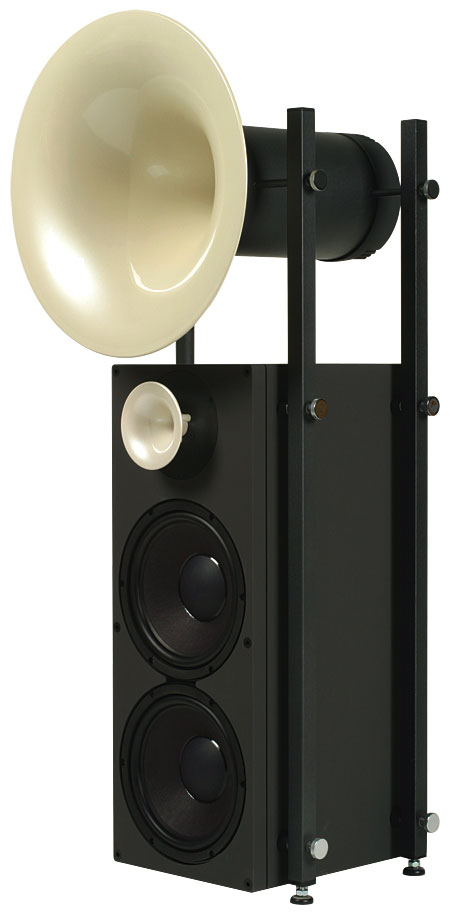
Avantgarde Acoustic Uno Nano loudspeaker

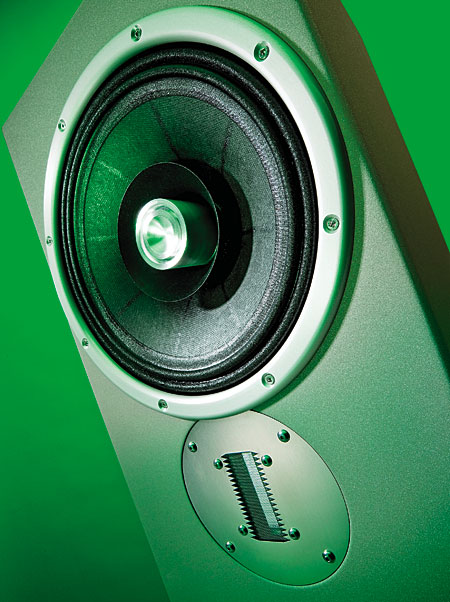
A compact horn loudspeaker. Isn't that an oxymoron, like jumbo shrimp, or military intelligence? From such venerable speakers as the half century-old Altec Voice of the Theater and the Klipschorn, as well as more modern examples like the Avantgarde Acoustic Trio, horns have always been big. The original Avantgarde Uno was the smallest speaker in Avantgarde's line, but it was still visually imposing, with a big horn midrange on top, a horn tweeter below that, and a powered sealed-box subwoofer at the bottom. (I reviewed the Uno 2.0 in Stereophile in August">http://www.stereophile.com/floorloudspeakers/287">August 2000, Vol.23 No.8, and the Uno 3.0 in August">http://www.stereophile.com/floorloudspeakers/287/index11.html">August 2002, Vol.25 No.8.) The Uno and its siblings, the Duo and Trio, are perhaps the antithesis of the in-wall loudspeakers beloved by interior designers. These speakers do not fade into the background—not visually or sonically.

Icon Parsec loudspeaker

"My vision for the future is one where all manufacturers sell their products directly to the end user. In this way, even the audiophiles in Dead Horse, Alaska can have access to all the audio manufacturing community has to offer." Thus wrote loudspeaker designer David Fokos in a letter introducing his new company Icon Acoustics to the press at Stereophile's High End Hi-Fi show in San Mateo, CA last April (footnote 1). Mr. Fokos, a Cornell graduate who for some years worked for Conrad-Johnson Design and designed that company's well-regarded Synthesis and Sonographe loudspeaker models, feels very strongly that the traditional retailing setup is inefficient when it comes to exposing audiophiles to a wide enough choice of product, particularly when it comes to loudspeakers. With 300 speaker manufacturers listed in the Audio directory issue but even a major retailer restricted to probably six brands, even big-city audiophiles will only be able to audition a fraction of the total number of brands. "Our industry is suffering from product saturation of its retail distribution network."

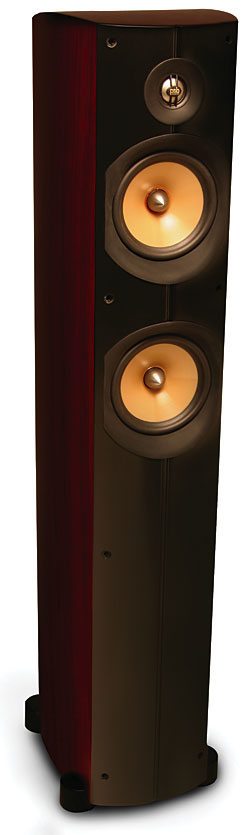
PSB Imagine T loudspeaker

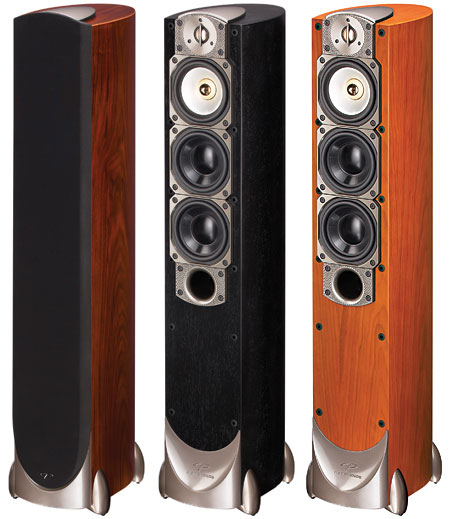
If you have more than six or seven bucks to spend, you might consider the Imagine T floorstanding speaker from PSB Loudspeakers ($2000/pair). A year ago, John Atkinson reviewedhttp://www.stereophile.com/floorloudspeakers/408psb">reviewed; PSB's Synchrony One speaker ($4500/pair; Stereophile, April 2008, Vol.31 No.4). The Imagine series is the next line down, and also includes center, surround, and bookshelf models. John Marks flippedhttp://www.stereophile.com/standloudspeakers/psb_imagine_b_loudspeaker"…; over the Imagine B minimonitor in his column in the February 2009 issue.

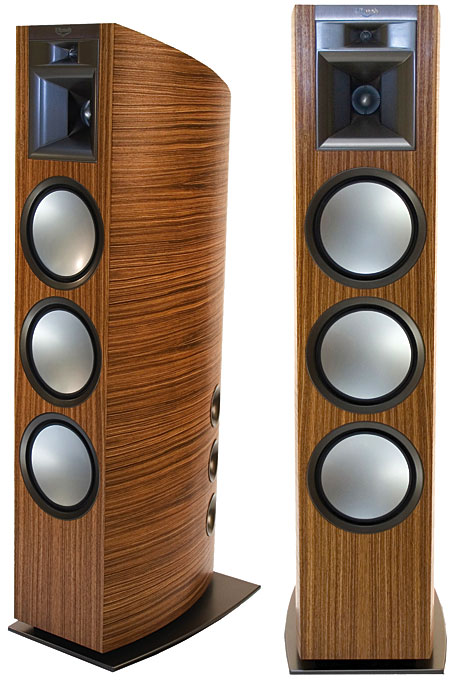
Klipsch Palladium P-39F loudspeaker

It ain't the stuff you don't know that trips you up, it's the stuff you know that ain't so. When, at the 2007 CEDIA Expo, I encountered Klipsch's startlingly new Palladium P-39F loudspeaker ($20,000/pair), I was impressed by its looks. Tall (56"), as beautifully contoured as the prow of a canoe, and clad in striking zebra-stripe plywood, the P-39F is possibly the best-looking speaker Klipsch has ever made.

Snell Acoustics Type A Reference loudspeaker

The Type A has served as Snell Acoustics' flagship loudspeaker since 1974. The Type A Reference System reviewed here is the sixth update of the late Peter">http://www.stereophile.com/floorloudspeakers/378snell/index4.html">Peter Snell's original three-way floorstanding design, and is the most radical departure from Snell's">http://www.stereophile.com/floorloudspeakers/378snell">Snell's original. Gone is the pair of "upright bricks of polished wood and stretched cloth" (footnote 1) that delighted decorators because they functioned best against a wall. Today's Type A Reference $18,999 price tag (footnote 2) purchases two tall midrange-tweeter towers, two huge subwoofers, two short but heavy enclosures housing the outboard passive crossover networks, and a small electronic crossover.

Sonist Concerto 3 loudspeaker

I know from conversations with other reviewers that this sort of thing happens all the time: Something new comes along—a product from a company we've never heard of, a technology we've never encountered before, whatever—and when we're impressed, we end up wondering if the thing is really as good as we think. We're insecure, just like you (footnote 1).

YG Acoustics Anat Reference II Professional loudspeaker

You've seen the ads from YG Acoustics: "The best loudspeaker on Earth. Period." It sounds arrogant. But come on—high-end audio has never been a field of shrinking violets. When Ivor">http://www.stereophile.com/interviews/1101ivor">Ivor Tiefenbrun of Linn announced that the turntable, not the cartridge or loudspeakers, dictated the sound quality of an audio system, that was a man convinced that he was right and taking on the world. And was Krell's Dan">http://www.stereophile.com/interviews/1203dagostino">Dan D'Agostino any less arrogant when, in 1980, he introduced the KSA-100 power amplifier? In a world where small size and high wattage were the norms, didn't it take a pair of big brass 'uns to bring out a honkin' huge slab of metal that put out only 100Wpc?

Infinity IRS Epsilon loudspeaker

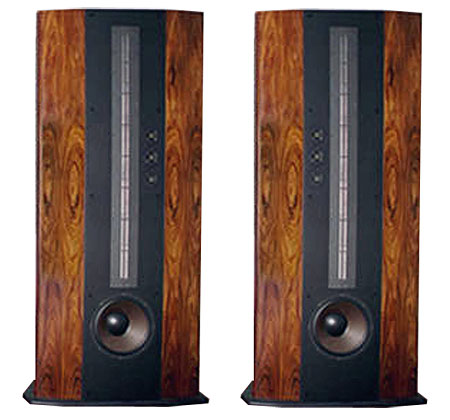
Like all companies that have been in business long enough to become fixtures in the marketplace, Infinity has seen its share of changes. It has long been that audio rarity—a company with one foot in the High End and one in the mass market. For the past few years, however, and despite continuing production of the now-classic IRS in its Series V incarnation, Infinity's mass-market foot has been the more firmly planted. Infinity, now a large company, is part of an even larger conglomerate, Harman International.

Advertisement
Advertisement
Advertisement