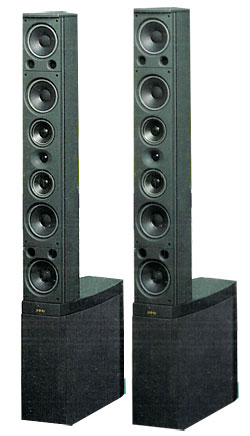
I can't think of two products at further ends of the audio spectrum than a single-ended triode tubed amplifier and a mass-market Home Theater loudspeaker. Single-ended tubed amplifiers are about reproducing subtlety, delicacy, nuance, and communicating the music's inner essence. Conversely, a Home Theater loudspeaker systemparticularly one made by a mass-market manufacturerwould appear to put the emphasis on booming bass and reproducing shotgun blasts, with little regard for musical refinement.
What a bizarre marriage it was, then, to pair the new Infinity Composition Prelude P-FR loudspeakers with the Cary Audio Design CAD-300SEI 11W single-ended triode amplifier (reviewed
elsewhere in this issue). This combination didn't happen by accident; as you'll see, these apparently disparate products are a match made in heaven.
I discovered the Infinity Preludes while surveying Home Theater loudspeaker systems for the upcoming second issue of the
Stereophile Guide to Home Theater. In addition to evaluating the loudspeaker systems under review with video soundtracks, I assessed their musical qualitiesor lack thereof. The Preludes were such a musical standout that I rescued them from the Home Theater room (where they had been powered by mass-market receivers and fed with a laserdisc source) and gave them a new lease on life in the larger music room, with reference-quality source and amplification components. The Preludes' extraordinary musical performance and unique design compelled me to tell you about how they performed in an audiophile-quality two-channel playback system.


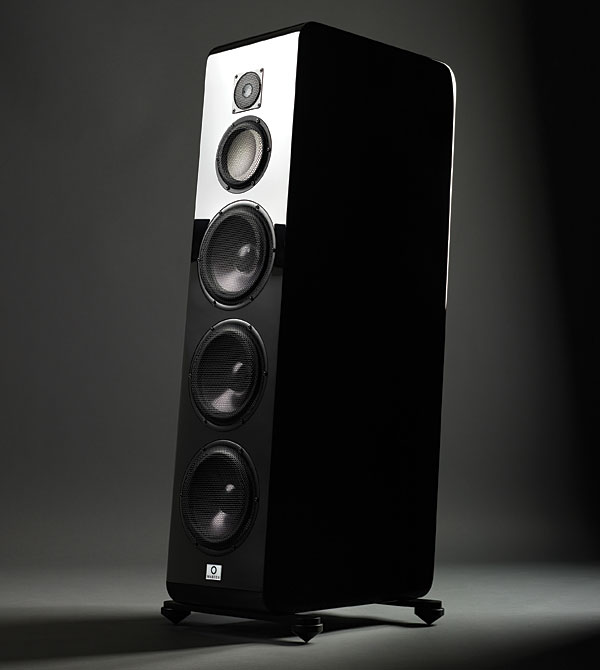
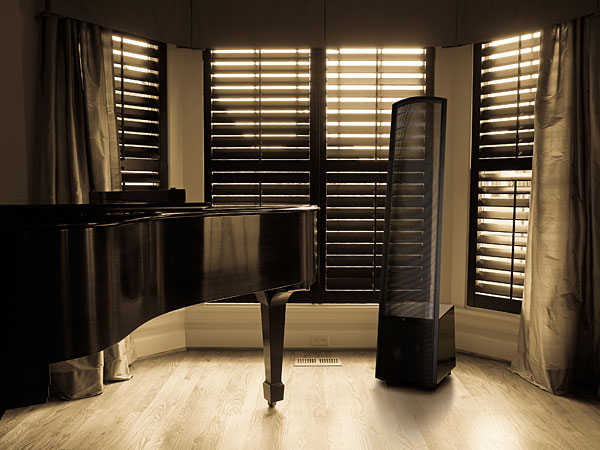
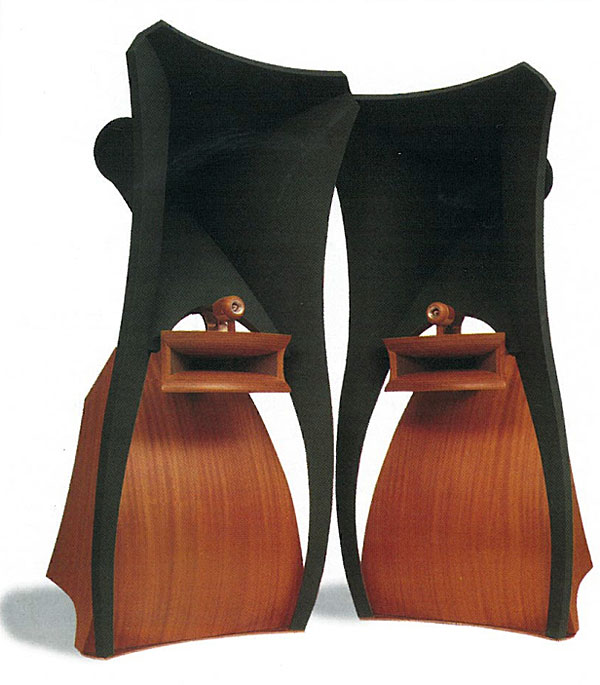
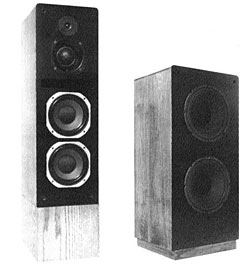 According to designer Bill Reed, the Nelson-Reed 8-04/B was not originally intended to be an audiophile speaker system, but was instead designed as a high-quality monitor for the critical recording engineer who wanted to be able to walk from the studio into the control room and hear the same thing from his speakers that he heard "live." The fact that modern studio mike technique ensures that this could never happen is probably beside the point. The point is that reproducing the original power and dynamic range of live music is a formidable challenge, which practically no audiophile speakers have met successfully. On the other hand, so-called studio monitors, which can do that routinely, have tended to be highly colored and otherwise generally lousy in all areas of fidelity except output capability. The 8-04/B was an attempt to combine the strengths of both kinds of speaker, while avoiding their usual weaknesses.

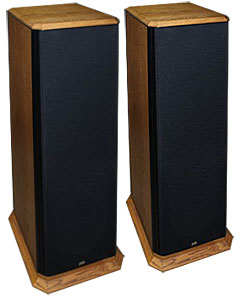 PSB is a small, Toronto-based manufacturer that has been collaborating with Canada's National Research Council to try and take some of the guesswork, some would say magic, out of loudspeaker design.
The NRC, financed by the Canadian government, does basic research in many technological areas and makes its findings available to any firm wishing to use them. (Most other countries provide or encourage this kind of government/business cooperation. It is against the law in the US, to our great disadvantage.) The NRC's audio division, headed by physicist Dr. Floyd E. Toole, has devoted the last several years to the rather formidable task of defining, and assigning numbers to, the various aspects of loudspeaker performance that affect listeners' subjective assessments of their sound.
PSB is a small, Toronto-based manufacturer that has been collaborating with Canada's National Research Council to try and take some of the guesswork, some would say magic, out of loudspeaker design.
The NRC, financed by the Canadian government, does basic research in many technological areas and makes its findings available to any firm wishing to use them. (Most other countries provide or encourage this kind of government/business cooperation. It is against the law in the US, to our great disadvantage.) The NRC's audio division, headed by physicist Dr. Floyd E. Toole, has devoted the last several years to the rather formidable task of defining, and assigning numbers to, the various aspects of loudspeaker performance that affect listeners' subjective assessments of their sound.