YG Acoustics Sonja 1.3 loudspeaker

The advertisements run by Colorado manufacturer YG Acoustics in 2008, when it launched its flagship loudspeaker model, the Anat Reference II Professional, unequivocally claimed it to be "The best loudspeaker on Earth. Period." They caused a stir. The YGA speaker cost $107,000/pair at the time of Wes Phillips's review in the March 2009 issue. Wes didn't disagree with the claim, concluding that, "Like my pappy used to say, it ain't braggin' if you can actually do it."

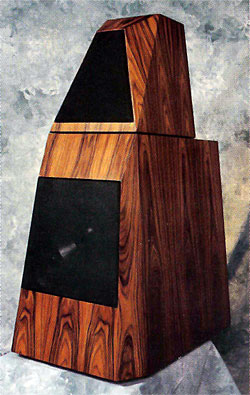 Though the original Artemis Systems Eos has been around for a few years, it doesn't seem to have made a big impression on audiophiles. Judging by a brief but exciting audition of the new Eos Signature and its accompanying Base Module at HI-FI '96, I found it hard to understand how it could remain such a well-kept secret. A few weeks later, to my surprise, Wes Phillips asked me if I wanted to review a pair and, throwing caution to the winds, I jumped at the opportunity. Rash move.
The movers delivered three large boxes and two absolutely huge crates. Inside the boxes were the two Eos Signatures and their external crossovers. Each crate contained a Base Module, and their appearance struck fear into my heart. I had gone too fareach one weighed 300 lbs, and together they were more commodious than some apartments in my Manhattan neighborhood. I signed for the delivery, then panicked when I realized there was no way to get these unpacked before my wife came home. Indeed, I didn't know how I was going to do it at all.
Though the original Artemis Systems Eos has been around for a few years, it doesn't seem to have made a big impression on audiophiles. Judging by a brief but exciting audition of the new Eos Signature and its accompanying Base Module at HI-FI '96, I found it hard to understand how it could remain such a well-kept secret. A few weeks later, to my surprise, Wes Phillips asked me if I wanted to review a pair and, throwing caution to the winds, I jumped at the opportunity. Rash move.
The movers delivered three large boxes and two absolutely huge crates. Inside the boxes were the two Eos Signatures and their external crossovers. Each crate contained a Base Module, and their appearance struck fear into my heart. I had gone too fareach one weighed 300 lbs, and together they were more commodious than some apartments in my Manhattan neighborhood. I signed for the delivery, then panicked when I realized there was no way to get these unpacked before my wife came home. Indeed, I didn't know how I was going to do it at all.