Audacious Audio

Sort By:  Post Date TitlePublish Date

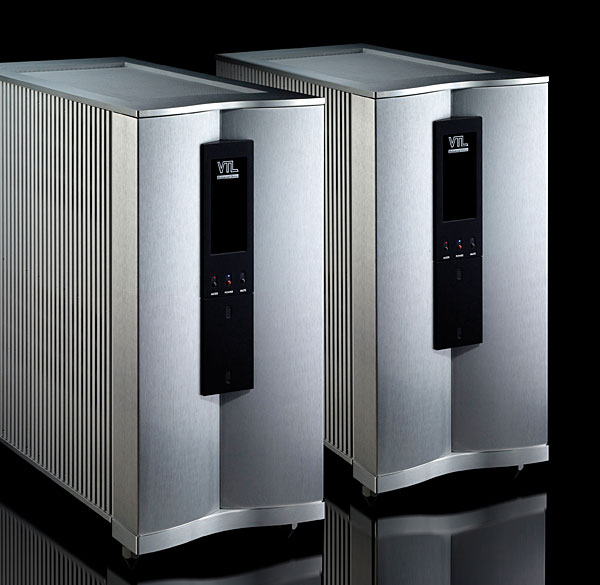
VTL Siegfried Series II Reference monoblock power amplifier

Big tube amplifiers were once scary monsters reserved for those who didn't mind heavy maintenance, careful tweaking, and the occasional explosion. Blown tubes required replacing, preferably with pricey matched pairs, then biasing with a voltmeter. Optimal sonic performance required regular bias monitoring and adjusting, and because of current surges on startup, you had to choose between leaving the heat-producing monoliths on, or turning them on and off for each listening session, thus shortening the life of the tubes.

Counterpoint Clearfield Metropolitan loudspeaker

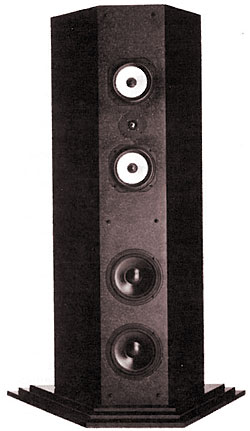
893count.250.jpgWhile Clearfield Audio may be a new name to many of you, it represents the marriage of two well-established members of the high-end community: Counterpoint and designer Albert Von Schweikert. Counterpoint had been working to add speakers to its product lineup for some time. The partnership with Von Schweikert, whom Stereophile readers will remember as the designer of the Vortex Screen favorably reviewed by Robert Harley in July 1989, fills out Counterpoint's high-end product line from source—the company showed a CD transport at the June 1993 CES—to speaker.

The Metropolitan
The developmental history of Vortex speakers provides a meaningful framework for the design of the Clearfield offerings, especially the Metropolitans, or Mets. Like the Vortex designs, the Mets are three-ways with transmission-loaded bass. Like the Kevlar Reference Screen (reviewed by Robert Greene in The Abso!ute Sound's "double-issue" 83/84, December '92), the Mets use Kevlar-coned midrange units from Focal that cover a broad range from 125Hz to 2kHz. What's dramatically different is the overall driver layout.

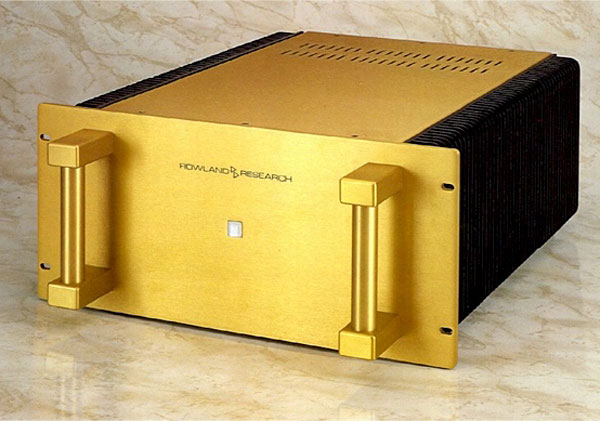
Jeff Rowland Design Group Model 7/II power amplifier

Very few products exude opulence as do the Rowland amplifiers: the massive chassis, the gold finish, those sculpted handles on the front plate. For some strange reason the amp reminds me of Brutus Beefcake, the golden boy of professional wrestling, upon whom I stumbled one night while flipping through the myriad channels of our cable TV. The visual impact is the same: beefy. And then there's the price: also beefy.

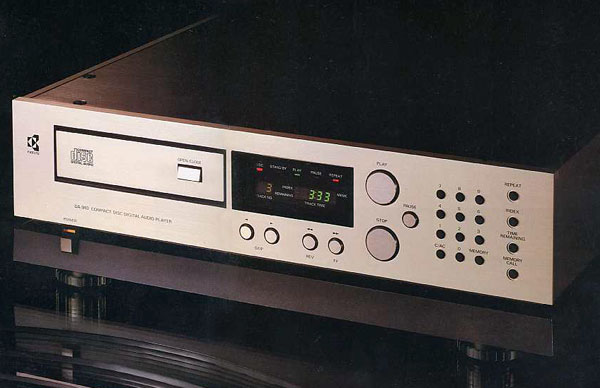
Kyocera DA-910 CD player

Those of our readers who are still anti-CD are going to be offended by what I am about to say. Partly because they do not want it to be true, but mainly because it is. I shall utter the heresy anyway: the Compact Disc is, right now, doing more for the cause of high-end audio than anything that has ever come along before!

There, I've said it. Now I shall explain it.

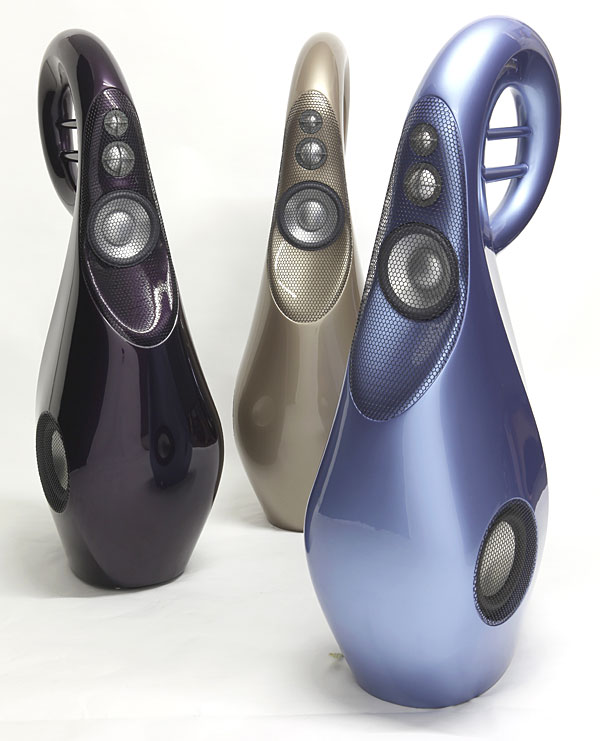
Vivid Audio Giya G3 loudspeaker

In February 2013, I was taking part in a "Music Matters" evening at Seattle retailer Definitive Audio, playing some of my recordings and talking about my audio philosophy. I love taking part in these events—in addition to Definitive's, in recent years I've participated in evenings organized by North Carolina's Audio Advice, Colorado's Listen-Up, and Atlanta's Audio Alternatives—but, as might be obvious, at each one I use a system provided by the retailer. The February 2013 system comprised Classé electronics and, to my surprise, Bowers & Wilkins Nautilus loudspeakers.

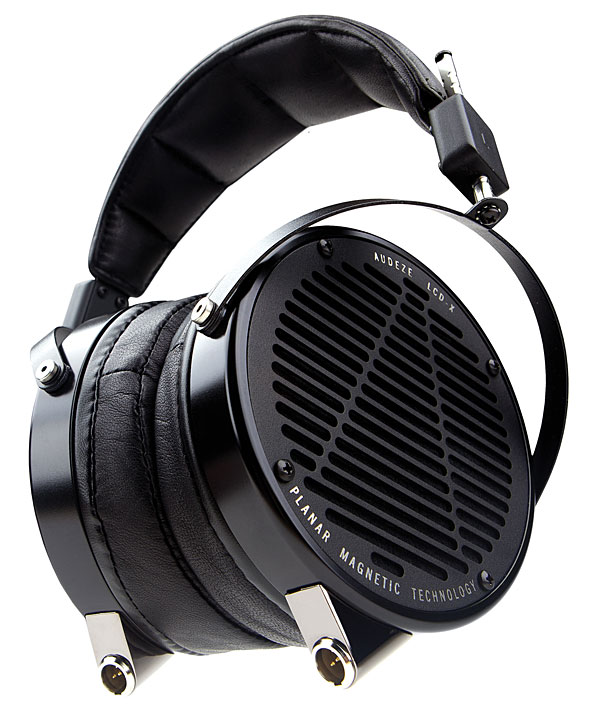
Audeze LCD-X headphones

I well remember my first "real" headphones: a pair of Koss Pro4AAs that I bought back in 1970. The Kosses were relatively expensive, but, like headphones today, they allowed an audiophile with limited cash to get a taste of high-end sound that was not possible with a speaker-based system. I bought the Pro4AAs because I had become fascinated with how the images of the instruments and singers were strung along a line between my ears inside my head. It seemed so much more intimate—a more direct connection with the music—than playback through loudspeakers.

dCS Vivaldi digital playback system

More than a decade ago, Data Conversion Systems, aka dCS, released the Elgar Plus DAC, Purcell upsampler, and Verdi SACD/CD transport, for a total price of $34,000. In 2009 came the Scarlatti—a stack of four components for $80,000, also available individually (see my August 2009 review). The latest variation on the English company's theme are the four Vivaldi components, launched at the end of 2012 for a total price of $108,496.

Pass Labs XA60.5 monoblock power amplifier

Whereas the Pass Labs preamplifiers are designed by Wayne Colburn, the power amplifiers are the work of company founder and high-end audio veteran Nelson Pass, who even lays out his own circuit boards. The X-model amplifiers, beginning with the X1000 in 1998, were the first implementation of Nelson Pass's patented Supersymmetry topology (see "Nelson Pass on the Patents of Pass"). The XA series, which debuted in 2002, combined Supersymmetry with the single-ended class-A operation of the Aleph series. The XA.5 models offer detail improvements over the XAs.

Simaudio Moon Evolution 850P line preamplifier

When I reviewed Simaudio's Moon Evolution 880M monoblock amplifier for the June 2013 issue, I communicated via phone and e-mail with the company's VP of marketing, Lionel Goodfield. When the topic of hearing the 880Ms at their best came up, I could almost imagine him shrugging as he said, "Just use it with the most transparent, revealing preamp you can find." Not surprisingly, he then went on to say that Simaudio's own Moon Evolution 850P would serve nicely in that role. My cynical side might normally have discounted any such suggestion from a marketing man, but I'd been hearing the same sort of thing from other sources. And, as it happened, there was an 850P at Stereophile World Headquarters . . .
Advertisement
Advertisement
Advertisement