Magico S5 Mk.II loudspeaker
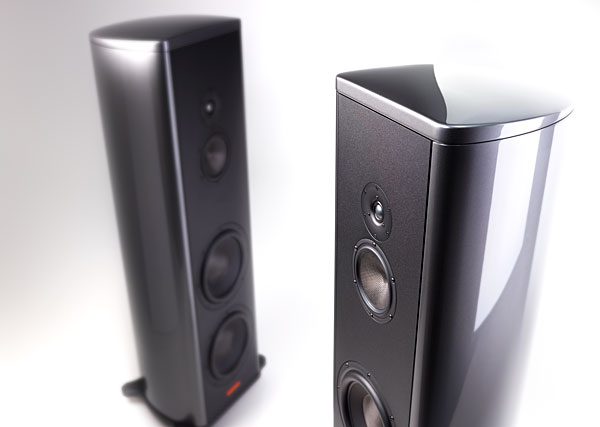
"Dammit!" No sooner had I praised small loudspeakers while dismissing large speakers as potentially having "large problems," in my review of the Crystal Arabesque Minissimo Diamond in the October issue, than I had to eat my words. Only days after that issue had gone to press, Magico's VP for Global Sales & Marketing, Peter Mackay, and CTO Yair Tammam, arrived at my place to set up a pair of the Bay Area company's floorstandingand very largeS5 Mk.II loudspeakers.
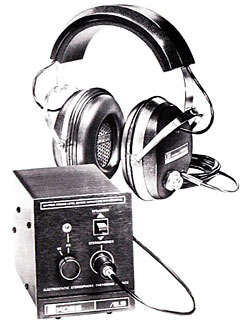 The top-of-the-line model from America's leading headphone manufacturer, these are bulky, heavy, very business-like in appearance, and very, very good.
The ESP-9 is dual-powered: from the AC line, or from the input signal itself, The power supply is rather large and heavy, and appropriate in appearance to the phones. Amplifier connections are via wires with spade lugs attached, and speaker connections are made to the rear of the power supply. A front-panel switch selects speaker or headphone operation, and terminates the amplifier outputs with 10 ohms in the Phones position.
Construction is typically top-of-the-line Koss: Rugged, nicely finished, and apparently very durable, and the phones are easy to handle. (Many headphones are so loosely pivoted on their headbands that they swing into impossible positions whenever you pick them up.)
The top-of-the-line model from America's leading headphone manufacturer, these are bulky, heavy, very business-like in appearance, and very, very good.
The ESP-9 is dual-powered: from the AC line, or from the input signal itself, The power supply is rather large and heavy, and appropriate in appearance to the phones. Amplifier connections are via wires with spade lugs attached, and speaker connections are made to the rear of the power supply. A front-panel switch selects speaker or headphone operation, and terminates the amplifier outputs with 10 ohms in the Phones position.
Construction is typically top-of-the-line Koss: Rugged, nicely finished, and apparently very durable, and the phones are easy to handle. (Many headphones are so loosely pivoted on their headbands that they swing into impossible positions whenever you pick them up.)