LATEST ADDITIONS

The Pros & Cons of Electrostatic Loudspeakers

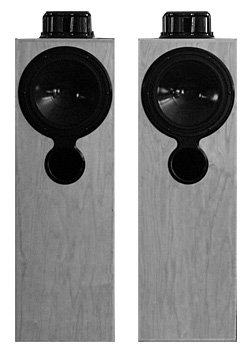
The main inherent advantage of the full-range electrostatic loud speaker system is that it allows a single diaphragm to embody the conflicting attributes needed for optimal performance at both extremes of the audio range. Its thin-membrane diaphragm can be made exceedingly light, for superb transient response and extended HF response, yet it can be about as large in area as desired, for extended LF response.
Continue Reading »

The Nonstick Embrace Of Home Theater

Editor's Note: 24 years ago, in January 1995, we published the first issue of Stereophile Guide to Home Theater, a sister publication intended to appeal to the the growing number of home-theater enthusiasts. Stereophile's founder, the late J. Gordon Holt, had gotten early into the idea of accompanying movies with high-quality sound, and when I first visited his New Mexico home in January 1986, his system included an Advent NTSC-format video projector.
Continue Reading »

Audio Physic Step Plus loudspeaker

In the 1990s, while putting together one of my early hi-fi systems, I'd often visit New York City audio retailer Sound by Singer to gawk at their top-tier wares. On one such visit I noticed a serious-looking gentleman listening to Stravinsky's The Rite of Spring through a pair of Audio Physic's Step loudspeakers (accompanying electronics long forgotten). Sitting on their dedicated, minimalist-looking metal stands, the pint-size Steps were angled up 22° or so, to create a physical time alignment of the tweeter's and midrange-woofer's wavefronts. The Step looked odd—kind of scrawny. But these petite minimonitors projected music that seemed to exist entirely free of their cabinets, pulling off a sort of "disappearing" act I'd never before heard.
Continue Reading »

CH Precision I1 Universal integrated amplifier

"The sound was to die for," I wrote shortly before my resurrection. I was taking notes about the sound of CH Precision's D1 SACD and CD Drive (now $38,000) and C1 D/A Controller (base price $32,000), in the demo room of Michael Woods's Elite Audio Systems, at the California Audio Show, just three months after the 2015 edition of the Munich High End show. CH Precision's L1 dual-mono, solid-state preamplifier (now $58,000), M1 dual-mono power amp ($104,000), and X1 external power supply ($17,000) had helped deliver "fantastic sound."
Continue Reading »

MartinLogan Dynamo 800X powered subwoofer

In the late 1980s, when I began reviewing high-end subwoofers, they were big and heavy, difficult to move or find space for in a room. Their controls were always on an inconveniently positioned rear panel, and there were no built-in automatic room-optimization options or parametric equalizers. Velodyne's 105-lb, downfiring ULD-18 ($2570), ca 1989, was typical: Two people were needed to unpack and move it; it was powered by an outboard 400W amplifier, connected inconveniently with a speaker cable and an RCA-terminated interconnect for its servo control; and its controls were on the bottom of the cabinet. Changing its crossover frequency involved soldering new resistors onto a printed circuit board inside the amp.
Continue Reading »

Gramophone Dreams #26: Nelson Pass & Harmonic Distortion

Every time I fly to California, my brain gets stuck on the lyrics of that Arlo Guthrie song: "Coming into Los Angeles / bringing in a couple of keys . . ." Even landing in San Francisco, I'm always smiling, because I've never been busted in California.

Which means that I'm a lucky guy. In this life I have acquired nothing of material value, but I did see Howlin' Wolf and Little Walter in Chicago in 1962, at Theresa's. I spent the whole Summer of Love (1967) in San Francisco listening to music. And because I lived only a few blocks away, I witnessed the Ramones' first gig at CBGB, in 1974.

Continue Reading »

Lutoslawski's Strange and Compelling World

There are many ways to talk about the remarkable Symphonies Nos.1 & 4 • Jeux vénitiens of Polish composer Witold Lutoslawski (1913–1994). You could, for example, approach them as does Kimmo Korhonen, whose extremely detailed and well-thought-out liner notes for the recent Ondine SACD of these works from Hannu Lintu and the Finnish Radio Symphony Orchestra examine the evolution of Lutoslawski's tonal language and explain that they basically represent the beginning (Symphony No.1, 1947), middle (Venetian Games, 1960–1961) and end (Symphony No.4, 1992) of his arc as a mature composer. Or you could simply close your eyes and discover how many fantastic places they take you to.
Continue Reading »

Air Tight ATM-300R power amplifier

To audio designers in Japan and elsewhere, the single-ended, 300B-tubed amplifier is like a haiku: an art form defined by both its prescribed limitations and the potential such restraint offers for artistic expression. Here, the only hard-and-fast rule is a simple one: output devices are limited to one 300B directly heated triode tube per channel. From there, it's a blank slate: Do you want AC or DC on the output-tube heaters? Tube or solid-state rectification? Low or high gain? Fixed or cathode bias? New parts, vintage parts, or a mix of both? Triode or pentode tubes as drivers? Capacitors or transformers—or nothing at all—between the plates of the driver tubes and the grids of the output tubes?
Continue Reading »
Advertisement
Advertisement
Advertisement