Audio Skies Michael Vamos - YG Acoustics, JMF Audio, Ideon at Capital Audiofest 2025
The Listening Room and Fidelity Imports - Diptyque DP-160 Mk.2 at Capital Audiofest 2025
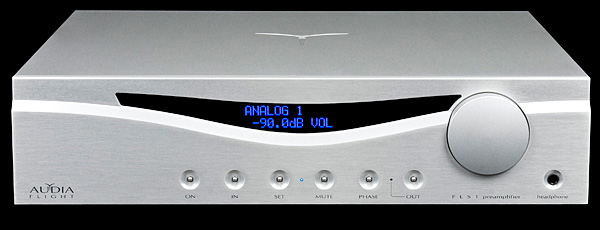
Fidelity Imports Audia Flight and Perlisten System
Fidelity Imports Wilson Benesch and Audia Flight System at Capital Audiofest 2025
J Sikora Aspire, Innuos Stream 3, Aurender N50, Gryphon Antileon Revelation, Command Performance AV
Bella Sound Kalalau Preamplifier: Interview with Mike Vice
BorderPatrol Zola DAC – Gary Dews at Capital Audiofest 2025
Audio Note UK TT3 Reference Turntable Debut at Capital Audiofest 2025
Kevin Hayes of VAC at Capital Audiofest 2025
2WA Group debuts Aequo Ensium at Capital Audiofest 2025
Capital Audiofest 2025 lobby marketplace walk through day one
Lucca Chesky Introduces the LC2 Loudspeaker at Capital Audiofest 2025
Capital Audiofest 2025 Gary Gill interview
Sponsored: Pulsar 121
Acora and VAC together at Capital Audiofest 2025
Scott Walker Audio & Synergistic Research at Capital Audiofest 2025: Atmosphere LogiQ debut
Sponsored: Symphonia
Sponsored: Symphonia Colors

LATEST ADDITIONS

TAD Dems in Manhattan Thursday July 19

Thursday July 19, 12–8pm, Manhattan specialty audio retailer NoHo Sound (62 Cooper Square, New York, NY 10003) will be having an open house. Special guests Jonathan Derda and Ben Newhall from MoFi Distribution will be on hand to demonstrate the TAD Micro-Evolution One loudspeaker (above), which received a rave review earlier this year, the TAD Compact-Evolution One loudspeaker, and TAD D1000 Mk.II DAC/SACD player, which was a "Greatest Bits" Award winner on our sister site AudioStream.com.
Continue Reading »

HDCD: Keith Johnson, Pflash Pflaumer, Michael Ritter

The men behind HDCD (L–R: Pflash Pflaumer, Michael Ritter, Keith Johnson

High Definition Compatible Digital® (HDCD®), the proprietary process for improving the sound of 16-bit digital audio, has finally arrived. More than a dozen digital processors using the technology are on the market, and the professional encoder used to master HDCD discs is following closely behind.

Continue Reading »

Recording of December 1966: Tchaikovsky: Swan Lake & Sleeping Beauty

Tchaikovsky: Swan Lake & Sleeping Beauty Selections
New Philharmonia Orchestra, Stokowsky
London Phase-4 SPC 21008 (LP); Ampex LCL-75008 (open-reel tape). Tony D'Amato, Marty Wargo, prods.; Arthur Lilley, eng. TT: 46:50.

These are exciting, lilting, concert-style (as opposed to ballet-style) performances of the best-known excerpts from Tchaikovsky's second- and third-most-popular ballets. (First, of course, is the Nutcracker.) The recording is a surprise, after the excesses we've heard on earlier Phase-4 recordings.

Continue Reading »

Play It Again, Siri

Okay, we know that Humphrey Bogart didn't utter that immortal instruction in Casablanca, but we couldn't resist, given that this issue includes Jim Austin's adventures with Apple's HomePod, the first smart speaker with hi-fi pretensions, which is featured on our August issue's cover.
Continue Reading »

July 4 Weekend Special: John Williams at the Movies

For a major, decidedly American change of pace from our usual fare of Prokofiev, Debussy, Xenakis, Berg, and Beethoven (for starters), let's lighten up with Reference Recordings' latest hybrid SACD, John Williams at the Movies? Also available as a 176.4/24 download—the format in which it was recorded and which I auditioned for this review—the performances by the Dallas Wind Band under Jerry Junkin are so vivid and color-saturated that RR has chosen them for their first hybrid high-resolution wind-band SACD.
Continue Reading »

Carver Research Lightstar Reference power amplifier

When it comes to amplifiers, ya gotcher tubes, yer solid-states, and yer hybrids. Although amplifier manufacturers would have you believe otherwise, the majority of designs within each category are variations on a few fairly-well-known themes. Everyone agrees that the power supply is extremely important. Most designers try to obtain the amplifier's desired frequency response and distortion characteristics with a minimum of negative feedback. It's also agreed—at least among designers of solid-state amps—that the ability to drive a variety of speakers, including those that present a low-impedance and/or reactive load, is an important priority.
Continue Reading »

Recording of April 1967: An Audio Obstacle Course

An Audio Obstacle Course: The Shure Trackability Test Record
Shure Bros. TTR-101.

Shure's new "Supertrack" V-15 Type II pickup was designed as an answer to all those high-powered discs whose excessive modulations make them shatter all over the place on lesser pickups, But just in case anyone didn't happen to own any of these difficult discs, Shure decided to issue one of these, too. The result is a collection of some of the meanest modulations ever gathered together in one place.

Continue Reading »

The Stereo Image

The author demonstrating stereo microphone techniques at an English audio show in 1981.

For most people the terms hi-fi and stereo are synonymous, and yet it is clear that there is still a great deal of confusion over what the word "stereo" actually means. There isn't even a consensus of opinion amongst producers of records, designers of hi-fi equipment, audio critics and music lovers as to the purpose of stereo, and considering that the arguments show no sign of diminishing in intensity, it is instructive to realise that 1981 sees both the 100th anniversary of Clement Ader's first stereo experiments and the 50th anniversary of Alan Blumlein's classic patent on stereo.

Continue Reading »

Prokofiev For Two and a Half

Why the title, "Prokofiev for Two and a Half," for a Deutsche Grammophon recording on which Martha Argerich and Sergei Babayan play Babayan's two-piano transcriptions of music from Prokofiev's ballet Romeo & Juliet and four of his operas? Because any recording that features the outsized pianism of the great Argerich immediately becomes one of extraordinary importance for artistic resources that are inherently doubled by at least 50%.
Continue Reading »

Audible Illusions Modulus preamplifier

Once upon a time, all audio equipment used vacuum tubes. In recent years, however, tubes have become the exclusive province of super high-end audio. It is more expensive to accomplish any particular task with tubes than with transistors, and few manufacturers (with the exception of Conrad-Johnson) seemed willing until now to refine their techniques and pare back their budgets to make tube components more affordable.
Continue Reading »
Advertisement
Advertisement
Advertisement