John Atkinson

Krell Modulari Duo Reference

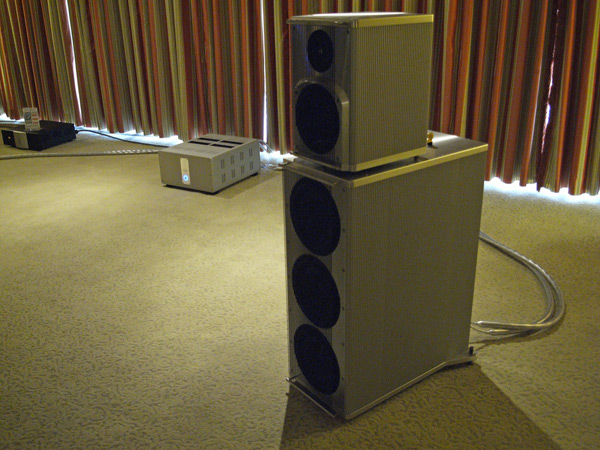
It was released in 2009, but Krell's Modulari Duo Reference loudspeaker ($65,100/pair) was new to me when I visited THE Show and ventured up to the 28th floor of the Flamingo. The two-box speaker features all-aluminum enclosures, and features twin port-loaded woofers and a ring-radiator tweeter. The Modularis were hooked up with Zen Satori cable to Krell's new Evolution 2250e amplifiers, which offer 250Wpc into 8 ohms and 500Wpc into 4 ohms ($20,000/pair). Also new to the Connecticut company's line at CES was the Phantom preamplifier ($17,500, or $20,000 with optional crossover module, completely adjustable for high-pass and low-pass slopes and frequencies) and the 525 CD player ($12,000 in basic form).
Continue Reading »

Legacy & Ayon

I was initially confused when I walked into this room, as there appeared to be two different systems set-up, with loudspeakers from two different manufacturers. However, playing while I was there were the new Legacy Audio Focus SE speakers in Black Pearl finish (left, $8995/pair), with the Lumenwhite Artisan speakers (not quite so left) silent. Common to both system was an Ayon Audio CD55 CD player and Synergistic Research cables, and Ayon Triton tubed monoblocks drove the Legacies.

Broadly similar in concept to the Focus 20/20 speaker that Paul Bolin favorably reviewed in January 2004, the 25th Anniversary Focus SE is considerably more refined. It uses an AMT supertweeter and a leaf tweeter, between two unique 7" midrange units that use a cone comprising a sandwich of Rohacell and a weave of silver wire and graphite. The two 12" woofers take over below 200Hz and have a low-Q ported alignment to take advantage of the usual room gain without booming. Frequency range is specified as 16Hz–30kHz and sensitivity a very high 95.4dB (4 ohm impedance).

The cabinet is narrower and deeper than the older speaker's, with sculpted edges that progressively reduce the baffle width for the HF drivers to optimize diffraction. The crossover uses Solen metalized polypropylene capacitors and braided silver Kimber Kable is used to connect the supertweeter. The drive-units are matched to within ±0.25dB and designer Bill Dudleston hand-tunes the crossover network of each SE speaker.

Continue Reading »

Hansen's The King (E)

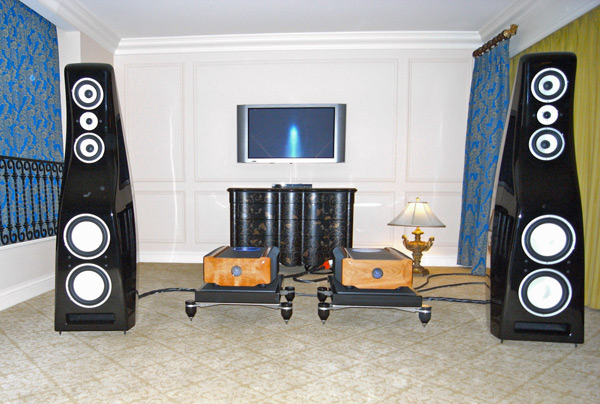
Hansen's cost-no-object speakers have always sounded excellent at CESes, so one of the first rooms I visited at the Venetian was Hansen's, to hear the new The King E (for Enlightened) loudspeaker ($98,000/pair). A 63"-tall, 6-driver, 3-way design weighing 420lbs, The King E was being driven by Tenor mooblocks and preamp, with the front-end a Clearaudio turntable fitted with a Graham Phantom II tonearm. (My apologies for not noting the phono cartridge being used.)

Listening to a 45rpm remastering of Manuel de Falla's The Three-Cornered Hat, I was struck by the effortless sweep of sound and low-frequency performance that suggested that The King's specified frequency response of 18Hz–23kHz was not hyperbole. Percussion and pizzicato strings had a start-stop character that was very lifelike, with not a hint of overhang or boom.

Continue Reading »

Peak Consults Chords

Bluebird Music's Jay Rein wanted to hear the Bluetooth-driven Chordette Gem-based system at the front of the room, with Spendor A6 speakers, but my attention was drawn to the familiar-looking speakers at the other end of the room, Peak Consult El Diablo Vs ($89,000/pair), which Michael Fremer reviewed in May 2007. Jay explained that he is ow the North American distributor for these Danish speakers.

The speakers were being driven by Chord SPM1400 monoblocks ($$32,900/pair) and a Chord CPS5000 preamp, with van den Hul's new Mountain interconnects and Nova speaker cables. Jay put the Reference Recordings CD of Scheherazade (RR-89CD) with Jose Serebrier conducting the London Philharmonic Orchestra into the Chord Red Reference Mk,II CD player ($25,900) and for an all-too-brief interlude, I was transported from the fake glitz of Las Vegas into the more real sonic world of the Arabian Nights.

Continue Reading »

Weizhi PRS6 AC Distribution

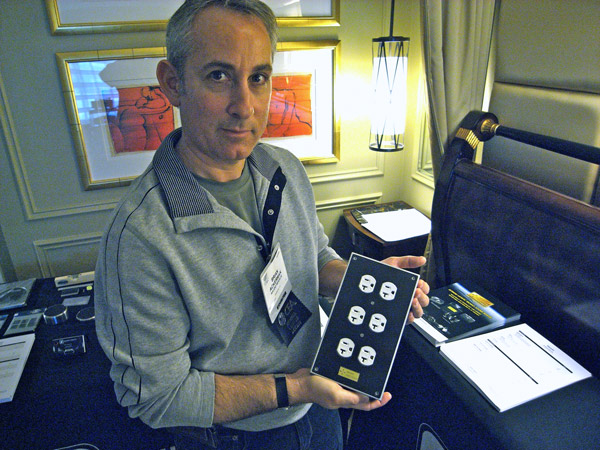
AAudio Imports' Brian Ackerman holds what must the world's most expensive AC strip, the Weizhi PRS6. Priced at $3200, the PRS6 is machined from a block of Super Duralumin alloy and features a graphite grounding module. There are no isolating transformers or conditioning circuits, the PRS6 is purely passive. The thinking behind the product, said Brian, is "to get the noise out of the line without changing the sound."

Yes, the Weizhi is a gorgeous piece of audio jewelry but do people really pay $3200 for peace of mind? Brian told me that he is currently shipping 10 units a week, so I guess they do.

Continue Reading »

Philips LHH1000 CD player

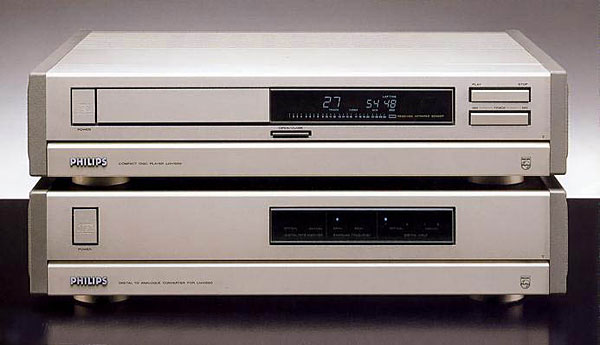
Externally, the LHH1000 came as a bit of a surprise to these jaded eyes, over-familiar with plain black or brushed-aluminum boxes. Each enclosure is finished in an almost white, anodized finish, with greenish-gray endcaps (made from zinc alloy, I believe) painted with a nubbly, crackle finish—an attractively utilitarian styling with shades of military-surplus radio equipment, nicely set off by subdued blue fluorescent readouts. Internally, the units are constructed to audiophile standards. The transport uses Philips's top CDM-1 mechanism, which is fabricated from diecast aluminum, compared with the plastic CDM-4 mechanism which appears in less expensive and less well-specified players. The loading tray, too, which is made from metal, has a reassuringly solid feel to it.
Continue Reading »

Ultimate Ears 18 Pro in-ear headphones

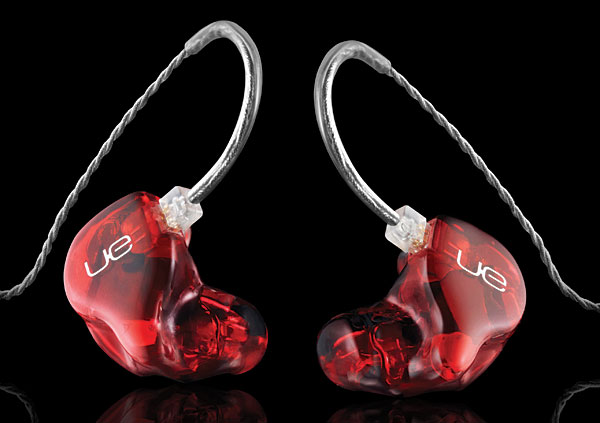
Headphone listening is hot these days, due not only to the ubiquity of the iPod as a music source but also because it is possible to get state-of-the-art headphone playback without having to have stupidly bottomless pockets. A plethora of affordable high-quality headphone amplifiers are available, and high-performance 'phones can be had for a few hundred dollars. Used with a computer or iPod to play uncompressed WAV or AIF files or losslessly compressed FLAC or Apple Lossless (ALAC) files, a headphone-based system can offer the audiophile on a budget seriously good sound.
Continue Reading »

Halide Design S/PDIF Bridge USB-S/PDIF converter

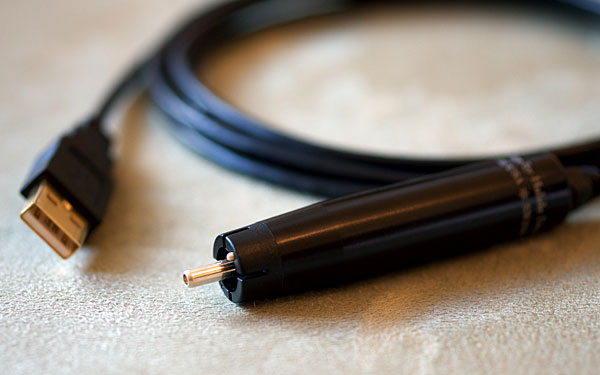
The weekly Vote! Page is one of the most popular features of the Stereophile website, and the August 22 question, "Should Stereophile review more or fewer computer-audio products?", generated a record number of responses. No less than 88% of those responding asked for more coverage of products that allow a computer to be a legitimate source of music in a high-end context. Just 7% of readers wanted less coverage.
Continue Reading »

Pioneer Elite TZ-9 loudspeaker

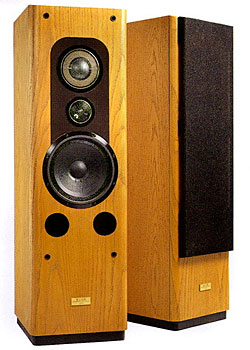
Although, historically, Asian high-performance loudspeakers have not had much impact in the US (with the possible exception of the Yamaha NS1000), it is obvious from recent events that that situation might change. Some Japanese manufacturers are determinedly attempting in 1989 to scale the high-end heights. Onkyo, for example, launched an entire range under the Precise brandname, designed by that most idiosyncratic of talented Californian engineers, Keith Johnson, while Yamaha has licensed the Swedish ACE-Bass technology to produce loudspeakers that extend amazingly low in the bass for their size. But it is Pioneer, already well-ensconced in the US pro market with their TAD (Technical Audio Devices) drive-units and monitors, who have made perhaps the biggest techno-splash with their "Elite-TZ" speakers. These feature both high-tech drive-units and a novel (if not entirely new) method of minimizing enclosure vibrations.

The TZ-9 is the top of Pioneer's new line, and costs a cool $4000/pair, placing it firmly in the high-end category. But for that outlay, the TZ-9 owner acquires a largish and quite handsome speaker, finished in a rather orange-colored oak veneer and standing some 4' high. Both tweeter and midrange units feature domes fabricated from an amorphous form of carbon termed by Pioneer "Ceramic Graphite," which is said to have 10 times the bending stiffness and two times the internal loss or self-damping of an equivalent titanium dome. The practical result should be accurate pistonic motion in each unit's passband, with a better-damped HF resonance than a metal dome. In practice, these Ceramic Graphite diaphragms can be quite brittle. Despite the presence of protective wire grilles over the mid- and high-frequency units, the first pair of TZ-9s we received had had the midrange domes shattered, due to inadequate early packaging.

Continue Reading »

Henry Azima: A Mission to Succeed

1087azima.jpgIn its first three years, UK hi-fi manufacturer Mission Electronics employed a number of engineers to reinforce the creative talents of founder and hi-fi enthusiast Farad Azima. The lineup included John Bicht, now with Versa Dynamics, and Stan Curtis, now heading up Cambridge Audio. But when Farad's brother Henry—"Henry" is actually a nickname and I am sure you can see the derivation—joined the company in 1979, he brought both a much-needed stability, and initiated a considerable degree of commercial success for the company's products. Now resident in Canada, he spends his time commuting between his laboratory in Toronto and the company's headquarters near Cambridge, England (footnote 1). Prior to joining Mission, however, Henry had served in the Iranian Navy for 15 years, an unusual training for an audio engineer. I asked him if this had been an appropriate preparation for the world of hi-fi.

Henry Azima: I had actually been a student in the UK, studying electronic engineering at the University of Surrey in Guildford. When I left the Navy in 1979 after the revolution in Iran, I moved to the UK and got a job with my previous University as an Assistant Lecturer and Researcher. However, Farad then asked me out of the blue to join Mission. I said, "Well, I have no idea about hi-fi, and stuff like that." He said, "You will learn, there's no problem!"

Continue Reading »
Advertisement
Advertisement
Advertisement