Michael Trei

Spin Doctor #26: The Sorane TA-1 tonearm and the Ortofon MC 90X phono cartridge

A friend who sells high-end audio gear once pointed out that people who shop for separate tonearms are very different from those interested in phono cartridges or turntables in general. If you think about it, this makes sense. Almost everyone buying a new turntable needs a cartridge to go with it, and most turntables come equipped with a tonearm. Tonearm shoppers are more avid enthusiasts than general consumers.

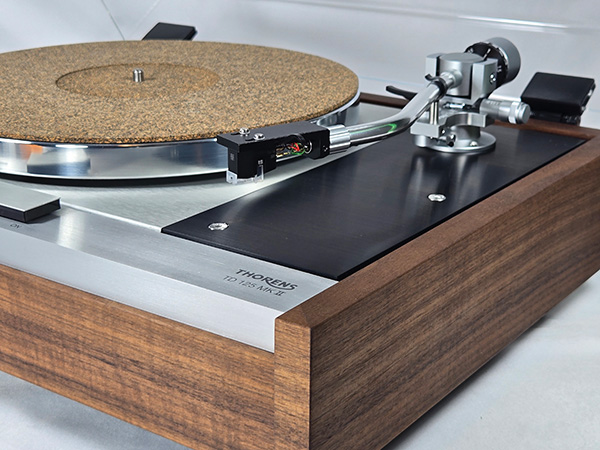
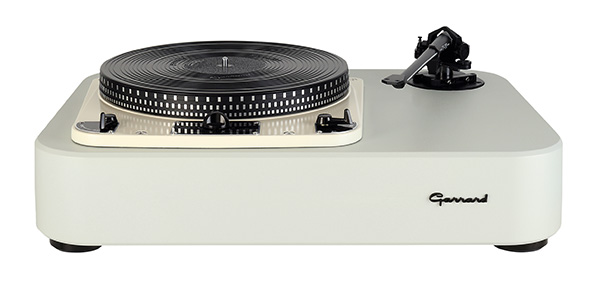
It wasn't always that way. In earlier days of high fidelity, 60 or more years ago, people putting together a cutting-edge phono playback system would typically buy what was known as a motor unit: a Thorens TD 124, Garrard 301, or a few years later the Garrard 401 or Technics SP-10. They would match it up with a tonearm from a company like SME or Ortofon.

Continue Reading »

Spin Doctor #25: The Garrard 301 in a New Light

They say that with age comes wisdom, and judging by some of my younger self's misguided choices, that adage could be true, at least for me. In 1984, after graduating from college with a degree in audio production, I moved back to England, where I had spent most of my teen years as a boarding school inmate. I had friends and connections there, and despite being a US citizen, I had some kind of sketchy work authorization that allowed me to work legally in the UK for up to six months. I connected with my old school friend Morris Gould, and we found a flat in South London to share as I looked for work.

Morris had been the de facto leader of my high school punk band, The Ripchords. Six years later, he was getting started with a career as ambient chill-out deejay Mixmaster Morris, releasing records as The Irresistible Force. Our apartment became a kind of hub in the South London music scene, with musicians and industry people circling through. Eventually, I found a job working at Music and Video Exchange, the gear-focused branch of the popular Record and Tape Exchange chain of secondhand record shops. At M&VE, the staff had first dibs on any cool gear that came in, and I remember being intensely envious when colleague Andy snagged a rare EMS VCS 3 synthesizer for almost nothing.

Continue Reading »

Spin Doctor #24: Connected-Fidelity TT Hub turntable and AFI FLAT.DUO record flattener and relaxer

It doesn't happen very often, but every once in a while a new turntable comes to my attention that I have no prior knowledge of. The last new turntable company that was a complete blank slate was J.Sikora, which I first encountered about six years ago courtesy of importer Jeff Fox of Notable Audio.

Now I find myself in that position again, with UK-based Connected-Fidelity and their turntable the TT Hub. Until I read the press release last December, sent to me by Mike Fajen of importer/distributor Sierra Sound, I was completely in the dark about the TT Hub, its manufacturer Connected-Fidelity, and that company's owner and head designer Michael Osborn.

Continue Reading »

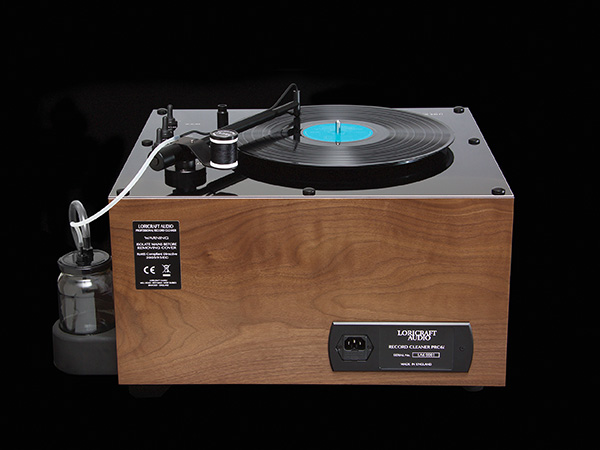
Spin Doctor #23: The Loricraft PRC6i record cleaning machine and the WallySkater v2.1 Pro

In my March Spin Doctor column, I gave an overview of my experiences cleaning records over the last 50-plus years and the advances in record cleaning technology over that time. My review of the HumminGuru NOVA ultrasonic record cleaner focused on that increasingly popular approach to record cleaning, using ultrasonic cavitation instead of scrubbing the record with a brush. But if there's one thing I've learned in that half-century of playing around with audio gear, it's that it can be a mistake to embrace a new technology just because of its newness, dismissing what came before as obsolete. The vinyl record itself is a good example of a technology discarded as obsolete, then embraced again by new (and old) generations. You can add vacuum-tube amplifiers, analog tape, and much else in our hobby to that list.
Continue Reading »

Spin Doctor #22: Cleaning LPs and the HumminGuru NOVA HG05

The first album I ever bought with my own money—cash earned mowing neighbors' lawns—was a British plum-label pressing of Led Zeppelin II. It was 1971. I rode my prized Raleigh Chopper bike from our home on the coast of Denmark down the road a couple of miles to the local record store in a small town called Hørsholm.

After entering the store and browsing for a few minutes, I mustered up sufficient courage to head to the counter with the second Zeppelin LP and ask to listen to it. All was musical bliss for a few minutes. Then just as I was really getting into it, about halfway through "What Is and What Should Never Be," the clerk decided I'd heard enough and rudely interrupted my listening session with a "get lost kid" look on his face. I surprised him by pulling out my lawn-mowing cash and buying the album. I pedaled home furiously, as fast as I could, and slapped my first LP onto the family Garrard Autoslim, which I wrote about in Spin Doctor #11.

Continue Reading »

Spin Doctor #21: the Kuzma Safir 9 tonearm

The British audio scene from the late 1970s through the mid-1980s was pretty strange. Audio as a hobby was a big deal, with widespread appeal to a much younger crowd than today. Audiophiles were guided by a flurry of what my friends called "hi-fi pornos," audio magazines that filled the racks at the newsagents.

Far more than you see today, there was a strong nationalist bent, with some writers displaying an open bias against anything that wasn't British. Magazines' editorial departments presented readers with a clear, specific doctrine of how a system should be built and what components readers should acquire.

As a schoolboy with no system of my own, I lapped up these suggestions, and when I returned to the US in 1980 to attend university, I was finally able to start building a system that conformed to the system-building rules that had been drilled into me.

Continue Reading »

Spin Doctor #20: The Rega Naia Turntable & Humminguru S-DUO Pro Ultrasonic Stylus Cleaner

To watch as Rega very slowly expands its turntable offerings upmarket requires the patience of a Thomas Pynchon addict waiting for each new tome from the notoriously slow-working and reclusive author. Starting out 51 years ago with just one turntable model, Rega now offers turntables at seven different price levels, plus a few minor variations in between. During the "lost years" of waning turntable and vinyl sales in the 1990s and early 2000s, Rega boss Roy Gandy candidly admits that the company put little effort into advancing its turntable designs, as sales at the time didn't really justify the investment. Rega had shifted its focus to digital source components, amplifiers, and loudspeakers, and even introduced a tube CD player.

That momentum finally started to reverse about 15 years ago, as the vinyl revival started to kick in and turntable sales began to pick up again. By this point, Rega was a much larger company and was able to leverage its growing reputation to engage with cutting-edge high-tech manufacturing subcontractors. Through these new relationships, they created a test bed turntable called the Naiad that would extend their design philosophies as far as was feasibly possible...

The Naiad's high price was the result of some of the design choices that had already been made, when scaling up for production wasn't even under consideration. Rega knew it wouldn't be too difficult to create a more production-ready version, into which they could distill most of what they had learned from building the Naiad. The result is the Naia, where with just a few simple changes, they have managed to undercut the Naiad's price by more than 70%, down to $12,995.

Continue Reading »

Spin Doctor #19: An exotic Audio-Technica cartridge and a Vivid flagship speaker

I think of Audio-Technica as the maker of some of the best high-value cartridges out there. From the ubiquitous AT3600L, which can be had for a little more than a Big Mac meal at McDonald's, to the popular OC9 moving coil series, A-T's cartridges have long been easy-to-recommend options that deliver great sound mounted on just about any turntable.

But occasionally, Audio-Technica likes to show off its technological chops by launching a cartridge that breaks new ground. Last year, they celebrated their 60th anniversary by stunning everyone with the AT-MC2022, which uses an outrageous integrated stylus and cantilever fashioned from a single piece of lab-grown diamond. In 2016, they flexed their capabilities with the AT-ART1000, which completely reconfigured how the elements of a moving coil cartridge are arranged, with spectacular results.

Now, eight years after the AT-ART1000 was launched, A-T has introduced the AT-ART1000x, which incorporates several small but important improvements.

Continue Reading »

Spin Doctor #18: Moonriver 505 Phono Stage, DS Audio E3 Optical Phono Cartridge System

I spent the second three-and-a-half years of my life living with my family in Sweden. Our home was on an island just outside of Stockholm called Lidingö, which locals tell me today is like the Beverly Hills of Stockholm, a fancy place where the rich and famous live. Fifty-nine years ago, it wasn't quite so fancy; it just seemed like a cool place for a little kid from New York City to grow up.

I can't honestly say I remember many details about my life between the ages of three and a half and seven, yet apparently some of that Swedish way of thinking ended up influencing my life view, specifically, how Swedes approach consumer goods and purchasing decisions.

Continue Reading »

Spin Doctor #17: Paging Dr. Löfgren, ViV Laboratory's Rigid Float 9ha tonearm

It started one evening when I was killing time watching YouTube videos and stumbled across a 2017 talk given by Jonathan Carr, Lyra's brilliant cartridge designer (footnote 1). After discussing his design and Lyra's manufacturing processes for about 18 minutes, Carr opens the floor to questions. Someone asks which of the many cartridge setup parameters he feels is the most important. I was floored when the first thing Carr said was that "horizontal tracking error is not very important at all." What? I couldn't believe I was hearing this from the guy who writes owner's manuals with super-specific specifications, like tracking force measured to a 100th of a gram and loading recommendations with wide but oddly specific ranges like 97.6 to 806 ohms. Did he really believe that the tonearm geometry calculations of Löfgren, Stevenson, et al, weren't such a big deal?

For decades I have painstakingly used the best tools available to perfect these settings with every cartridge I install; now a guy whose opinion I respect deeply is saying it's not very important.

Continue Reading »
Advertisement
Advertisement
Advertisement