T+A Solitaire T Bluetooth/Wired Headphones
There, in his defiance of convenience, was a truth: Sound matters, enough to haul an electrostatic rig through Terminal 3, to trade portability for transcendence.
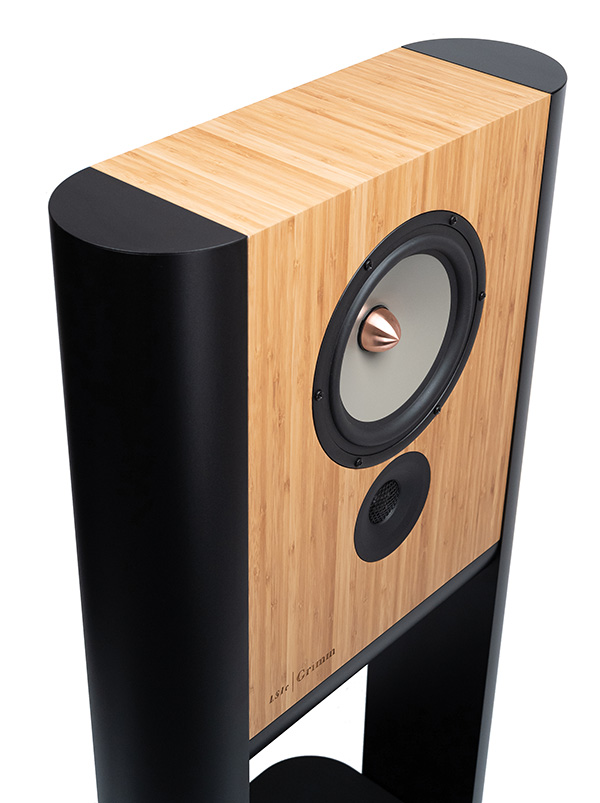
Years later, Eelco, too, started taking stereo gear to new altitudes, becoming a designer of high-end speakers and electronics. After Grimm Audio, a 15-person enterprise, moved to a building near Eindhoven airport in the southern Netherlands, he realized that it stands in almost the exact spot where his dad used to park his fighter jet.
"That's pretty odious," Andy Summers says to me. "An odious comparison." His blueish eyes darken. Roughly an hour into our 90-minute face-to-face interview, I'd asked if it bothers him that in terms of reach and staying power, his solo oeuvre will never match his work with The Police.
To me, the observation seemed factual and uncontroversial, like saying that the sun rises in the east. The Police sold more than 75 million records and played some of the largest venues in the world. The night before our interview, I'd watched Summers perform a show in a 400-seat theater in rural Waldoboro, Maine.
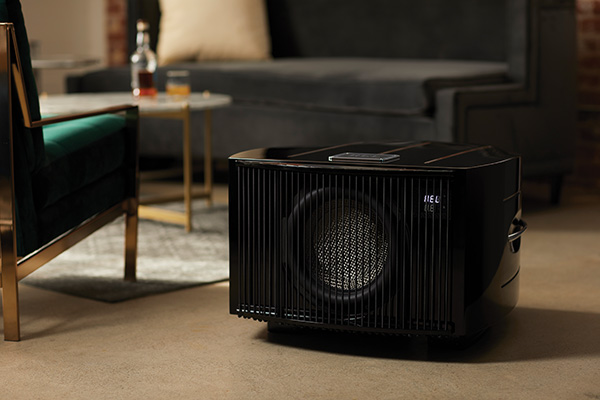
With subwoofers, he's at his worst. Did you hear that?, he'll exclaim when he worries that a low bass note received too much emphasis. He nags and niggles that perhaps the integration between the main speakers and the subwoofer leaves a crater somewhere in the low-frequency band. He harps, not always believably, that he can hear where the subwoofer is, even though deep bass is supposed to be impossible to localize. Most of all, he barely lasts a song without getting twitchy about the sub's gain setting, imagining that he has to dial in exactly the right amount of deep-bass presence with each track.
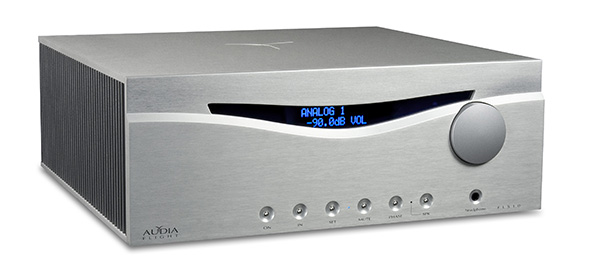
The beauty of an integrated amp lies in its synergy. Audio engineers know exactly how the pre and power sections will interact; the two are literally designed to work together. On paper at least, that means optimized impedance matching, and signal integrity that can rival and perhaps surpass separates. How do you know whether a standalone preamp is a great match for a power amp? For most of us, it's through trial and error. It isn't unusual for restless stereo aficionados to own multiple combos over the years, in search of the ideal one. That gets costly.
Then there's the fact that an integrated amp helps declutter a room, appealing to minimalists and people whose living spaces are less than cavernous. Another plus: no need to shell out for audiophile-grade interconnects.
There's no accounting for taste, or so the truism goes. But arguing over preferences is exactly what many audiophiles do. Similarly, Stereophile reviewers are all about parsing and evaluating sound, and how a product looks isn't usually a big part of the equation. But I'll buck that convention and say that the radically shaped Estelon X Diamond Mk IIs aren't just the most visually sublime speakers I've laid eyes on; they ought to be part of the Cooper Hewitt Museum's permanent collection. Or MOMA's.
Boris Blank has a cold, and three days after meeting him in his hometown of Zurich, I do too. This seems apt. Metaphorically, he's been infecting me for decades.
For almost 45 years, Yello, the pioneering Swiss band that Blank formed with singer Dieter Meier, has created witty electropop that provokes joy and awe in attentive listeners. You can dance to most of this music, of courseit's often hard not tobut its allure, its spell, goes deeper. For one thing, Yello's music is delightfully visual. Cinema for the ears.
When German writer Johann Wolfgang von Goethe published The Sorrows of Young Werther in 1774, he intended for readers to finish it, but not, you know, to end it. To Goethe's disbelief, his novel sparked a spate of suicides. The title character, whose obsessive love for a married woman was unrequited, ended up shooting himself, and soon the copycatting started. Young men of the era would dress just as the fictional Werther hadyellow trousers, blue jacketand use a similar pistol. Often, a copy of the book was found at the scene. The number of deaths was unsettling enough that Italy and Denmark banned Goethe's novel. The German city of Leipzig even outlawed Werther-style clothes for a while. The phenomenon is now known as the Werther effect.
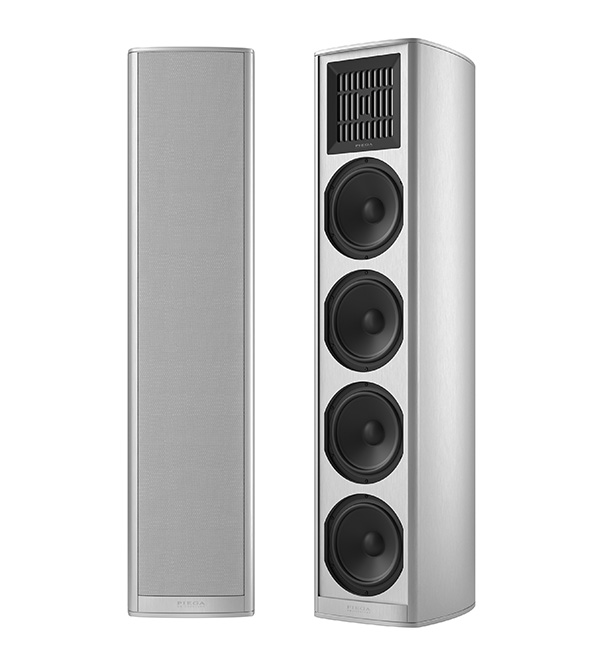
Part of the reason I was so smitten with the recording lay in the engaging, naturalistic presentation it received from the handmade-in-Switzerland Piega Gen2 811 floorstanders ($30,000/pair) that had just made their way to my listening room.
I don't know why I was chosen as the lucky recipient, but after stammering half a dozen thank-yous, I suddenly owned about 150 fine wines. A few carried four-figure price tags.
Reliably telling a Pinot Grigio from a Chardonnay isn't part of my skill set. Grape varieties, terroir, vintages? You might as well ask a toddler to become conversant in quantum mechanics. Still, I was intrigued by the bottles and amused by the ridiculousness of the situation. Me, an oenophile? I supposed I could pretend, and I did.
After opening and drinking, with my wife, a 1988 Château Léoville Barton, I wrote an over-the-top review and emailed it to a wine-loving friend for his amusement. "I beheld Hawthorn berries and beef stock along with a suggestion of blonde tobacco. Other than the obvious green walnut, there was a top note of wet Baja beach at dawn, mixing subtly with minke-whale flatulence and a hint of two-day-old scallop innards. Finally, with subsequent sips, I detected the aroma of the well-worn merkin of a Honduran sex worker. All in all, not a bad wine."
Eat your heart out, Robert Parker!