Jim Austin

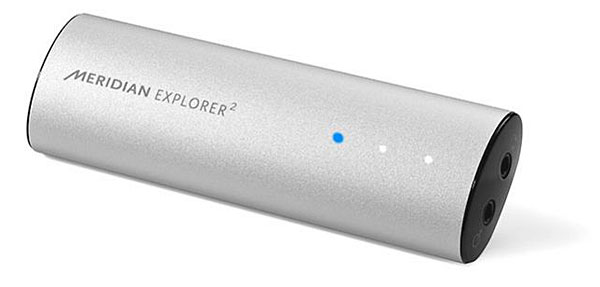
Meridian Explorer2 D/A headphone amplifier

I was lying on a mattress on the floor of an empty apartment on Manhattan's Upper West Side. Not as grim as it sounds—it's a nice apartment, and the mattress was new, and had just been delivered—but it was hot (no air-conditioning), and my family and my furniture were still in my condo up in Maine, and I was lonely. I needed some cheering up. Which is how I rationalized the decision to buy an Explorer2, Meridian Audio's tiny, inexpensive ($299) digital-to-analog converter.
Continue Reading »

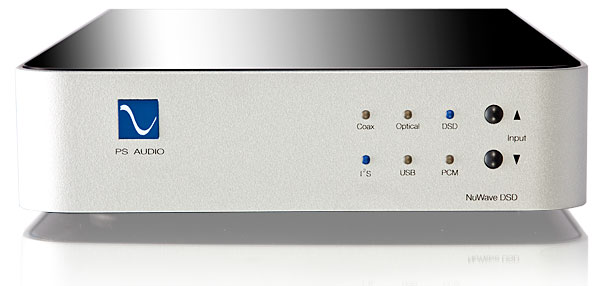
PS Audio NuWave DSD D/A processor

Researchers at MIT recently discovered a "music channel" in the human brain. These neural pathways respond to all kinds of music—and only to music. "A listener may relish the sampled genre or revile it," Natalie Angier wrote in the New York Times. "No matter. When a musical passage is played, a distinct set of neurons tucked inside a furrow of a listener's auditory cortex will fire in response"
Continue Reading »

VTL/Wilson/Transparent at Innovative Audio: Selling “Happy”

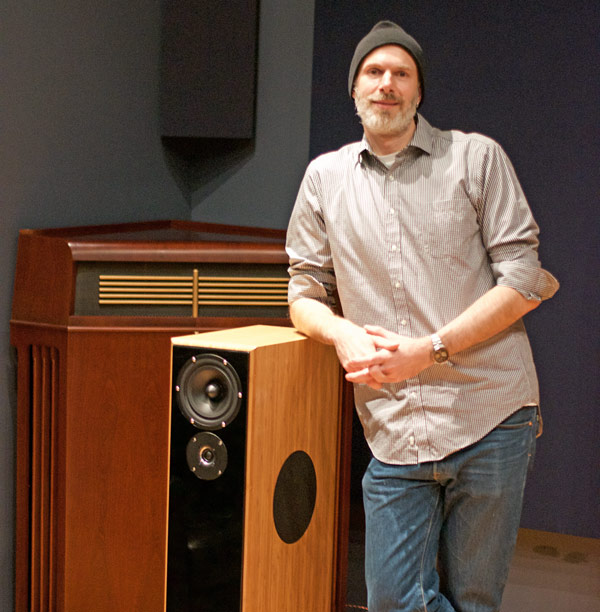
Photo: Jim Austin

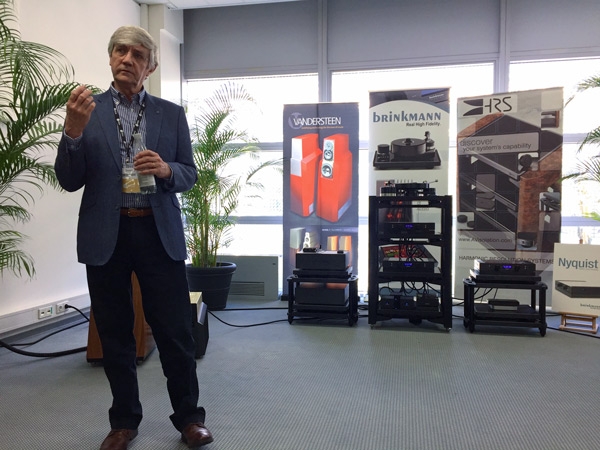
"'Happy' is our primary product," Elliot Fishkin, the proprietor of Innovative Audio, which is entering its 45th year of business, told visitors early Thursday evening, January 21. "We want you to be able to be connected to the music in profound ways." A small crowd was gathered in the lobby outside Innovative's newly renovated showrooms, in an expansive underground space on the east side of Manhattan, to hear amplifiers by VTL, cables by Transparent, and loudspeakers by Wilson Audio.

Continue Reading »

Dispatches from the Other Portland

Portland, Maine, my hometown for the better part of two decades, is a pretty hip place. We are not, for the most part, innovators in fashion, but we are early adopters of the more interesting latest styles.

For years now, what I take to be a Brooklyn style has been prevalent among the local twentysomething crowd. The hipper restaurants are full of pretty young women and bearded men in plaid shirts who, on the one hand, seem ready for the woodlot but who, on the other hand, seem too skinny to lift a decent-size chainsaw. Likely as not, they arrived on single-speed racing bikes converted for commuter use. Nifty machines.

Continue Reading »

Audio, Meet Science

For a field based on science, high-end audio has a relationship with its parent discipline that is regrettably complex. Even as they enjoy science's technological fruits, many audiophiles reject the very methods—scientific testing—that made possible audio in the home. That seems strange to me.
Continue Reading »

Westone 3 in-ear headphones

Designed to be used onstage by musicians monitoring their sound and mix, in-ear monitors (IEMs) such as the new Westone 3 are great in situations where you want to hear nothing but the music. They're small and portable, and their high efficiency and easy impedance load mean they work well with portable players. IEMs are better than electronic-feedback, noise-reducing, closed circumaural phones at blocking out airplane engine noise and annoying neighbors who want to chat. They're also more compact, sound better, and don't require batteries.

Continue Reading »

Marantz SA8001 SACD player

Most people are familiar, at least in outline, with the Hans Christian Andersen fairy tale "The Princess and the Pea." In the story, the Queen decides that it's time for her son to marry, and the Prince—apparently a very fussy young man—decides that he can marry only a true princess, as measured by her sensitivity to small discomforts. It's like being an audiophile, but with peas.

Continue Reading »

RealTraps MondoTrap room acoustics treatment

For a hobby based on science and technology, audiophilia has more than its share of unscientific elements. That's not necessarily a bad thing; not all of those elements are obvious snake oil, and there's more than science to creating—or re-creating—a musical experience. Still, for the more technical-minded it's a little disconcerting that even the most basic distinctions, such as why two CD players sound different from each other, are hard to explain using technical measurements and simple scientific concepts.

Continue Reading »
Advertisement
Advertisement
Advertisement