Digital Processor Reviews

Sort By: Post DateTitle Publish Date

Devialet D-Premier D/A integrated amplifier

Most reviews are straightforward. One preamplifier or power amplifier replaces another. DACs are swapped out. A new pair of speakers takes up residence in the listening room.


But some products demand a complete revision of a system's architecture. Such was the case with Devialet's D-Premier ($15,995). Not only is this French product an integrated amplifier, with phono and line analog inputs; it has digital inputs and an internal D/A section.
Ayre Acoustics QA-9 USB A/D converter

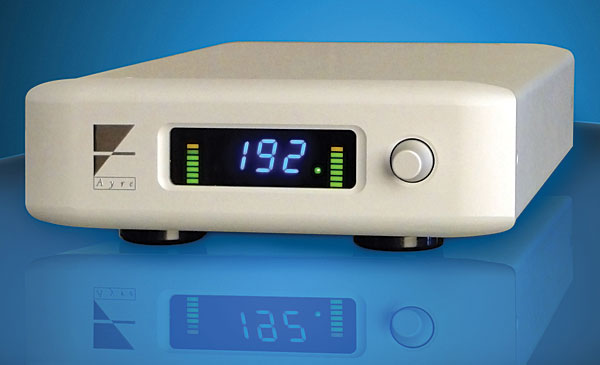
Since its founding in 1993, Colorado-based Ayre Acoustics has made its name with amplifiers and preamplifiers based on truly balanced, solid-state circuitry that didn't use the ubiquitous panacea of loop negative feedback to produce linear behavior. Their first digital product was the D-1x DVD player, reviewed for Stereophile by Paul Bolin in February 2003, which offered unusually good video performance. The D-1x was followed by the C-5xe and DX-5 universal players, respectively reviewed by Wes Phillips (July 2005) and Michael Fremer (December 2010). But the most intriguing digital product to come from Ayre was the QB-9 digital processor. Reviewed by WP in October 2009, the QB-9 has just one input, USB, and uses Gordon Rankin's proprietary Streamlength code to give asynchronous operation, which in theory offers the best jitter suppression. "The QB-9 isn't a computer peripheral," said Ayre's marketing manager at that time, Steve Silberman. "It makes computers real high-end music sources"—a statement with which WP agreed.

MSB Technology Platinum Data CD IV transport & Diamond DAC IV & D/A converter

The audiophile does not pursue music reproduction because it is useful; he pursues it because he delights in it, and he delights in it because it is beautiful. If music were not beautiful it would not be worth knowing, and if music were not worth knowing life would not be worth living.


My apologies for corrupting the well-known statement by French mathematician Jules Henri Poincaré (1854–1912), in which he described his relationship with science and nature. But substituting audiophile for scientist and music for nature, I feel the sentiment expresses what drives many audiophiles to the extremes for which mere mortals often chide us.

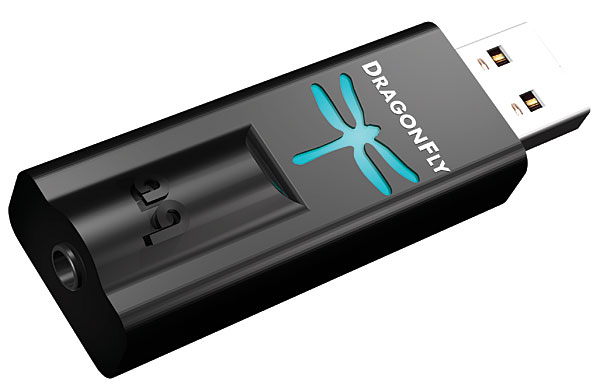
AudioQuest DragonFly USB D/A converter

"This product is an industry disrupter."


Thus spoke AudioQuest's Steve Silberman, VP of development, of their brand-new USB D/A converter, the DragonFly. "There are a lot of very good DACs out there," he continued. "There are even a lot of very good affordable DACs. But the problem is, people outside of audio don't want them: They don't want old-style components like that.

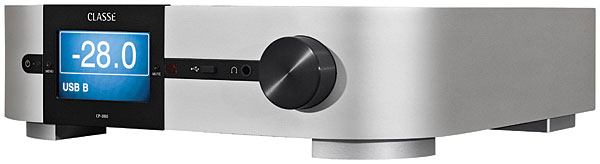
Classé CP-800 D/A preamplifier

I was setting up for some musical demonstrations I was to present for a Music Matters evening at the ListenUp! store in Boulder, Colorado, in May 2011. For these events, an audio store invites manufacturers (and the occasional journalist) to demonstrate to local audiophiles the musical benefits of high-end audio playback. In Boulder, I was to share the store's big listening room with Dave Nauber, president of Classé Audio, who had set up a system with B&W Diamond 802 speakers, a Classé stereo amplifier, and a preproduction sample of Classé's new CP-800 preamplifier ($5000), all hooked up with AudioQuest cable. I unpacked my MacBook, with which I was going to play the high-resolution master files of some of my Stereophile recordings, and looked around for a DAC. There wasn't one.

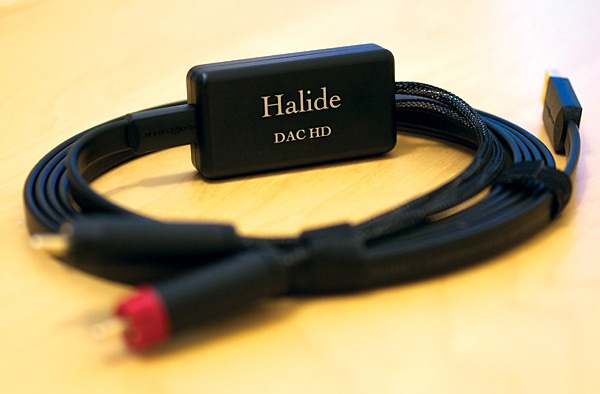
Halide Design DAC HD D/A converter

When it comes to getting audio from a PC via its USB port, the buzzword du jour is asynchronous. This cryptic term refers to which device has control over the timing of the audio data being streamed from the computer: the computer itself, or the device receiving the data. It might seem logical to have the computer control the timing, but this is not so. When digital audio data are converted to analog by a D/A converter, control over exactly when each dataword is converted is critical for the best quality of sound. Any uncertainty in that timing manifests itself as analog distortion, aka jitter.

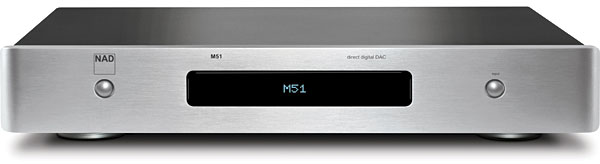
NAD M51 Direct Digital D/A converter

Who wants only a digital-to-analog converter when you can have a DAC with benefits? How about if those benefits also come with some high-resolution attitude?


That's what I pondered while setting up the NAD M51 ($2000). Sure, it's a basic DAC, but it also has extras—like HDMI inputs, remote-controlled volume, a polarity switch, and one of my favorite features on any DAC: a display that tells you which sampling rate the thing is locked to.

Peachtree DAC•iT D/A converter


It's common knowledge that manufacturers tune the sound of each DAC model. There are the facts of product design and marketing: inputs, outputs, case materials, price points. After that, what's left are the trade-offs of different circuit designs and filter options, which are chosen with care—each has a subtle yet telling effect on a DAC's sound. Most designers try to go from bits to analog with minimal deviation from perfect. But when you look at the measurements and listen closely, you realize that perfect is elusive. One has to make choices.

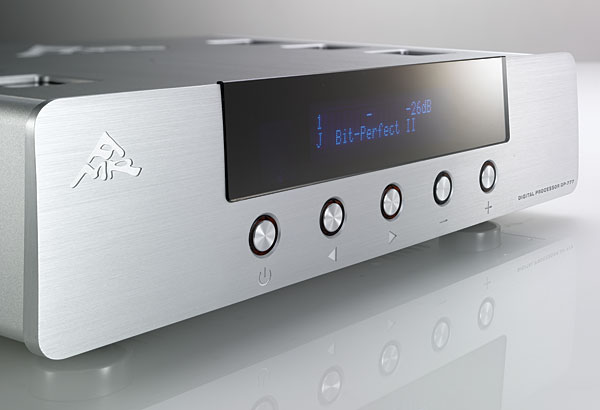
Abbingdon Music Research DP-777 D/A processor

Computer audio is more than just a pleasant distraction. For the jaded reviewer, USB digital converters and the like are an escape from that humdrum, if only because they bring with them so many variables: myriad combinations of different platforms, storage devices, operating systems, device drivers, media players, codecs, word lengths, sampling rates, connection protocols, and more. Challenging though they may be, computer-audio products are a tonic for reviewers inclined toward apathy.
Advertisement
Advertisement
Advertisement