Budget Component Reviews

Sort By: Post DateTitle Publish Date

HeadRoom Total BitHead headphone amplifier
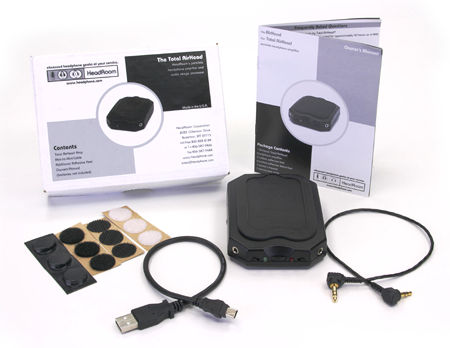
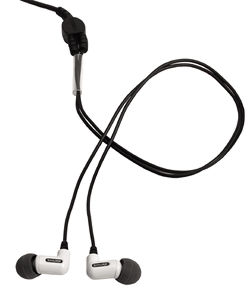
When, on his long-running TV variety show, Jackie Gleason used to order up some "traveling music" from music director Ray Bloch, he got a live orchestra's worth. But when Gleason, a composer and conductor in his own right (he wrote his show's unforgettable theme song, "Melancholy Serenade"), actually traveled, his listening options were severely limited compared to ours. By the time the comedian died in 1987, Sony had introduced the Walkman cassette player, but Apple's iPod was still more than a decade in the future.
Paradigm Reference Studio/60 v.3 loudspeaker

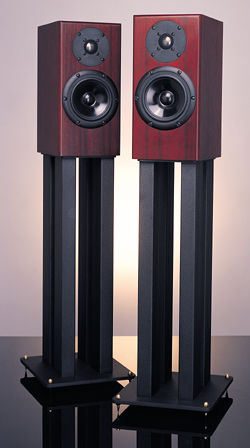
I am biased in favor of Paradigm loudspeakers. I've used them for 10 years; they offer good sound and good value, properties they share with a number of other Canadian makes who have taken advantage of Canada's National Research Council facilities in Ottawa. In fact, the first components I bought specifically for what is now my multichannel system were Paradigm Esprit/BP speakers, which had impressed me at a Stereophile show. When I took the step into multichannel and found that there wasn't a matching center-channel speaker for the Esprits, I replaced them with Paradigm's Reference Studio/60 v.2s. But while the smaller Reference">http://www.stereophile.com/loudspeakerreviews/628">Reference Studio/20, and the larger Studio/100http://www.stereophile.com/loudspeakerreviews/252">Studio/100; have both been reviewed in Stereophile, the Studio/60 had not. The release of the v.2's successor, the Reference Studio/60 v.3 ($1699/pair), was an opportunity to fill that gap.


PSB Image B25 loudspeaker

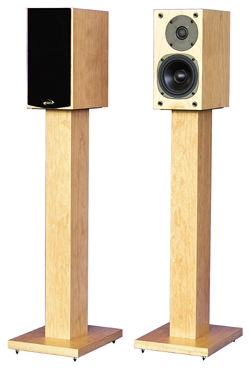
Paul">http://www.stereophile.com/interviews/231">Paul Barton, founder of PSB Speakers International, is an icon of the North American speaker industry. A talented designer who has for many years produced innovative and cost-effective designs at a range of prices, Barton does not let time stand still, constantly updating and revising his designs. But what makes him unique, in my view, is that, unlike the designers at most North American speaker companies, whose successful affordable designs are trickled down from their more expensive models, Barton, like the British designers, seems to get most of his excitement from his budget lines. His original PSB">http://www.stereophile.com/loudspeakerreviews/241">PSB Alpha was, in its day, the most significant entry-level speaker made in North America since the original Advents of the 1970s.


Musical Fidelity X-DACV3 D/A processor

The X-DAC v3 replaces Musical Fidelity's Tri-Vista 21 DAC, which is no longer in production, although you might find some on dealer's shelves. The Tri-Vista 21 used two pairs of subminiature 5703 WB military tubes in the analog output stage. MF's Antony Michaelson called this Cold War tube, which is no longer made, a trivistor. The Tri-Vista 21 was last seen selling for $2395.


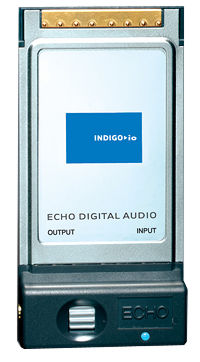
Echo Indigo IO CardBus soundcard

The integration of computers into high-end audio is contentious. A reader">http://www.stereophile.com/showvote.cgi?340">reader poll last spring on our website indicated that a significant proportion of audiophiles—a quarter—is dead set against the idea, yet both Microsoft, with Windows Media Player 9, and Apple, with iTunes, seem convinced that the future of domestic music reproduction involves computers. To support that idea, both Apple- and Windows-based computers (the latter with Intel's about-to-be-launched HD Audio technology) are promoting hi-rez audio playback.


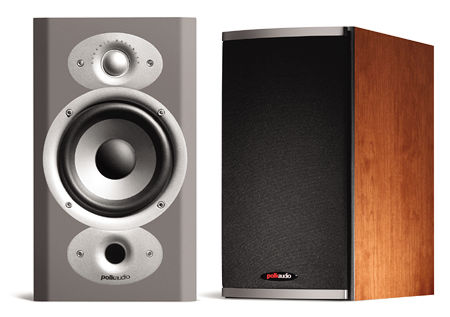
Polk RTi4 loudspeaker

In the September 2001 Stereophile (Vol.24 No.9), I wrote very favorably about Polk's RT25ihttp://www.stereophile.com/loudspeakerreviews/417">RT25i; loudspeaker ($319.90/pair). That bookshelf model impressed me with its open, neutral midrange; its pristine, extended high-frequency response; and its low-level dynamics. On the minus side, the RT25i was fairly limited in low-bass extension and high-level dynamic slam. At the time, I was seeking a new speaker for my home computer music-composition system, and I bought the review samples—the only time I've done that since I began to write for Stereophile some 20 speaker reviews ago.


Audes Bravo loudspeaker

Attending a Consumer Electronics Show is enjoyable, productive, nerve-racking, and exhausting. Too many components, so little time. One has to prioritize to ensure sufficient time to cover everything intended. One needs to avoid certain rooms, such as those with new, unremarkable designs from companies whose designers would love to talk—for half an hour or more—with each audio reviewer who makes the mistake of sauntering in. There are also many rooms in that middle region—rooms on neither the Must Hit nor the Must Avoid list.


Infinity Primus 150 loudspeaker

It was 20 years ago that I began audio reviewing as a second career. It was also 20 years ago that I made my first very expensive audio purchase: a pair of Infinity RS-1b speakers. The RS-1b was a landmark speaker in its day, and very costly for the time at $5500/pair. (I think my dentist has just spent more than that on a TV.) In retrospect, the RS-1b was an extraordinary value. With four large towers, more than 30 drivers, and a servo network and a passive crossover, the Infinity RS-1b resolved a significant amount of detail, was capable of large dynamic swings, had pinpoint image specificity on a wide, deep soundstage, and was capable of reproducing a convincing bottom octave in the right room when paired with the right associated equipment. Its main weaknesses were a relative lack of coherence due to its use of three different types of drivers to cover the various frequency ranges, and both the midrange/tweeter towers and woofer columns were picky about amplifier matching.


Advertisement
Advertisement
Advertisement