Budget Component Reviews

Sort By: Post DateTitle Publish Date

Paradigm Atom v.3 loudspeaker
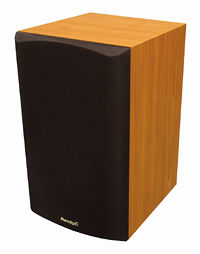
I had mixed feelings about reviewing the $189/pair Paradigm Atom loudspeaker. Although in the past I've been favorably impressed with Paradigm's speakers—the $600/pair Reference">http://www.stereophile.com//loudspeakerreviews/628/">Reference Studio/20 remains one of my favorite affordables—Budget Bob tends to get a bit nervous when a speaker's price drops below $250/pair. In my experience, even when the most talented speaker designers attempt to make a speaker to sell at such a low price, the result is often a very small cabinet with limited bass extension and inferior high-level dynamics.
Athena Technologies AS-F2 loudspeaker

I have always had an affection for speakers designed and manufactured by the Canadian conglomerate Audio Products International Corp. (API), which markets speaker designs under the names Mirage, Energy, Sound Dynamics, and Athena. In fact, it was 20 years ago that API created the first budget speaker that caught my attention, the Mirage 350. At the time, the 350 was the only speaker I'd heard that cost less than $300/pair. It sounded open, musical, and detailed without seeming bass-shy. (A larger successor, the 460, was for many years my reference home-theater speaker.) Although I've been impressed with many other API designs I've heard over the years at friends' houses, press events, and hi-fi shows, it had been more than a decade since I'd formally reviewed an API product.


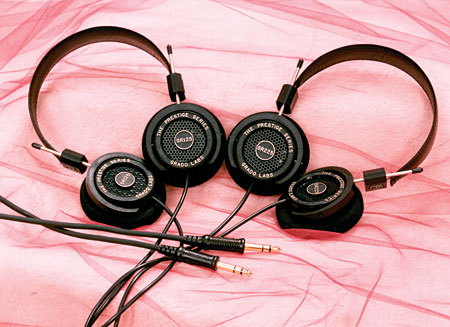
Grado Laboratories SR 125 headphones

For many years I have used three sets of headphones, all from Grado Laboratories: the Reference">http://www.stereophile.com/headphones/796grado">Reference RS-1 ($695), the SR-125 ($125), and the SR-60http://www.stereophile.com/headphones/532">SR-60; ($60). I've always favored Grado headphones because the minimal-resonance design philosophy that I feel is responsible for the uncolored midrange of their moving-iron cartridges extends throughout their headphone range as well. Recently, however, I've achieved a new perspective regarding the SR-125 'phones that I felt would be of interest to Stereophile readers.


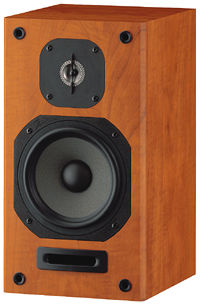
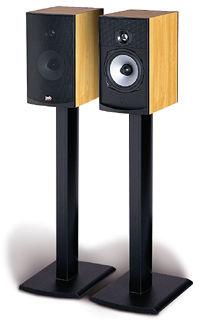
PSB Alpha B loudspeaker

Paul Barton is a legend in the speaker business. For 25 years this musician and engineer has dedicated his life to providing speaker purchasers with higher levels of sonic realism at lower prices. Barton is a frugal perfectionist, and his obsession with psychoacoustics is evident in all his designs. I was mightily impressed with his midpriced Image 4T (Stereophile, February 2001), which was, like all Barton designs, designed with the assistance of the facilities of Canada's National Research Council.

RME Digi96/8 PAD computer soundcard

When I read John Atkinson's reviews of the Digital Audio Labs CardDeluxe (Vol.23 No.9) and RME Digi96/8 Pro (Vol.23 No.11 and Vol.24 No.1), I realized that soundcard technology had matured far faster than I had been aware. For about the price of a mainstream CD player, anyone with a reasonably powerful computer could add multitrack digital recording technology to his bag of tricks.

Mission m71 loudspeaker

I haven't been shy in these pages regarding my love for the Mission 731i loudspeaker (reviewed in November 1996, Vol.19 No.11). It quickly became my reference standard for an entry-level audiophile speaker. Subsequent to my review, Mission significantly improved the speaker by introducing a silk-dome tweeter (see Follow-Up in April 1998, Vol.12 No.4). I bought three pairs: one for my home recording studio, one for my faux outdoor summer-home system (guest bedroom windowsills, pointing outward), and one for portable use to drag to friends' parties when their sound systems are not up to snuff.


JMlab Chorus 706 loudspeaker

The most exciting development in audio today isn't multichannel surround, single-ended triodes, or $10,000 phono cartridges. It's "trickle down." I get buzzed when an audio designer known for cutting-edge multikilobuck designs claims to have a product that can produce 80% of the sonic realism of his flagship design at 50% of the cost. I get even more excited when he does it again—that is, produces a product that produces 64% of his flagship's performance at 25% of the cost. Designers who have successfully trickled-down their flagship technologies abound in all quarters of audiophilia, from electronics (eg, Audio Research, Conrad-Johnson) to speakers (Alón, ProAc) to cables (MIT).


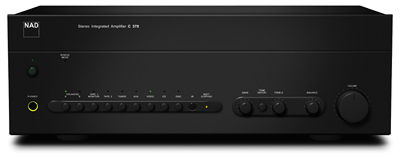
NAD C370 integrated amplifier

NAD has been out there on the leading edge of entry-level high-end sound long enough that some audiophiles reckon they invented the category. Sure, we should give serious props to the likes of Creek, Rotel, Musical Fidelity, Arcam, Denon, and Parasound, all of which have made significant contributions to the musical aspirations of budget-conscious pilgrims. But I continue to harbor warm feelings about my last extended visit with an NAD component: the inexpensive yet supremely musical L40 CD Receiver, which I reviewed in the June 2000 Stereophile.


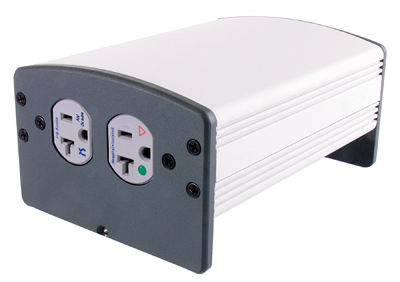
PS Audio Ultimate Outlet AC conditioner

PS Audio's Power Plant AC-regeneration devices have taken the audio and home-theater worlds by storm. The P300 was voted 2000 Accessory of the Year in Stereophile (December 2000), and the P600 won the Editors' Choice Platinum Award in Stereophile Guide to Home Theater (January 2001). The Power Plant differs from conventional power-line conditioners (PLCs) in that it doesn't just "clean up" AC but actually synthesizes (or regenerates) it. Each Power Plant is essentially a special-purpose amplifier, producing AC to run the equipment plugged into it, the maximum output wattage indicated by the model number. (The most powerful Power Plant available is the P1200, which produces 1200W.)


Sony TA-P9000ES multichannel analog preamplifier

Sony describes the $700 TA-P9000ES as "a pure audio multichannel preamplifier equipped with two inputs for 5.1 analog multichannel audio sources, enabling selection, volume control, and amplification." A relay with twin gold-plated crossbars switches the two six-channel sources. Then follows a class-A solid-state push-pull amplifier in discrete configuration. Separate transistors, resistors, and capacitors populate the printed circuit boards. An oxygen-free copper shield surrounds each channel to prevent crosstalk between the channels. In addition, there is a relay-controlled gain stage offering 0, +6, and +12dB amplification.


Advertisement
Advertisement
Advertisement