Budget Component Reviews

Sort By: Post DateTitle Publish Date

Musical Fidelity V-Link USB-S/PDIF converter
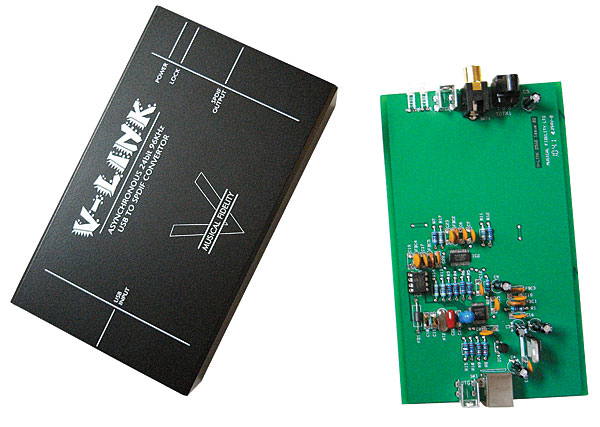
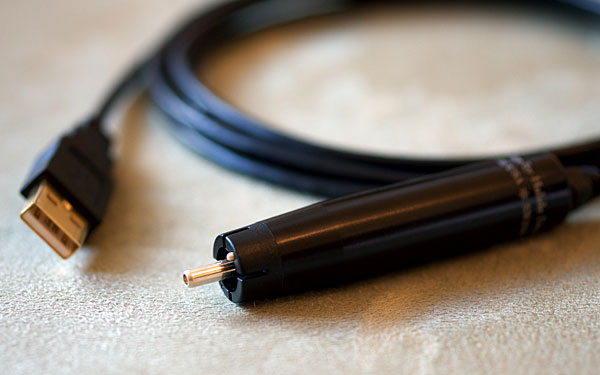
A computer is not optimized for the uninterrupted streaming of audio data. It has rapidly become established wisdom, therefore, that the optimal means of extracting audio data from a computer's USB port is to operate that port in what is called "asynchronous isochronous" mode. This lets the receiving device, such as a digital-to-analog converter (DAC), control the flow of data from the PC. In theory, asynchronous USB operation (not to be confused with the asynchronous sample-rate conversion used in some DACs) reduces jitter to unmeasurable levels, depending on the accuracy of the receiver's fixed-frequency oscillator, which is used to clock the data to the DAC. By contrast, in the alternative and almost ubiquitous USB operating mode, called "adaptive isochronous," while the sample rate of the output data, averaged over a longish period, will indeed be the specified 44.1 or 48kHz, there will be short-term fluctuations, or jitter, due to the oscillator having to change its frequency every millisecond to match the uncertain rate of data flow from the PC.
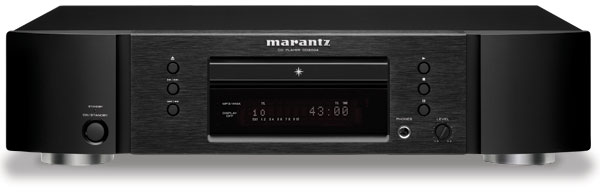
Marantz CD5004 CD player

After writing my very favorable review of Marantz's PM5003 integrated amplifier ($449.99) for the January 2010 issue, I began to fantasize about how it might be packaged with other components to create a dynamite entry-level system for about $1000 (excluding cables). A good place to start, I felt, was the companion model to the PM5003, Marantz's own CD5003 CD player. Since then, both have been replaced with new models, respectively the PM5004 and CD5004, so I sought out review samples of both. (To read how the PM5004 compares with the PM5003, see my "Follow-Up" on the Marantz PM5004 integrated amplifier.)

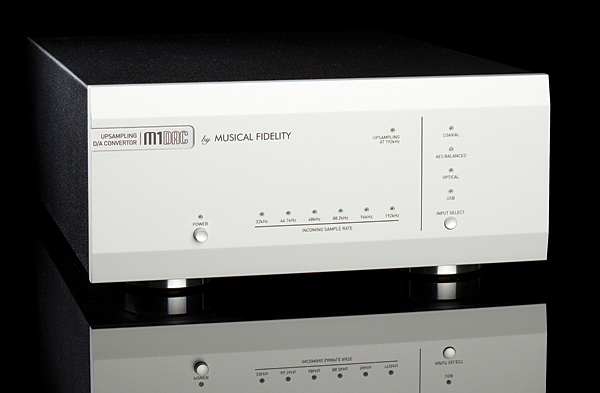
Musical Fidelity M1 DAC

The M1 DAC is by Musical Fidelity. At $699, it's a stunning bargain. Comparing it to $995 for the Digilog in 1989. Meanwhile, the M1 is far more versatile, way better built, and, if memory serves me right, sounds vastly better.


It appears that the way to sell a DAC in 2011 is to almost give it away, in real-dollar terms. Some people pay far more than this for a set of speaker cables, a pair of interconnects, even a power cord. The M1 DAC is a piece of kit that can transform your system. I kid you not.

Epos M5i loudspeaker

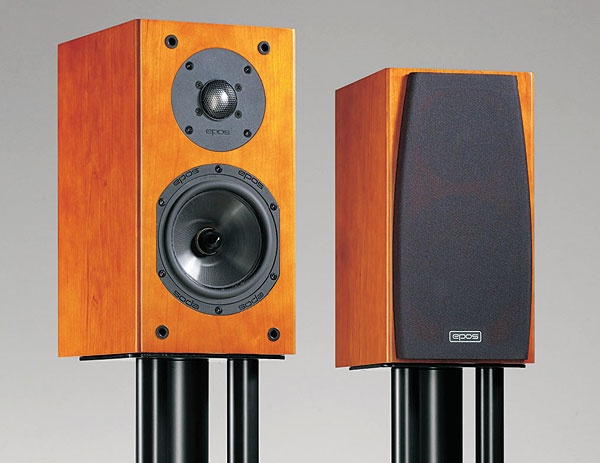
The M5i, basically a two-way bookshelf version of the 21½-way M16i, has the same tweeter, woofer, and footprint as the larger model, less its larger cabinet and second mid/woofer, and incorporates all of the i-series updates included in the M16i. The speakers look very similar; like the M16i, the M5i is available in gorgeous cherry veneer or basic black. The price ($899/pair) is $249/pair higher than the original M5. I placed the M5is on Epos's dedicated stands.

HRT Music Streamer Pro USB D/A converter

Art Dudley and others have covered the first products released by HRT, and now the company has added to its product line a Pro version of its Music Streamer, which sports balanced circuit design from tip to tail.


Housed in the same simple, functional, six-sided case of extruded aluminum as HRT's other products, the Pro is painted a bright blue to distinguish it from the Music Streamer II (red) and Music Streamer II+ (gray). At 5.6" it is also a tad longer than the others, and includes a single B-type USB 1.1 jack centered on one end, and two small, fully balanced TiniQ output jacks on the other. More about these special mini sockets later.

Chord Chordette Gem D/A processor

There's home cooking on one side of the hedge and fast food on the other, and the world moves farther from the former and nearer to the latter with each passing day. So it goes in domestic audio, where virtually every new milestone of the past quarter-century has pointed far more toward convenience than toward quality.


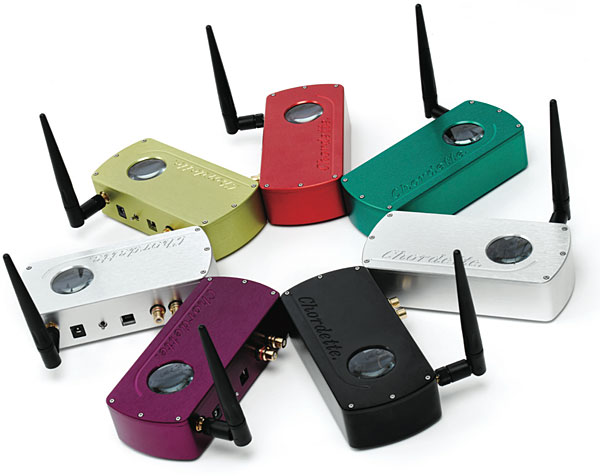
Depressed? Don't be. Those of us in the perfectionist community have a history of dealing with such things, howsoever slowly and inefficiently. (footnote 1). We're getting better at it, too, year by year. An example: Chord Electronics, of sunny southern England, has now brought to market their Chordette Gem D/A converter ($799) which they offer as an affordable means of getting perfectionist-quality sound from computer-music files.

Sutherland Engineering Timeline record weight

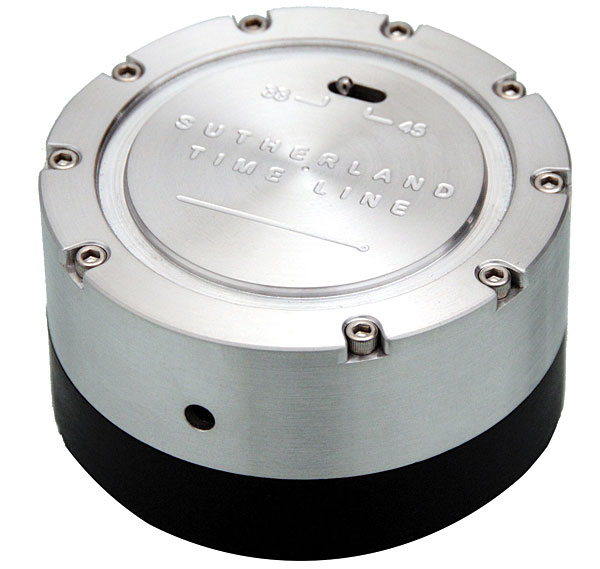
Ron Sutherland has devised the Timeline, a device for testing the 33.33 and 45rpm speeds of turntables. It's housed in a disc of aluminum and Delrin that fits over the platter spindle. Turn it on, and an LED shoots a red dash of light at the wall (if there is one) behind your turntable. If the dash doesn't move, the speed is correct. If it drifts to left or right, you'll need to adjust the 'table's speed. Unless your wall has hash marks, there's a bit of subjectivity involved, and at $399 the Timeline isn't cheap, but Sutherland says he's not making much money at that price, and that it will take a lot of sales to recoup the R&D he's put into designing something as precise as he claims the Timeline is.—Michael Fremer

Halide Design S/PDIF Bridge USB-S/PDIF converter

The weekly Vote! Page is one of the most popular features of the Stereophile website, and the August 22 question, "Should Stereophile review more or fewer computer-audio products?", generated a record number of responses. No less than 88% of those responding asked for more coverage of products that allow a computer to be a legitimate source of music in a high-end context. Just 7% of readers wanted less coverage.

NHT Classic Absolute Tower loudspeaker

I've always enjoyed the time I've spent with NHT loudspeakers. The two bookshelf models I've reviewed—the SB-3 (Stereophile, November 2002) and its successor, the Classic Three (November 2006)—shared NHT's "house sound": liquid, balanced, and dynamic, with little coloration, and a slightly forward and lively midrange. The newer Classic Three, still in production, sounded more refined, natural, and detailed than the SB-3. I like to see speaker designers whose work improves over time.


So when NHT approached me about reviewing a new floorstanding model with a small footprint, the Classic Absolute Tower—their first new speaker design of the next decade, they say—I jumped at the chance. Not only had I not reviewed an NHT in a while, but I'm increasingly intrigued with—and applaud—the trend of manufacturers to add small-footprint tower speakers to their lines of affordable speakers. As most speakers costing under $1000/pair tend to be bookshelf models, shoppers need to worry about buying good-quality stands of the appropriate height, and about optimizing the speaker positions with respect to the front and side walls.

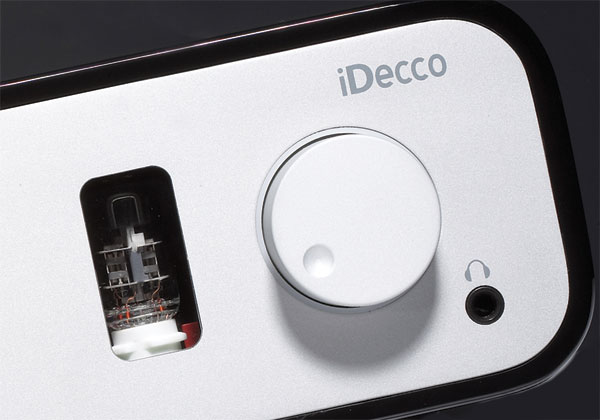
Peachtree iDecco D/A integrated amplifier

As with so many other things, from cell phones to soy milk, the idea of a portable MP3 player was something I at first disdained, only to later embrace with the fervor of any reformed sinner. But not so the idea of a high-fidelity iPod dock: Given that I now carry around several hundred high-resolution AIFF files on my own Apple iPod Touch, the usefulness of a compatible transport seemed obvious from the start. Look at it this way: In 1970, whenever I bought a music recording, I could enjoy it on any player, in any room in the house. In 2010, why shouldn't I enjoy at least that degree of convenience and flexibility—without resorting to a pair of tinny, uncomfortable earbuds?
Advertisement
Advertisement
Advertisement