
As We See It

Sort By: Post DateTitle Publish Date

House Calls & Home Auditions
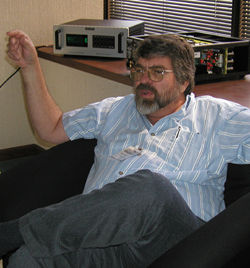
Conventional wisdom has it that you should listen to an audio component, preferably in your own system, before you decide to buy it. But who, these days, has the opportunity to do this consistently? Even an audition in the store isn't guaranteed; I have to drive two hours to get to the nearest dealer with decent customer service and a good inventory of interesting gear. And though he generally stocks a fairly wide range of components, like any dealer, he carries only a small sample of all the hi-fi gear that's currently, in principle, available.


Music Business—Show Business

Stereophile is devoted to getting the best sound from a home audio system. But as I have written">http://www.stereophile.com/asweseeit/533">written before, audiophiles don't have access to an absolute sound, only to what has been captured in the pits or grooves of their discs, which is itself the result of a creative process. The playing back and the making of recordings are therefore two sides of the same coin. This is why I get actively involved in recording projects and why I publish articles about those projects, the most recent of which appears on p.50. "Project">http://www.stereophile.com/musicrecordings/804k622">Project K622" describes the making of a new recording of Mozart's Clarinet Concerto (work number 622 in the Köchel catalog of Mozart's compositions, hence the article's title), which is being released both on hybrid SACD and on 180gm vinyl. (You can buy both from our secure "Recordings&quot">https://secure.stereophile.com/stereophile/recordings.shtml">Recordings…; page.)


Absolute Values

I recently came across a 1998 report, "Explaining">http://www.conference-board.org/publications/describe.cfm?id=398">Expla… the Computer Productivity Paradox," by Kevin Stiroh and Robert H. McGuckin III, that discussed the apparent fact that the widespread use of computers has not resulted in any significant increase in worker productivity. This is indeed a paradox, as my experience in the magazine business has left me with the opposite impression. We all do more, with less, than at any earlier time.


Vinyl Value

I recently bought a turntable, the first I've owned in about 15 years. I had sold my vinyl collection—a mix of classic rock, early 1980s pop, and the odd jazz or classical LP—when I was in grad school, for economic reasons: I needed the money for rent, or food, or beer, or something. Nor do I know what happened to my old plastic turntable; more than likely, I left it curbside for anyone strolling by who was able to appreciate its value.


We Get Letters

One of my mentors, John Crabbe—my predecessor as editor of the English magazine Hi-Fi News—used to insist that a magazine's soul is its "Letters" column. If a magazine was able to publish a lively collection of readers' letters, said John, it would enjoy a lengthy life. Conversely, if its letters column was dull or nonexistent, then no matter how much advertising it had or how many readers it could boast, it was just a matter of time before it had the lid shut on it. In the 28 years since John told me this, I have not found an exception. The kicker, of course, is that there's no easy way of ensuring that a magazine has lively letters to publish.


Advertisement
Advertisement
Advertisement