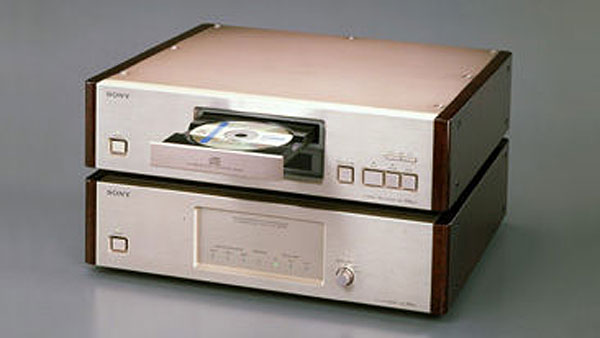
Meridian 208 CD player/preamplifier
"Desperation is the Mother of Invention." Isn't that how the proverb goes? Certainly it applied ten years ago in the case of the Philips engineers working on the development of the Compact Disc system. Given a specification that had included a 14-bit data word length, they had duly developed a 14-bit DAC chip, the TDA1540, only then to be informed that the CD standard decided upon after Sony joined forces with the Dutch company would involve 16-bit data words. (Thank goodness!)
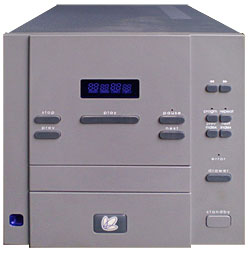 The Proceed CD player is the first digital product from Madrigal Audio Laboratories, a company known for their Mark Levinson preamplifiers and power amplifiers, including the very highly regarded
  The Arcam Delta 170 is one of the first examples of an entirely new product category: CD transports. The concept of different CD transports having different sonic qualities is vexing. It is a simple matter to prove that the bit stream contains identical data from virtually any CD transport (see "Industry Update," Vol.12 No.8). According to Arcam, development of the Delta 170 was spurred by audible differences among transports heard by dealers, customers, and Arcam staff. The possibility that CD transports have their own sonic signatures is intriguing.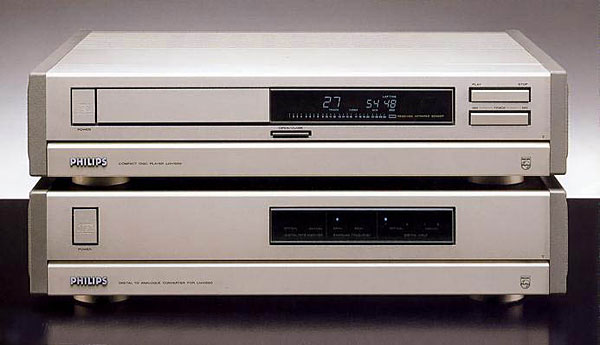
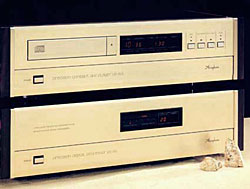 $13,000! You could buy two Hyundai Excels for that kind of money. Or one 5-liter Ford Mustang. Or two-thirds of a Saab 900 Turbo. How could the purchase of this Accuphase two-box CD player be justified on any rational grounds? What if it did offer state-of-the-art sound quality? Would it really be 50 times better than a humble Magnavox? Would it even be 4.3 times better than the