Stand Loudspeaker Reviews

Sort By: Post DateTitle Publish Date

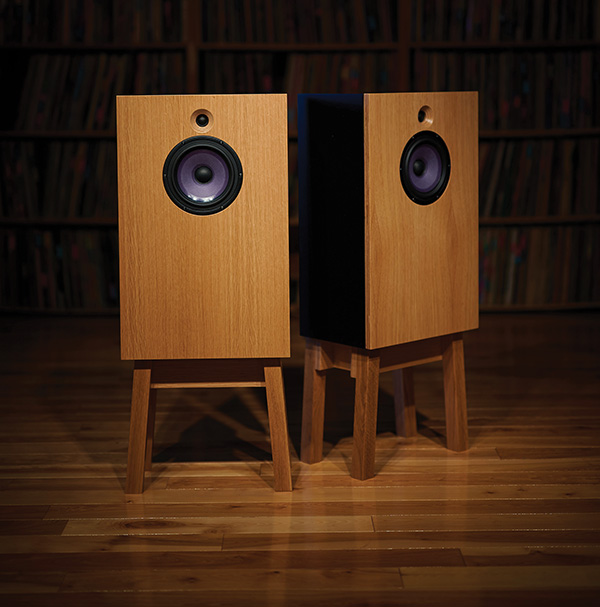
Franco Serblin Accordo Goldberg loudspeaker
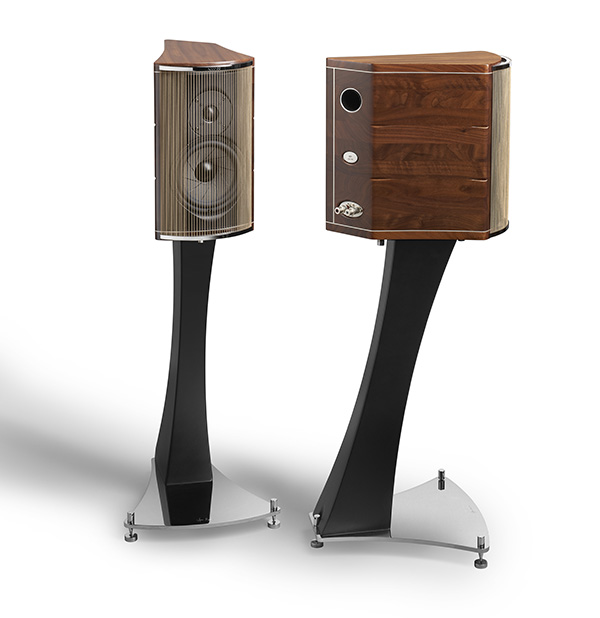
As founder and chief designer of Sonus Faber, Franco Serblin designed and manufactured many loudspeakers of acclaimed high quality, mainly in box form. Nevertheless, he remained painfully aware that such conventional rectangular parallelepiped constructions inevitably possessed an inherent and hard-to-suppress resonant signature characteristic of box-form cabinetry, significantly differing from that for a musical instrument. Franco had long obsessed over the sound and construction of classical string instruments, violins, violas, and cellos made by grand masters over centuries. He valued highly those richly resonant, expressive, complex sonic signatures.
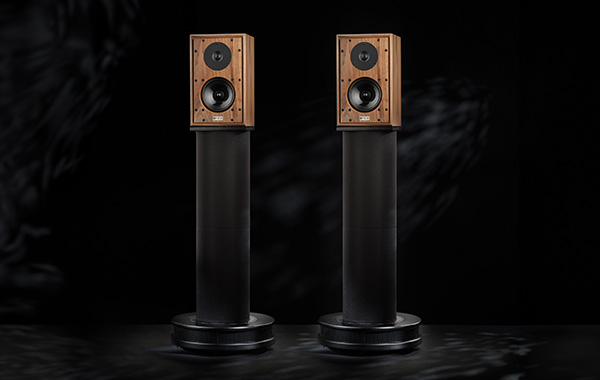
Gramophone Dreams #86: Harbeth P3ESR XD loudspeaker and Nelson subwoofer/stand

After lifelike timbres and speed-train momentum, how a loudspeaker projects its energy into my room is the main thing that determines how my sound system feels as I listen to it. When I review loudspeakers, I try to notice the unique tone and force of their "voice" as they speak into my room. Do they stand too close, stick out their chests, and brag loudly in third harmonics? Or do they have small voices that force me to lean in to make out what they're saying?


With a miniature box speaker like my reference Falcon Gold Badge LS3/5as or the similarly sized Harbeth P3ESR XDs, which I'm auditioning this month, I have to sit very close to experience any of their direct, "off-the-cone" energy. If my listening position gets too far away or the speakers are positioned too far apart or too far from the wall behind them, the sound thins and loses body.


I didn't need to sit close to those 1947 Altec A5 Voice of the Theatre horns I used to use.

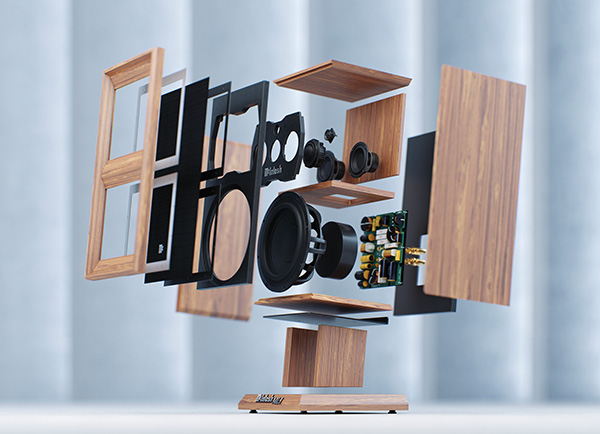
McIntosh ML1 MkII loudspeaker

What was old is new again. McIntosh Laboratories has been in business long enough that they are able to bring new design thinking, materials, and construction methods to products from their extensive back catalog. Example: McIntosh's first successful loudspeaker, the ML1. The venerable Binghamton, New York, hi-fi company recently released a redesigned "Mk II" version ($12,000/pair, stands included).


In this, McIntosh is not unique; KLH, JBL, Klipsch, and other companies have rethought and reworked vintage products for the current marketplace, employing new approaches and technologies. Think of it as remastering classic hardware.

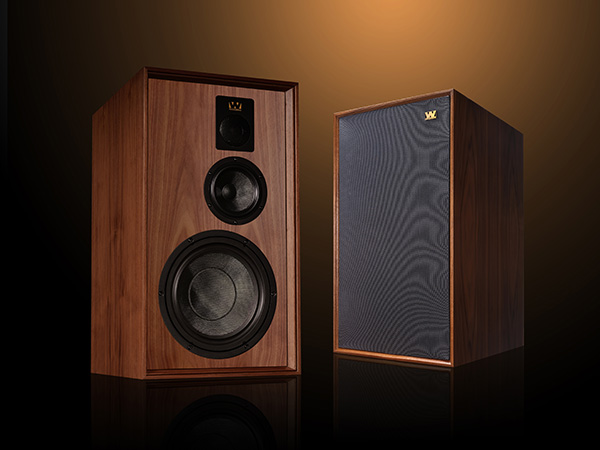
Wharfedale Heritage Series 90th Anniversary Dovedale loudspeaker

When I first got interested in audio in the UK, in the 1960s, four English brands dominated the domestic loudspeaker scene: Goodmans (founded in 1923), Celestion (whose first loudspeaker was launched in early 1925), Tannoy (which started making loudspeakers in 1928), and Wharfedale. Wharfedale was the youngest of these brands, founded in 1932 in Yorkshire—the land of the Dales—by Gilbert Briggs.


Wharfedale is still a British brand, with its R&D department in the UK, but it's now owned by the IAG Group, which was founded in Hong Kong in 1991 and is based in Shenzen, China. In addition to Wharfedale, IAG owns the Audiolab, Castle Acoustics, Leak, Luxman, Mission, and Quad brands. In recent years, Wharfedale has been introducing redesigned versions of some of its classic speakers. Herb Reichert favorably reviewed the three-way Linton Heritage loudspeaker in September 2019; then, at the 2022 Munich High End Show, Wharfedale introduced the subject of this review, the Heritage Series 90th Anniversary Dovedale.

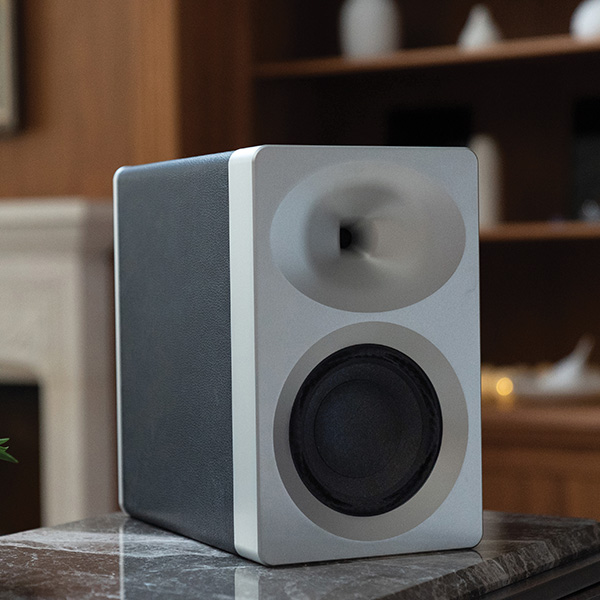
Thrax Audio Siren loudspeaker

Based in Bulgaria, European audio company Thrax has been active since 2009. Their ingenious and varied design approaches seen over several product lines have continued to intrigue me with their conceptual originality, innate musicality, and imaginative use of a broad spectrum of technologies. Their products range from valve (tube) amplification to digital audio and, more recently, loudspeakers . . . The range of distinctive high-end electronics has continued to expand to include a loudspeaker, the standmount Lyra, now joined by the smaller Siren ($13,600/pair), also a standmount and the subject of this Stereophile review.

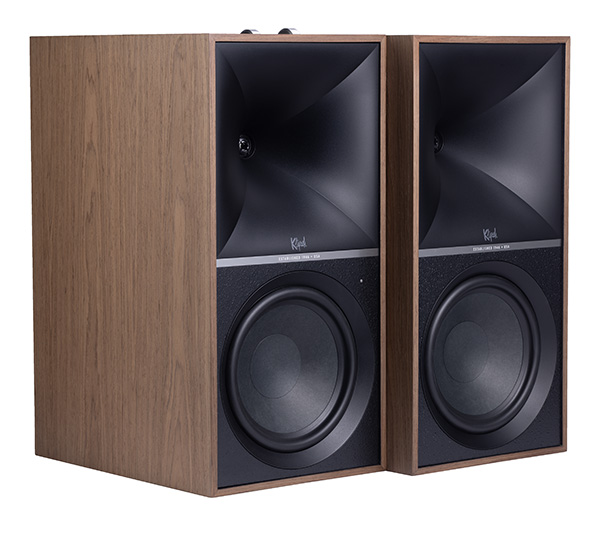
Klipsch The Nines integrated loudspeaker system

Do you remember your first really decent hi-fi system? It opened up your music, teased your brain with the possibilities of thrilling aural excitement, of dives to the bottom of the musical ocean. Perhaps it was all you needed, but more likely it was the beginning of a quest for your own ultimate sound-induced bliss.


That quest may be ongoing and never-ending, because our tastes and preferences evolve over time, money comes and goes, and we're simply never satisfied. And even if we are, eventually, we're audiophiles, and the industry always offers something interesting and new, or something old that's new again.


My time with a pair of Klipsch The Nines speaker-gadgets reminded me of the exciting, youthful bloom of my first serious sound system: a Technics SL-D2 turntable with Audio-Technica cartridge, a Philips 45Wpc receiver, and New Advent Loudspeakers.

DeVore Fidelity Orangutan O/baby loudspeaker

In the mid-2000s, I worked at a "white-shoe" law firm on Wall Street, ran with renegades, and fancied myself a writer. Fast-forward some 18 years. The firm, like many cash-flush NYC firms, has moved to midtown and I've moved on. Those renegades are now respected members and players in the hi-fi community. I still fancy myself a writer.


Back then, I made friends with a big-eared clique that would influence my future in hi-fi: audio writer Michael Lavorgna (currently editor at TwitteringMachines.com); NYU law professor Jules Coleman; former Stereophile deputy editor and current AudioQuest director of communications Stephen Mejias; record-industry veteran Andrew Klein; composer Dan Cooper; illustrator Jeff Wong; vacuum-coffee–machine collector and audiophile Margery Budoff, who regrettably passed in 2015; Tone Imports' Jonathan Halpern; and DeVore Fidelity proprietor-designer John DeVore.

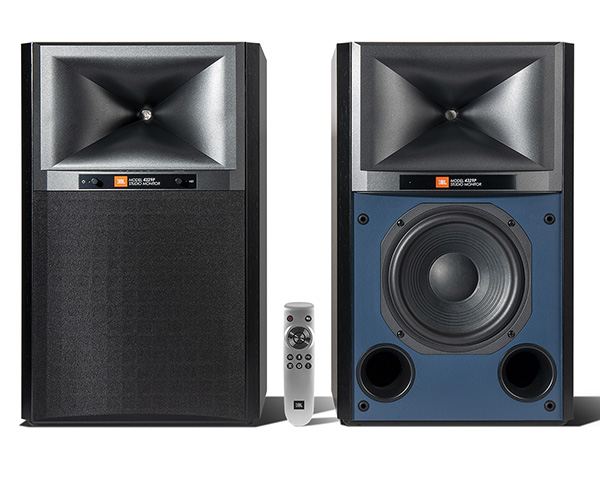
JBL 4329P active loudspeaker

Hi-fi is at a crossroads. One road takes us toward modernized versions of the gear we grew up with, stuff that has been around since the 1950s. The other road faces the future. While sometimes accommodating physical media, including vinyl records, that's not where that road leads. On that road, streaming is the norm, and equipment may be hooked up with traditional signal cables or with no cables at all, just GHz-range electromagnetic radiation, the digital kind. In the more extreme cases, the music may remain digital all the way to the amplifiers, which themselves are likely to be class-D.


I keep a foot on both paths, hoping they don't diverge so much that they split me in two. I've got a substantial collection of physical discs, black and silver, and I play them often. But I love the convenience of my network-attached storage (NAS) appliance, Qobuz, even lossy Spotify, especially when I want my world filled with music for hours with no thought or action on my part.

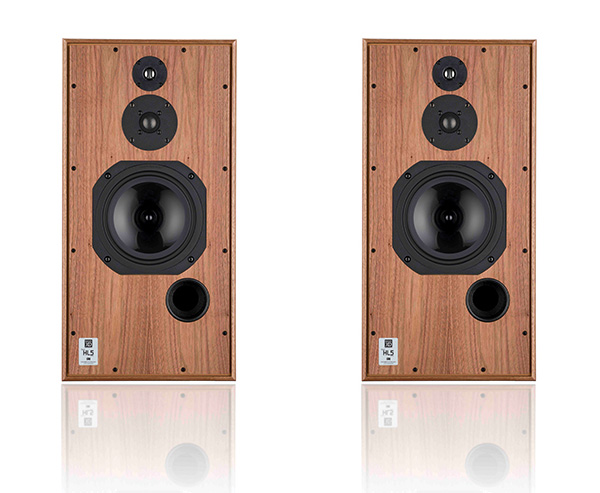
Harbeth Super HL5plus XD loudspeaker

What Were Once Vices Are Now Habits—the 1974 album by those San Jose yacht-rock sages the Doobie Brothers—could also describe an audiophile's life.


The journey begins with booze and bong money spent instead on an entry-level turntable and cartridge; it did for me anyway. Then starts the churn, through many components and configurations seeking that elusive, blissful audio fix until finally we find our audio oasis, our own sonic peace, our gearhead nirvana. We achieve a system that satisfies our listening indulgences, whether it be based on streaming or spinning, class-D or tubes, with Belden wire or 0.999999% pure-silver single-strand wire that costs more than a Range Rover. It doesn't last.

Advertisement
Advertisement
Advertisement