

Gradient
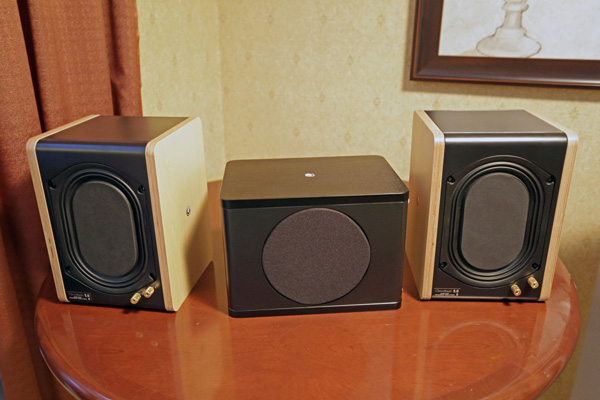
Finnish company Gradient is known for its unusual-looking speakers (they have a model that always reminds me of one of those ergonomically-designed office chairs), and unconventionalbut effectiveapproach to bass response. At SSI 2013, they introduced an interesting new small speaker, the Gradient 5.0 ($2000/pair), which features the same coincident mid-tweeter driver used in their larger speakers, and a passive radiator for the bass that looks like a mini-version of the famed KEF B139 woofer.
Great Value from Cambridge Audio
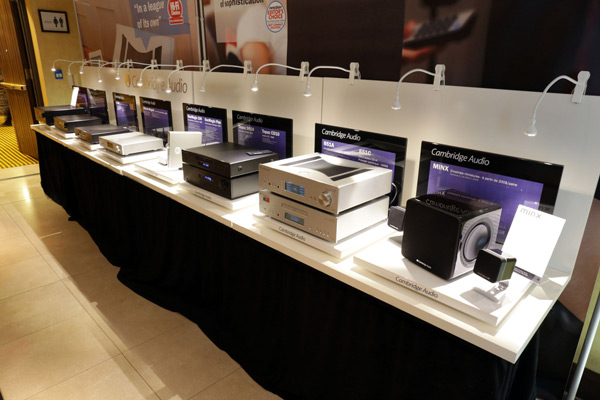
In a very different financial world than the Wilson/VTL and Magico/Constellation offerings belowand a world that, frankly, I'm much more comfortable inwere the Cambridge range of electronics and speakers. The small Minx speakers in the foreground of the picture above are $200/pair, $599 in a 2.1 setup that includes a subwoofer.
High Water mark
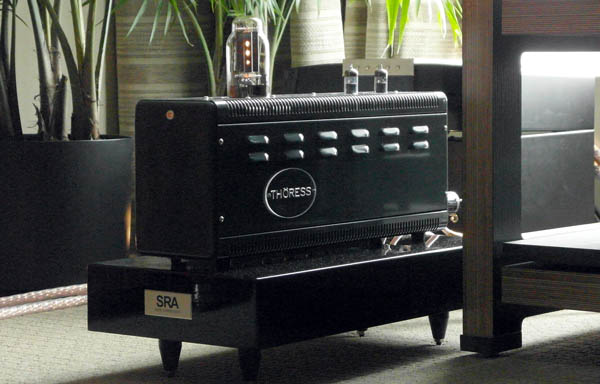
The same qualities I strive for in my system at homea sense of touch and drive, rich sonic textures and colors, musical momentum and flowseem often to be abundant in the systems put together by the New York-based distributor and retailer High Water Sound. Given that, and the fact that HWS proprietor Jeff Catalano has superb taste in music, I was sad when the time came to leave this room and move on.
Kudos from Britain
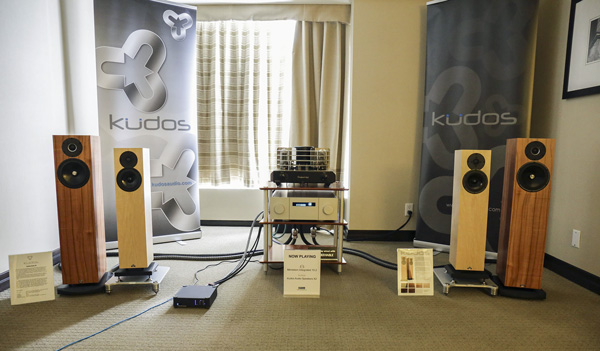
Kudos Audio is a line of British speakers designed by Derek Gilligan, formerly of NEAT, which uses custom drivers made for them by SEAS. The one demoed at SSI 2013 was the X2 ($2900/pair), a modestly-sized floorstander, in a system that included a Mimetism 15.2 integrated ($6690). The source was a CD in a laptopnot conforming to audiophile ideals, but the sound did not seem to suffer from it.
Lars at large
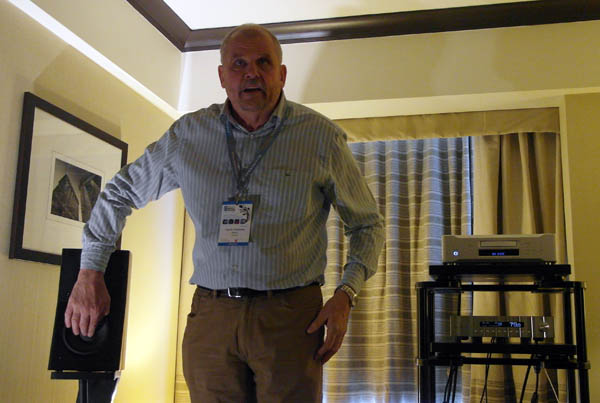
Lars Kristensen of Denmark’s Raidho Acoustics, who has yet to overcome his shyness, presented the Raidho/Rowland system with all of the good cheer and powers of persuasion for which he is known and admired in our industry.
Lensdemomium?
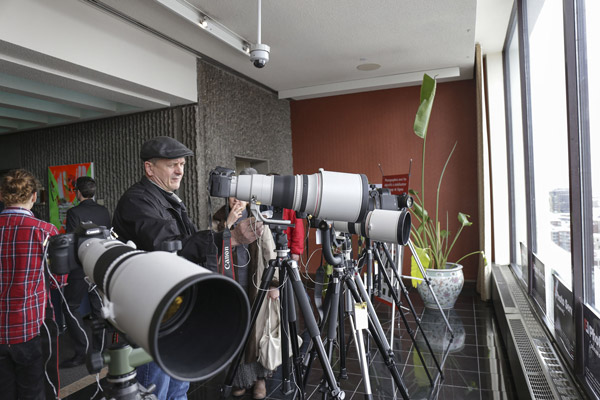
The English translation of the French word image in Salon Son & Image is "picture," or, well, "image." But it's been an open secret for some time that the show is much stronger on the son (sound) than on the image. I saw just one projection video setup at SSI 2013, and there were a few LCD/LED monitors, but no one seemed to pay much attention to them. However, SSI managed to enlist as an exhibitor Photo Service, a major camera store, which offers a wide range of products related to photography. This worked out extremely well for all concerned.
Let It Rock

After the awards presentations, the rock band, Hans Wilwright, took the stage, with a typically energetic series of numbers. I know that some of my industry and media colleagues found this music too loud, but, hey, it's rock, and although I'm far from being a rock fan, I expect rock to be loud, and this was not nearly as loud as I've heard. (Sitting in the fifth row of Rent on Broadwaynow, that was LOUD!)
Line Magnetic
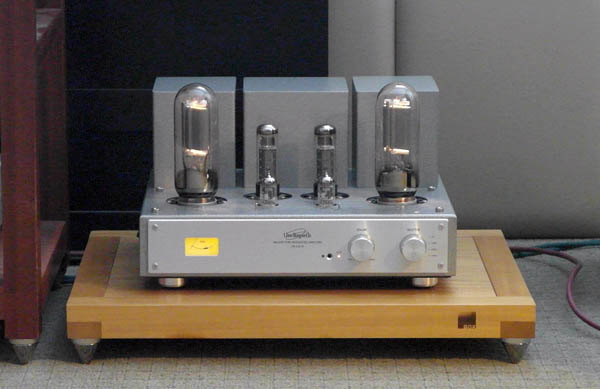
Here’s a closer look at the Line Magnetic 218 integrated amplifier, which uses one single-ended 845 triode per side for approximately 22Wpc. At SSI the LM amp drove DeVore O/93 loudspeakers using Auditorium 23 loudspeaker cable ($980 for a 2.5m pair): the same great, green stuff I’ve used at home for the past 8 years.
Linn at large
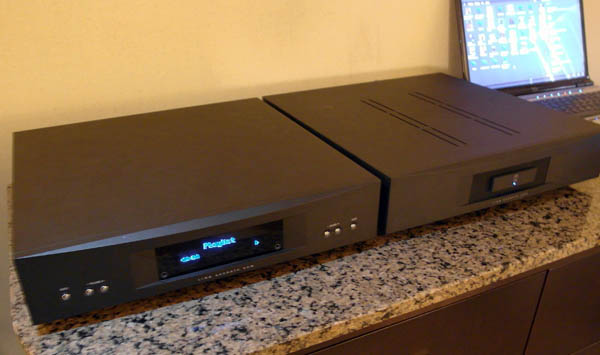
Montreal retailer Audio Club presented a simple, effective all-Linn system, comprising the Ethernet-friendly Linn Akurate DSM preamplifier/digital player ($9300) and Akurate 2200 power amplifier ($6300), seen above, and a pair of Linn Majik Isobarik loudspeakers ($6300/pair). An outboard file-storage device, of indeterminate make and model, was tucked away underneath the credenza. Unfortunate room dimensions were surely responsible for the trace of bass boominess I heard, yet the Linn system was compelling and listenable, nonetheless.
Live at Leedh
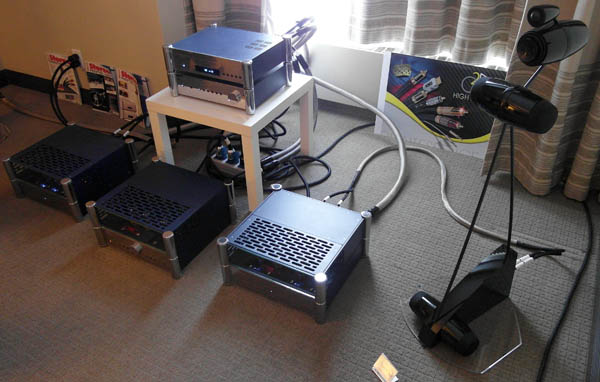
Despite its unfortunate physical resemblance to an electric shoe-shine machine, the Leedh E loudspeaker sounded open and airy during my visit to the room sponsored by Conceptas Sound and Engineering. I was prevented, by the language barrier, from learning anything about the E or its companion Lua brand electronics, including prices; one of two people running the room handed me some information sheets, but the other person snatched them away. I requested and was given more, but my moment of triumph was dashed when I saw that all of the literature was in French. All I have deciphered from it so far is that the Leedh E weighs less than “a dozen kilos” (I think), and one of its drivers is 17cm in diameter.