

Ibrahim Ferrer: 1927–2005
Ibrahim Ferrer, one of the best-known practitioners of the Cuban vocal music known as son, died in Havana on August 6 of multiple organ failure. He had returned, ill, from a European tour several days previously, and then been hospitalized.
Icons and innovators at Definitive Audio
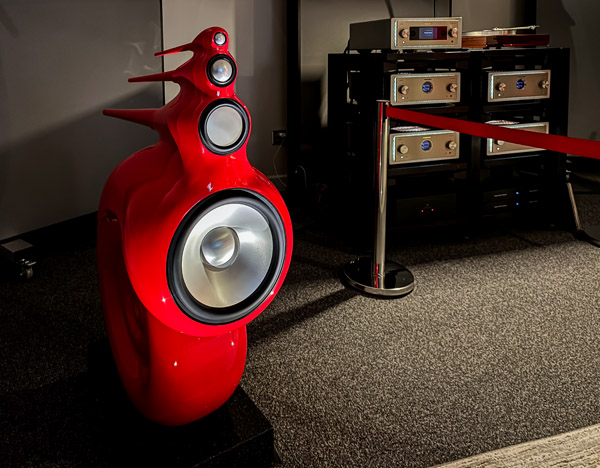
Definitive Audio of Bellevue, Washington (near Seattle), one of the premier dealerships in the Pacific Northwest, continued its 50th anniversary celebration with a September event it called "Icons and Innovators." Highlighted by showings of the new JBL Everest series and Bowers & Wilkins Nautilus and 801 Abbey Road edition loudspeakers, the event drew a full house to the first of two sessions on the afternoon of September 18.
Ida Levin RIP

I am sad to report that, 19 years to the day after I recorded her performing Schulhoff's Sonata for Solo Violin for Stereophile's Duet CD, Ida Levin passed away on Friday November 18, after a lengthy battle with leukemia. She was 53. Our condolences to her family, her fellow musicians, her students, and to all who, like me, were thrilled by her playing. As a tribute to Ida, from now until January 1, 2017, we are offering Duet to our readers free of charge (though we will still have to charge shipping and handling).
Ideon Axiom DAC Introduction
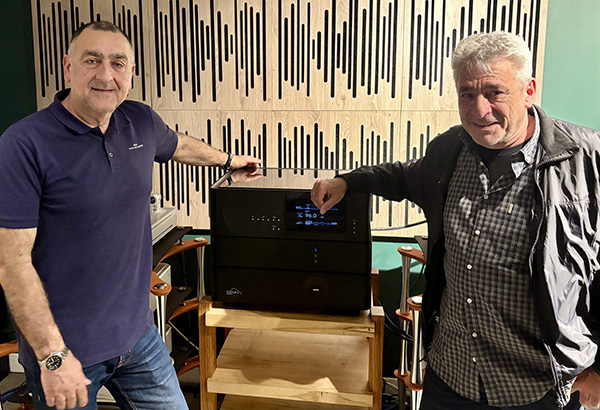
On Thursday April 2nd at Park Avenue Audio in NYC, Ideon Audio introduced their latest and greatest creation, the Axiom DAC. Walter Schofield, Co-Managing Director of the 2WA Group with Walter Swanbon, did the introductions. Miguel Barrio reports.
If At First You Don't Succeed . . .
When we received notice several days ago from Panasonichttp://www.panasonic.com">Panasonic; that the company was finally releasing its DVD-Audio players next month, we filed the press release for a couple of days to see if it would last the week (see previous">http://www.stereophile.com/news/10620/">previous story). Apparently, the products are still a go. Panasonic says it will offer a full line of DVD-Audio/Video models under both the Panasonic and Technics brand names, with the first units arriving in stores in July. As previously">http://www.stereophile.com/news/10509/">previously announced back in August 1999, the Panasonic DVD-A7 will have a suggested retail price of $999.95, and the Technics DVD-A10 will have an SRP of $1199.95.
If At First You Don't Succeed, Try the Internet
The audio business has been claiming its share of victims lately, with few companies able to reanimate once economic problems set in. Working hard to break this cycle, Carver">http://www.carver.com">Carver Corp. became one of the first manufacturers to switch from a dealer-based operation to both dealers and internet sales.
If At First You Don't Succeed, Try, Try Again Dept.
The largest advertising and promotional campaign for an audio product in Sony Electronics' (and possibly anyone's) history debuted during NBC's Thursday-night prime-time television lineup last week. The campaign, titled "Make it with MD," featured various celebrities as they moved through a Hollywood party sporting a small MiniDisc personal stereo unit playing their own personalized music mixes. Sony also plans major cable, billboard, print ad, and promotional tie-ins.
If They Build the Chips Will the Universal Players Come?
With the proliferation of audio and video formats based on the 5.25" disc (CD, DVD-Audio, SACD, CD-R, CD-V, DVD, etc), buying a universal player that can decode anything thrown at it is many a consumer's Holy Grail. But to date, the vast majority of manufacturers (Pioneer being a notable exception) have been taking sides, choosing to exclude either SACD or DVD-Audio playback from their machines.
If You Build It, They Will Come . . .
We're still waiting to see even one official US release of DVD-Audio software, but reports are trickling in that the recording industry is nonetheless planning for the multichannel high-resolution audio landscape. The latest bit of news comes from mastering facility Future">http://www.futurediscsystems.com">Future Disc Systems, which announced last week that it is now mastering DVD-Audio projects, and will soon be ready for high-resolution surround sound.
IFPI: Music Sales Off Worldwide
The international music industry is once again singing the blues, and CD burning is the refrain.