

Every Grueling Minute Available for Your Entertainment . . .
The process becomes the product: in an announcement tinged with shades of This">http://www.spinaltap.com/">This Is Spinal Tap, the band LIVE says it will be recording its next album under the scrutiny of a live internet camera. The webcast, which began July 17, is available on LIVE's websitehttp://www.friendsoflive.com">website; 24 hours a day, offering fans and the simply curious an "unblinking" glimpse of the creation of their new album, from "start to finish."
Every New CD to be Restricted?
Let's try to imagine the ideal music-buying landscape from a record company's point of view. As distasteful as this may seem to an ever-growing legion of unhappy audiophiles and music fans, it can go a long way towards explaining why the major labels appear to suddenly be at war with their customers.
Everything Mattered at Music Matters 12
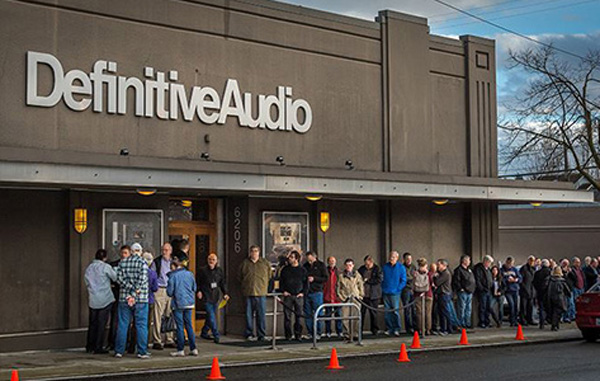
The 12th annual Music Matters event, held at Definitive Audio's Seattle location on March 9, featured six complete systems plus an Auralic-driven headphone display and static Rega turntable corner. All but the silent display showcased recorded music in its finest light. By the end of the evening, it was clear why Music Matters has earned a reputation as the top retailer-sponsored audio event in the USA.
Everything You Ever Wanted to Know About AACS
On our last News Desk post of 2006, we reported that an anonymous hacker called Muslix64 had announced that he had crackedhttp://www.stereophile.com/news/010107hacked/">cracked; the Advanced Access Content System (AACS) digital rights management (DRM) scheme. Muslix64 said he'd release more details (and decryption software) on January 2. That software, called BackupHDDVD, is now available onlinehttp://rapidshare.com/files/8318838/BackupHDDVD.zip.html%22">online; and the Internets have been all atwitter about it, with charges ranging from "bogus!" to "hallelujah!"
Ex Machina Soundworks and Danville Signal at AXPONA 2026
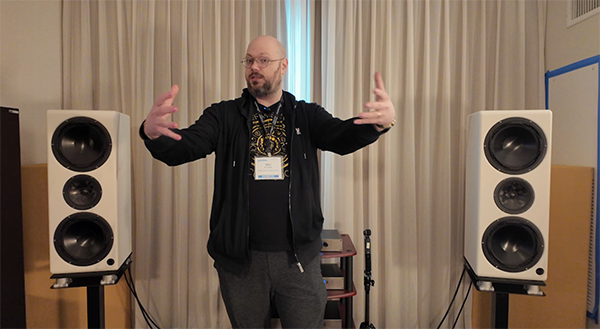
At AXPONA 2026, Ken Micallef speaks with Ex Machina Soundworks' Dev Avidon and Danville Signal's Al Clark about the all-in-one Main Sequence System they demo’ed together at the show.
eXamining a trio of systems at Xclusive High End Show Vienna 2026

Ola Björling reports on what he saw and heard at the Xclusive High End Show Vienna 2026, one of High End Vienna 2026's satellite shows.
Execs Will Depart BMG In Wake of Napster Settlement; Rumor of EMI Deal
Two top executives at Bertelsmann">http://www.bmg.com/">Bertelsmann Music Group will depart in the wake of the company's recent settlementhttp://www.stereophile.com/news/10885/">settlement; of its lawsuit against Napster. Citing irreconcilable differences with parent company Bertelsmann AG over company strategy, BMG chief executive Strauss Zelnick and chairman Michael Dornemann announced their resignations Sunday November 5.
Experience Music Project Announces Grand Opening
Last week, the Experience">http://www.emplive.com">Experience Music Project, described as an "interactive museum devoted to creativity and innovation in American popular music," announced that it will open its doors to the public on Friday, June 23, 2000, in Seattle, Washington, with a multi-day celebration featuring events in and around the museum, and live performances by a wide variety of musicians. EMP said it expects more than a million visitors during the course of its first year.
Experimental Recording Technologies Spice Home Entertainment 2001
 Although Gary Shapiro emphasized digital television in his keynote address at Home Entertainment 2001, the Consumer">http://www.ce.org">Consumer Electronics Association president didn't ignore the importance of audio advancements. "SACD is a fantastic sensory experience," he told reporters at the May 11 press luncheon.
Exploring Audio's "Last Frontier"
Two elements that keep the audio business interesting are the new companies and technologies arriving almost every week (see also BW's storyhttp://www.stereophile.com/news/10382/">story;). Some stick around for years, while others fade away between hi-fi shows. But amid the incessant change are a handful of characters who stay with it, continually evolving with the industry and reinventing themselves with each twist and turn.