

The Great Debate...and Then Some
"Some say it dates back to 1927, when Gramophone magazine's editor thundered that electrical reproduction was a step backward in sound quality," said the promotional copy for Home Entertainment 2005's opening-day event, "The Great Debate: Subjectivism on Trial." It continued: "But whenever it started, the Great Debate between 'subjectivists,' who hear differences among audio components, and 'objectivists,' who tend to ascribe such differences to the listeners' overheated imaginations, rages just as strongly in the 21st century as it did in the 20th." On April 29 at the Manhattan Hilton, Stereophile editor John Atkinson and one of the Internet's most vocal audio skeptics, Arnold B. Krueger, debated mano a mano where the line should be drawn between honest reporting and audio delusion.
The Great Rocky Mountain Audio Fest Starts Friday
Could it only be the 11th time the annual Rocky Mountain Audio Fest has welcomed thousands of audiophiles to Denver? The three-day gathering, which takes place Friday, October 10Sunday, October 12 at its comfortable location, the Marriott Denver Tech Center, has become such an essential part of the international audio scene that it feels like it's been here forever.
The Greatness of Baritone Dietrich Fischer-Dieskau
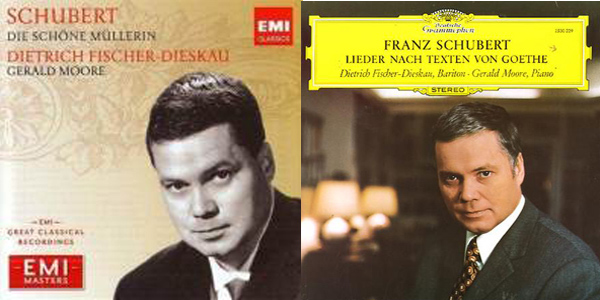
If any single voice was synonymous with the flowering of the LP era, it was that of German baritone Dietrich Fischer-Dieskau. The great artist's death at his home in Bavaria on Friday, May 18, 10 days short of his 87th birthday, sets the final seal on an age in which art song, oratorio, and opera received equal respect from record companies and the listening public.
Equally adept at all three disciplines, Fischer-Dieskau became perhaps the most recorded baritone in history. There was a period in which nary a month went by without another LP from Fischer-Dieskau on which he sang either solo or in ensemble. Even today, when so many recordings have gone out of print, and large number of LPs have never been remastered for CD, arkivmusic.com lists no less than 490 titles that include Fischer-Dieskau's voice. The most recent release, a four-SACD remastered compilation of some of the monaural Schubert lieder (art song) recordings he made with pianists Gerald Moore and Karl Engel early in his career, became available on the website on May 8. Its 39 performances are but a fraction of the Schubert recordings he made in his five decades before the microphone.
The Grid to Host Private Listening Event Featuring Systems from Goldmund and Marten on March 28
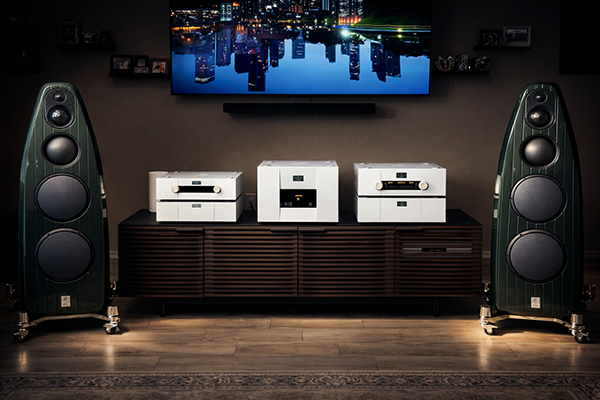
The Grid, one of the largest home audio retailers in Texas, will be hosting a private listening event at its Houston showroom on March 28, 2026. Systems that primarily feature gear from Goldmund and Marten will be shown, according to an official press statement, "in a carefully prepared environment, demonstrating their full potential."
The Hard-Disk Shuffle
When it comes to digital music players and the future of computer-based entertainment, the computer industry appears to be going in two directions at once. Apple Computer has recently made a strong move into the portable music arena with its $399 iPod, a player that can store as many as 1000 songs. The company is also rumored to be developing software and computer-based editing equipment for the pro-audio industry.
The Hi-Fi Expo Sofia

Friday–Sunday, November 23–25: The Hi-Fi Expo Sofia will be held at the Grand Hotel (1 Gurko Street, Sofia, Bulgaria). More than 250 high-end brands are expected to exhibit. For more info, visit www.hifiexpo.bg.
The Home Entertainment 2000 show, planned to be held in Rye, NY this spring, has been canceled.
The Home Entertainment 2000 show, originally planned to be held in Rye, New York this spring, has been canceled. Show staff has received feedback from manufacturers and dealers, who feel that the rooms at the Rye venue are too small, and that a suburban location is not optimal. EmapUSA VP Jaqueline Augustine states that "We want to hold a successful show, and this venue could not guarantee our success."
The Hot Five
Every autumn, the Consumer">http://www.CE.org">Consumer Electronics Association (CEA) publishes its "Five Technologies to Watch" list of "technology trends poised to shape the consumer electronics industry" in the year ahead. Most of the choices may seem obvious, but the final entry on the list this year may be a surprise for audiophiles.
The Hot Shade of July
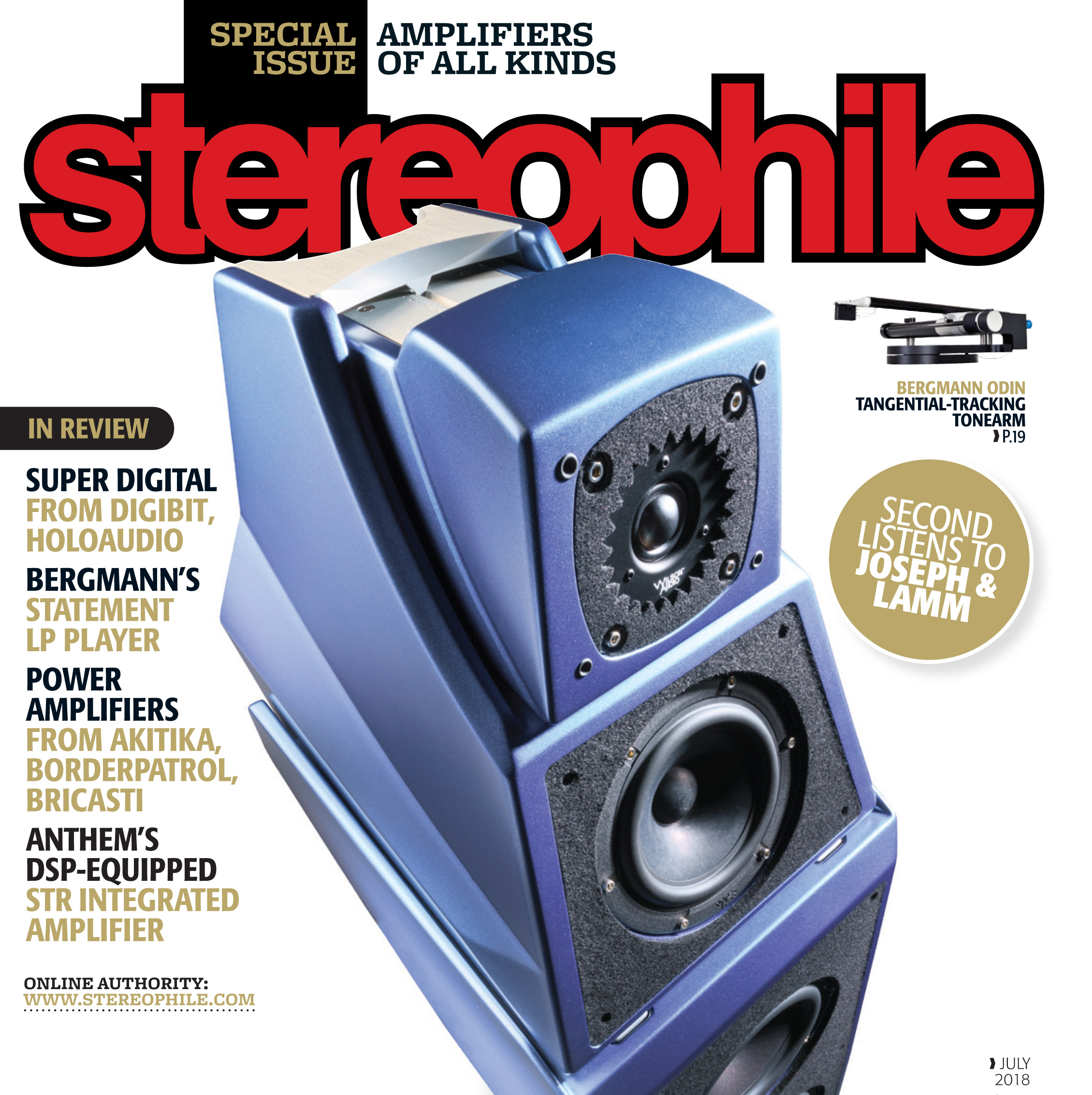
But maybe not so hot in the listening room, where you can get absorbed reading the latest issue of Stereophile. The expensive but superb-sounding Wilson Alexia 2 speaker is featured on the cover and reviewed inside, but also inside this issue is a review of the least expensive amplifier we have reviewed in decades, AkitikA's GT-102, which costs just $314 as a kit and $488 assembled and tested.
The Hour of Power
PS Audio's Paul McGowan is a man with a mission: He wants to teach audiophiles about AC power, from the creation of the universe to its final destination in our contemporary electronics components. Toward that end, McGowan wrote, produced, and narrated a one-hour documentary DVD called From Coal to Coltrane, which provides a lively look at a subject many of us take for granted.