

Shure SE310 in-ear headphones
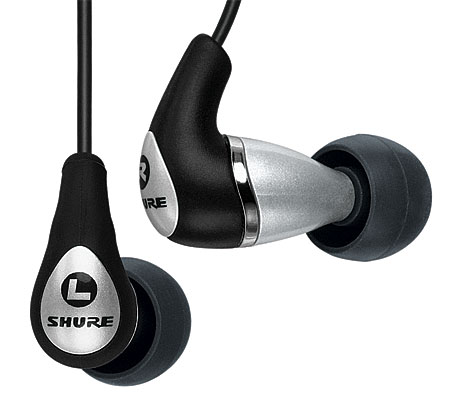
I got early into personal stereos. I lost my driving license for a while in the mid-1970s—something about a stop sign and "failure to observe"—so I used to take the train to a regular bass-playing gig I had in Brighton, on England's south coast. Not only did I conclude that any audio magazine worth its cover price had to have enough meat in it to last the two-hour journey and back again, I also built myself an op-amp–based, battery-powered amplifier to drive a pair of RadioShack headphones. Desperate times called for desperate measures, and my only source was a mono cassette recorder. Inside-the-head mono is as mono desperately does, so once I got my license back, it was back to the car and stereo FM radio. It wasn't until a) I moved to New York City to become a strap-hanging commuter and b) bought a 2003-vintage 30GB iPod (which I still use) that music on the move again began to play a major role in my listening.
Siefert Maxim III loudspeaker
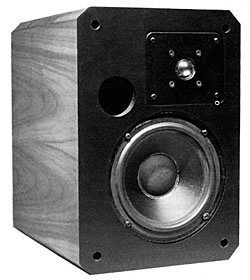 While it is not quite accurate to say that $500/pair loudspeakers are a dime a dozen, they are by no means unusual. And since this is a price area where major design compromises are mandatory (footnote 1), the sound of such loudspeakers tends to vary all over the map, from pretty good to godawfuldepending on what performance areas the designer chose to compromise and by how much.
I approached this latest half-grander with little enthusiasm, despite Siefert's persuasive literature, I have, after all, been reading such self-congratulatory hype abiout new products for longer than most Stereophile readers have been counting birthdays. This, I must admit, was ho-humsville.
While it is not quite accurate to say that $500/pair loudspeakers are a dime a dozen, they are by no means unusual. And since this is a price area where major design compromises are mandatory (footnote 1), the sound of such loudspeakers tends to vary all over the map, from pretty good to godawfuldepending on what performance areas the designer chose to compromise and by how much.
I approached this latest half-grander with little enthusiasm, despite Siefert's persuasive literature, I have, after all, been reading such self-congratulatory hype abiout new products for longer than most Stereophile readers have been counting birthdays. This, I must admit, was ho-humsville.
Signet SL280 loudspeaker
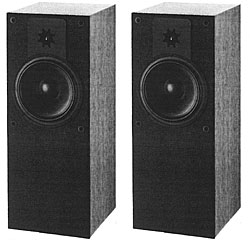 Audio journalists tend to wander the corridors of a CES in a minor state of shell-shock. There are no carnival-barkers outside the rooms enticing one to enter (not yet, at any rate), but the sounds and reputations oozing from the open doorways yield little to the "hurry, hurry, hurry" crowd. The Signet room has always, it seems, been one of the quieter oases, often eschewing sound altogether while contentedly displaying their phono cartridges, cables, and various accessories. On a recent CES hunt, I was therefore intrigued to find them demonstrating two new loudspeakers, of all things, to the milling throngs.
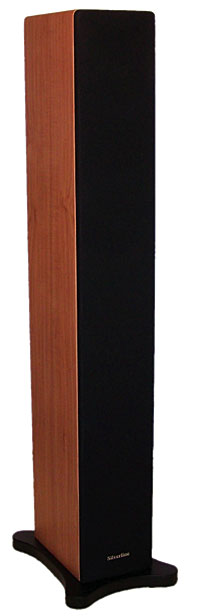
Silverline Audio Minuet loudspeaker
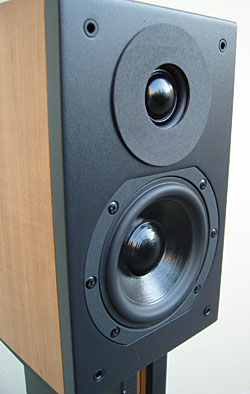
I always look forward to Stereophile's Home Entertainment Shows, where I scout out interesting new models of affordable loudspeakers. At HE2007">http://blog.stereophile.com/he2007">HE2007 in New York City, I was struck by the Silverline Audio room—not only by the sound I heard there, but by the way Showgoers reacted to that sound.
Silverline Audio Technology Prelude loudspeaker
It must be difficult for makers of audio equipment to decide how to best exhibit their products at events such as the annual Consumer Electronics Show. If you're doing a demo, you want it to impress audio journalists and potential dealers, and sometimes just playing music is not enough: you need something extra. A few years ago, Joseph Audio put on a demo, supposedly of their top-of-the-line floorstanding speaker, during which Jeff Joseph removed a cloth that had been draped over what was assumed to be hotel-room furniture. Under that cloth were the speakers that were actually playing: Joseph's new in-wall model, mounted on flat baffles. Wilson Audio Specialties demonstrated their speakers with purportedly ultra-high-end electronics and digital source, then revealed that they were actually using a modestly priced preamp and power amp, and that the source was an Apple iPod.
Simaudio Moon i-1 integrated amplifier
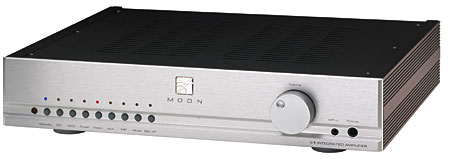
Fearless leader called me and asked if I'd be interested in reviewing the Simaudio Moon i-1 ($1500), the entry-level integrated amplifier in Simaudio's Classic line. Hmmm. I'd been very impressed by all of the more expensive Simaudio products I'd heard at Stereophile's Home Entertainment shows over the years, and the 50Wpc Moon i-1 would be an interesting match for the affordable speakers I've had in-house lately. Send it on, JA!
Sjöfn HiFi (the clue) loudspeaker
I was sitting in my high chair, eating strained peas. My father was walking around the kitchen with a wooden box in one hand and a cord with a plug in the other. The box and the cord were attached to each other. I was inspired to utter my first actual sentence: "Plug it in over there!" Moments later, a man with a disturbing voice began squawking from inside the wooden box. It was a radio. Schnapps, our dachshund, barked angrily. I started to cry. Ever since, I've been charmed, fascinated, and mostly annoyed by wooden boxes that talk to me.
Slim Devices Squeezebox WiFi D/A processor
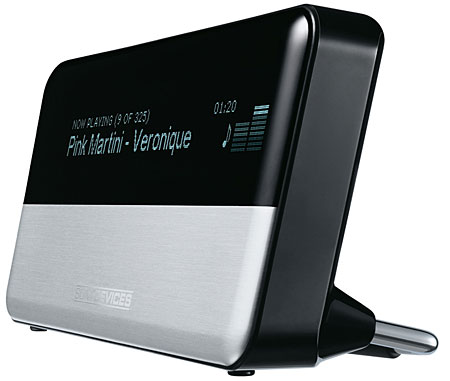
As readers of the Stereophile eNewsletter will be aware, the twin subjects of distributing music around my home and integrating my iTunes library of recordings into my high-end system have occupied much of my attention the past year. I bought an inexpensive Mac mini to use as a music server, using an Airport">http://www.stereophile.com/digitalprocessors/505apple">Airport Express as a WiFi hub, which worked quite well, but my big step forward was getting a Squeezebox. I described this slim device in the mid-Marchhttp://www.stereophile.com/images/newsletter/306Bstph.html">mid-March; and mid-Aprilhttp://www.stereophile.com/images/newsletter/406Bstph.html">mid-April; eNewsletters; I urge readers to read those reports to get the full background on this impressive device. In addition, the forums and Wiki pages on the Slim">http://www.slimdevices.com/dev_overview.html">Slim Devices website offer a wealth of information on getting the most from a Squeezebox.
Snell Type E/III loudspeaker
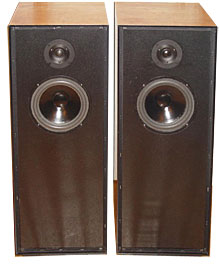
One question posed by John Atkinson at the July 1991 Stereophile Writers">http://www.stereophile.com/features/109">Writers Conference had to do with the ease of reviewing: Is it harder to write a bad review of an expensive product than a good review? I find it hardest to write a good review of an inexpensive product. If I admire a less expensive loudspeaker, for example, it may become a recommended component, and can displace a more expensive speaker (that received mixed comments) from our twice-yearly rankings. This can be a big responsibility; even a conditional rave of a low-cost product means that JA may assign another Stereophile reviewer to do an immediate follow-up report. The Snell Type E/III loudspeaker may be a good case in point.
Snell Type K/II loudspeaker
In some ways, building an inexpensive yet musical two-way loudspeaker is a greater design challenge than creating a cost-no-object reference product. Although the latter is a much more complex endeavor, the venerable two-way box seems to bring out the creativity and resources of the designer. Rather than throw money at the product in the form of more expensive drivers, enclosures, or components, the designer of a low-cost two-way is forced to go back to the basics, rethink closely-held tenets, and rely on ingenuity and sheer talent to squeeze the most music from a given cost. Consequently, the inexpensive two-way is the perfect vehicle for designers to develop their skills. If one has mastered this art form, one is much more likely to achieve success when more ambitious designs are attempted.