

To Be or Not to Be
I'm scared. I've just returned from a visit to the isle of my birth, Manhattan. As the spouse and I walked to Stereophile's officeshttp://forum.stereophile.com/photopost/showphoto.php/photo/114">offices…; to meet John Atkinson and Stephen Mejias for dinner, we passed some of the most valuable real estate in the country. It was hard to imagine that, if global warming continues at its current, ever-accelerating pace, the buildings we were marveling at will soon be below sea level.
To Play or Not to Play
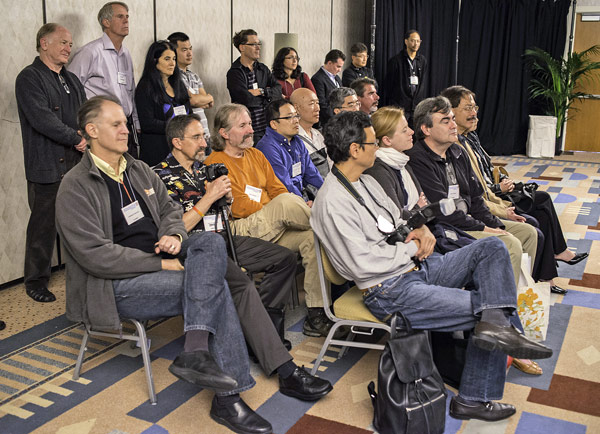
To put it mildly, Jack Vad (second row in photo, orange shirt) was dismayed. The Grammy Awardwinning media producer and chief engineer for the San Francisco Symphony had just returned from the 2014 Rocky Mountain Audio Fest, and was trying to make sense of his experiences there. When he'd carried his latest recordings, which I think are superbly recorded, into rooms at the show and asked if he could play them, exhibitors were anything but enthusiastic.
To the Simple, Everything Appears Simple

My spirits sank as I read the comments on Stereophile's Facebook page. In the November issue, we had published reviews of UpTone Audio's USB Regen device by Kalman Rubinson, Michael Lavorgna, and myself. Michael and Kal had enthused about the positive effect the USB Regen had made, but I could detect no measurable difference. On Facebook, Dan Madden had written, "I think a device like this would need a blind listening test to verify that a listener could hear the difference in a statistically measurable way, in a very high percentage of times."
Tomorrow's Classics Are Today's Bargains
For roughly the same amount of money, you can buy a new Toyota Camry or a used mid-sized Mercedes-Benz sedan. The new car has several things going in its favor: no one else has ever driven it, smoked in it, or ferried dogs and kids and fast-food leavings in it, and it comes with a fresh warranty and the latest safety equipment. But the used Mercedes has other things in its favor: having started with a much larger "build budget," it is, simply, more car for the money all around—you just have to pick a good one.
Too Good to Be True
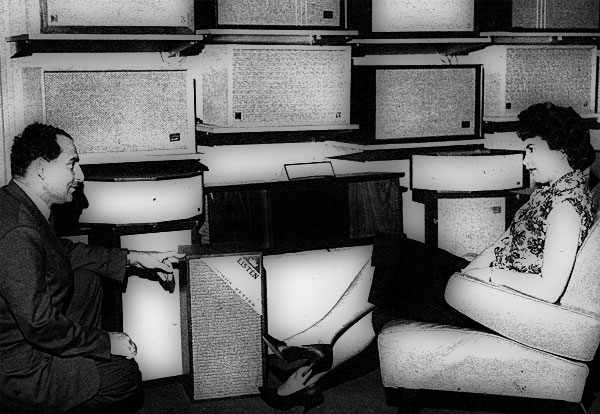
Two letters from readers (see below) started us thinking again about something we've mulled at, off and on, for the past year or so: Does today's high-fidelity equipment, for all its vastly improved performance, actually sound that much better than the best of the early components?
Too Many Audio Shows?
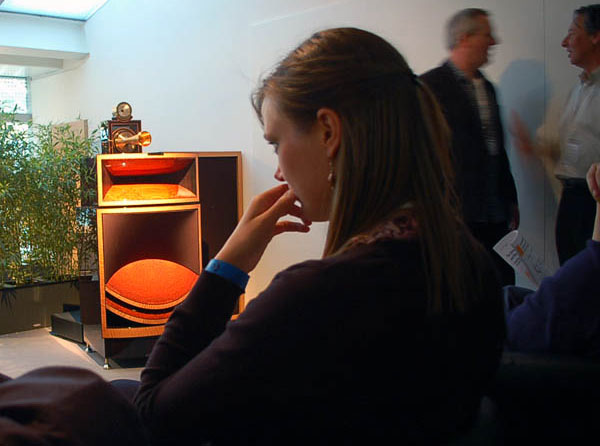
In the wrap-up of his coverage of the 2013 Salon Son & Image show in Montreal, which took place at the end of March, Robert Deutsch asked if there were too many audio shows. The Chicago AXPONA show was held two weeks before SSI, the second New York Audio Show followed less than three weeks later. In May, there was the humongous High End 2013, in Munich, followed two weeks later by the third T.H.E. Show Newport Beach, followed by: the Capital AudioFest, in Washington, DC (July 2628); the fourth California Audio Show, in the Bay Area (August 811); the tenth Rocky Mountain Audio Fest (October 1113); and TAVES in Toronto (November 13).
While this is no more shows than took place in 2011 or 2012, many exhibitors, manufacturers and distributors alike, to whom I talked at the spring events felt that the high-end audio industry is suffering from an overload of audio shows.
Transparent, My Dear Watson
Much of the descriptive">http://www.stereophile.com/reference/50">descriptive terminology used in subjective reporting describes things we hear in live music, and expect—or, rather, hope—to hear from reproduced music, too. I'm referring to terms like width, depth, perspective, spectral balance, and tonal accuracy. If you read our reports, you know these terms as well as I do, and since they are (for most people) self-explanatory, I will devote no more time to them.
True, Truer, Truest: Reviewers
"Writing about music is like dancing about architecture."—Laurie Anderson
Trumpets to the Back of Me?
As part of this issue's coverage of the recent Consumer Electronics Show (see Sidebar), I report on my dissatisfaction with almost all the surround-sound demonstrations I experienced in Las Vegas. As a music-lover, the last thing I want is to have trumpets and drums attacking me from behind, yet almost without exception, that is what record producers seem to feel is an essential part of the DVD-Audio and SACD experiences.
Tweaks & DVD: Listening to the Crazies!
In common with the mood of our times, there seems to be an increasing amount of bad temper in the High End. There are more people around who, in Jonathan Scull's timeless phrase, have a "level of audiophile rage very close to the surface." Witness, for example, the "cancel my subscription" letter from Professor Daniel H. Wiegand in this issue: he obviously feels a line has been crossed.