

Rogue Audio Magnum Ninety-Nine preamplifier
Rogue Audio's Magnum Ninety-Nine tubed preamplifier is derived from the original Rogue Sixty-Six that I reviewed">http://www.stereophile.com//amplificationreviews/289/">reviewed in October 2000. The Sixty-Six was designed to offer consumers a taste of high-end performance in a vacuum-tube line stage. By constrast, the Magnum Ninety-Nine's pedigree is pure audiophile, with a more sophisticated mu-follower circuit topology aimed at the purest expression of performance.
Rogue Audio RH-5 preamplifier-headphone amplifier
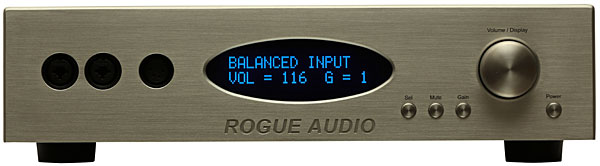
Every day in my bunker, I use one of a few high-quality headphone amplifiers to double as a line-level preamplifier-controller and operate as the quality-assurance reference for my ongoing audio experiments. I must choose this component carefully, because it determines the upper limit of my system's ability to reveal any subtle differences among components under review.
Rogue Audio RP-1 preamplifier
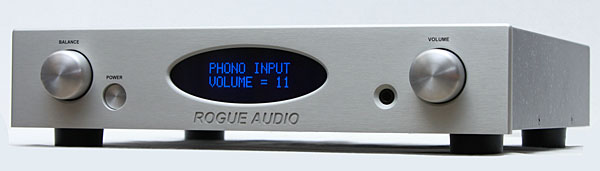
Pulitzer Prizewinning poet Mary Oliver famously remarked, "attention without feeling . . . is only a report."
After nearly two years of prattling for Stereophile, I am finally grasping the full veracity of that statement. When I read reviews that jabber on about highs, mediums, and lows, and that rely exclusively on nonmusical vocabulary, I come away with feelings of acute cognitive dissonance. Not to mention: if a review has a lot of initialismsADD, S/PDIF, DXD, HDMI, etc.my ADHD kicks in and I stop reading by the third paragraph.
Rogue Audio RP-7 line preamplifier
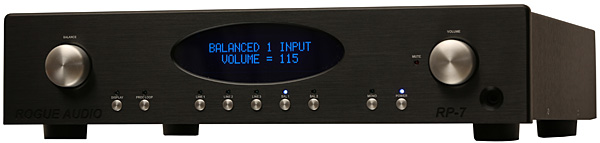
You know I'm a lucky guy. I maintain two separate audio reviewing systems.
The core component of my beloved, daily-driver desktop system is a Mytek Brooklyn DAC-preamp-headphone amp. Through this system I play high-resolution files and Internet sources (Tidal, Qobuz, Netflix, and YouTube). One of the Brooklyn's two line-level inputs delivers NPR news and baseball from my Kenwood KT-990D FM/AM tuner. I mostly use this system with headphones, but currently, the Brooklyn's line-out feeds a pair of Bel Canto Design's compact e.One REF600M monoblocks driving the shelf-mounted Dynaudio Excite X14 speakers I use to play movies and videos.
Schiit Freya + line preamplifier
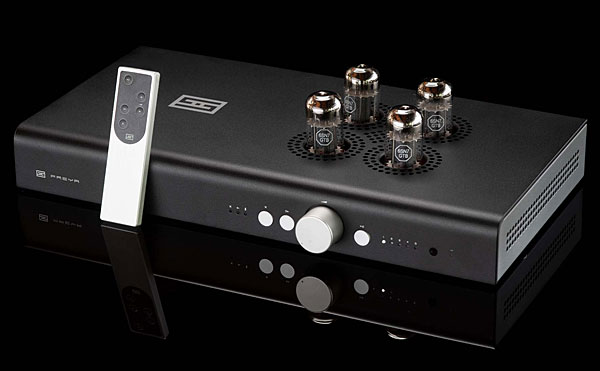
What am I doing with a vacuum tube preamplifier? I haven't owned a tubed preamp since I bought a Sonic Frontiers Line 3 preamplifier at the turn of the century. I set that aside within a few years as I moved into multichannel because multichannel tube-based electronics were, and still are, rare. My last home experience with a vacuum tube was with a PS Audio Stellar M1200 monoblock power amp, which is a hybrid with a 12AX7-based input stage.
Sonic Frontiers Line 2 line preamplifier
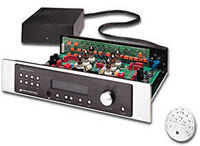
In just a few years, Sonic Frontiers has evolved from a parts and kit vendor to a full-line audio manufacturer (footnote 1). Their initial offerings were well received, but their kit origins were apparent in the layout and cosmetics of their products. While SF still offers kits (like their high-value Assemblage DAC-2), the new line of vacuum-tube electronics has world-class construction, design, and packaging. This generation of SF equipment is evidence of their advanced evolution, even though their constructor genome can be detected in the use of audiophile-preferred, as opposed of OEM, components.
TARA Labs Space & Time Passage preamplifier
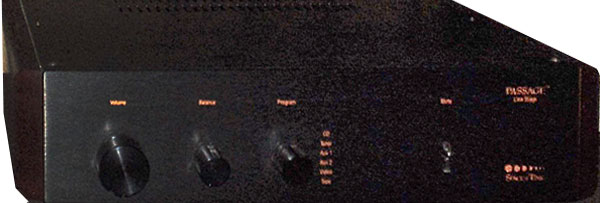
Better known for their speaker cables and interconnects, The Absolute Reference Audio Labs (TARA Labs) has quietly branched out into electronics and loudspeakers. Their Passage is a line-levelonly preamp. I actually favor such a modular approach to preamp design. Standing as we are at the dawn of the digital audio age, the breakup of the traditional preamp into separate phono and line-level stages represents a more flexible, cost-effective design approach.
Three FollowUp Reviews
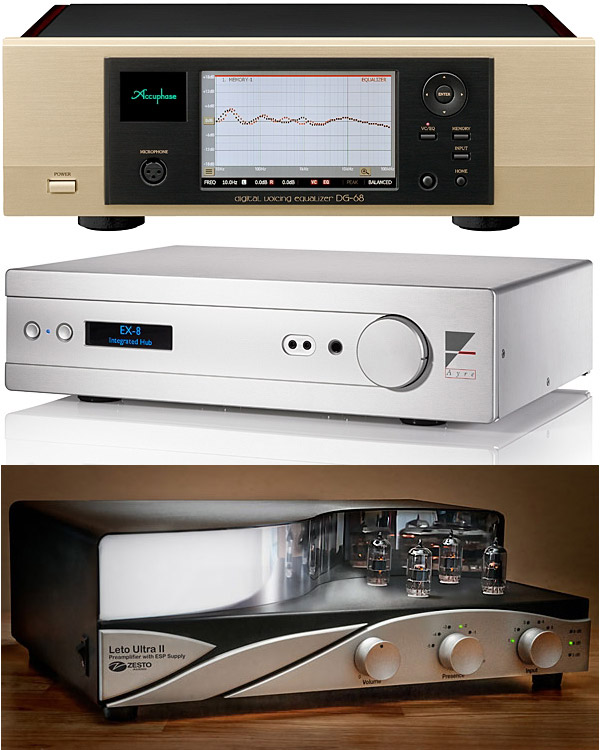
Stereophile often subjects products that have been reviewed to further coverage: sometimes because there was an aspect of performance that needed further investigation; other times because there was a controversial finding. Three recent followups concerned the Ayre Acoustics EX-8 2.0 Integrated Hub amplifier that Ken Micallef reviewed in the November 2021 issue; the Accuphase DG-68 Digital Voicing Equalizer that Jason Victor Serinus reviewed in August 2021; and the Zesto Leto Ultra II line preamplifier that Ken Micallef reviewed in February 2021.
Treehaus Audiolab The Preamplifier
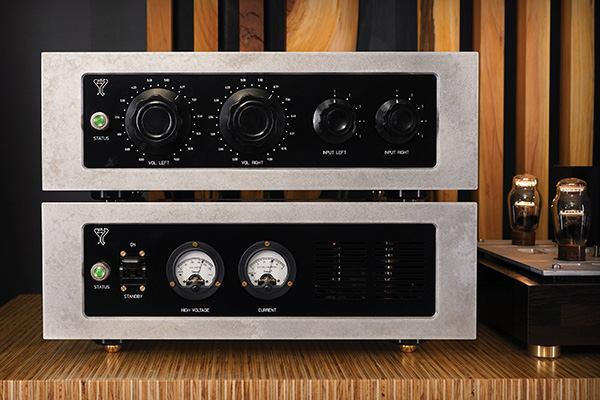
Imagine navigating the hectic rooms of an audio show at which a sea of similar-looking, similar-sounding gear blends into a predictable thrum, drawing a chorus of familiar nods. Then you stumble into the room occupied by Rich Pinto and his Treehaus Audiolab components. Here, the expected evaporates, replaced by designs that offer something different, both inside and out, sparking curiosity among jaded journalists and seasoned listeners.
Two August 2021 FollowUp Reviews
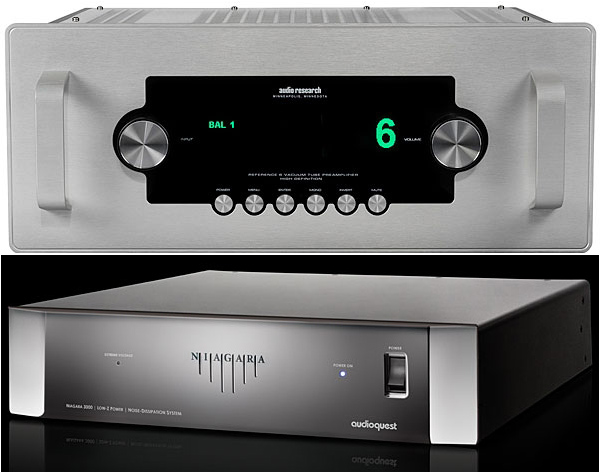
Stereophile's August 2021 issue contained further looks and listens to two high-performance products: the Audio Research REF 6SE line preamplifier and the AudioQuest Niagara 3000 Low-Z Power Noise-Dissipation System.