

Lamm Industries M1.2 Reference monoblock amplifier
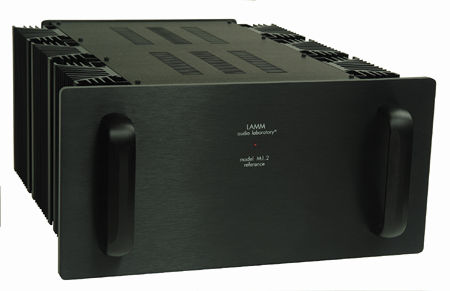
The "Reference" designation is thrown around a lot in the world of perfectionist audio. It's most often used to elevate the top of the line to a higher perceived status. Occasionally, as in the case of the VTL TL-7.5 line stage that I reviewed in October 2003, it genuinely denominates a component that is clearly superior to its competition in most aspects of performance.
Lamm Industries M2.1 monoblock power amplifier
How did Michael Jordan, talented as he was at the peak of his powers, always manage to impose his will on his teammates to push them to victory when it counted most? What made Sandy Koufax able to elevate his pitching to a superhuman level when the stakes were highest? A knowledgeable, hardcore sports fan can watch the performance of two players with nearly identical statistics and, after not too long, tell you which one is merely very good and which one is great. What makes a star are intangibles—those qualities you can't quantify or analyze, but can't help but recognize when you're in their presence.
Lamm M1.2 Reference monoblock power amplifier
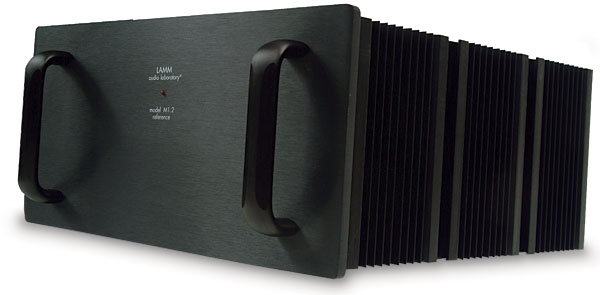
There is always a conflict between the needs of reviewers and the realities of the marketplace. Once a reviewer has invested his time and energy in a review, he would like that product to remain in production for all time, which would allow it to be used as a reliable recommendation forever. But whatever the product and whatever the category, sales of a product almost always follow the same triangular curve: a sharp rise at the product's introduction, a maximum reached sometime thereafter, and then a steady decline to a sustained but low plateau. Marketing-minded manufacturers therefore introduce a new model every three or four years, in hopes of turning that single triangle into a continuous sawtooth wave.
Lindell AMPX power amplifier
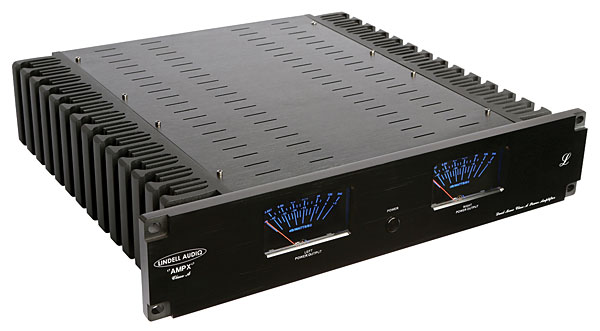
Lindell Audio, a Swedish professional-audio company, was founded in 2010 by recording engineer Tobias Lindell, and claims to offer equipment "by engineers, for engineers." Tobias Lindell specifies the features and functions that he wants each product to incorporate; the actual circuit designs are by others. Although Lindell's corporate headquarters are in Sweden, the products are manufactured in China, and are competitively priced.
Linn Klimax 500 Solo monoblock power amplifier
Recently I found myself on the phone with Linn's chief design engineer, Bill Miller, talking about switch-mode power supplies. Affable Mr. Miller was ensconced in Linn HQ in Glasgow, Scotland. After a bit I inquired if Head Man Ivor Tiefenbrun was about the manse, and was quickly handed over. "You're such a cheeky guy. Why'd you call it the Klimax?"
Linn Klimax Solo 500 Mono power amplifier
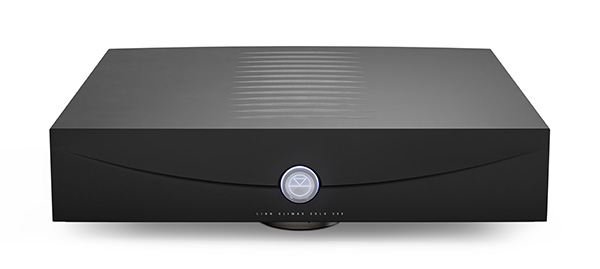
Founded in Glasgow, Scotland, in 1972, Linn Products Limited is in an elite club whose members have been around for 50 years or more. You're doing some things right if you can prosper in the quirky audiophile marketplace for more than 50 years.
Linn Klimax Solo 800 monoblock power amplifier
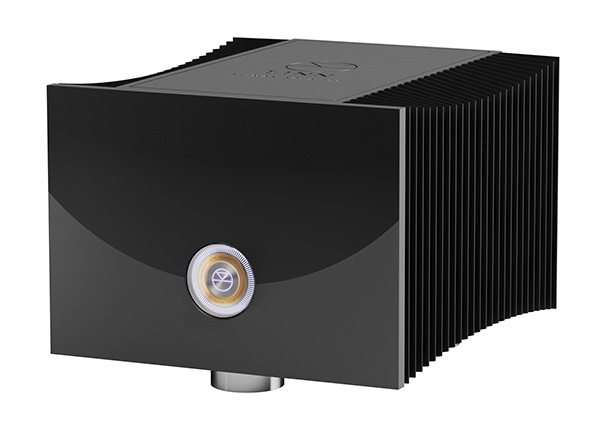
For reasons that have as much to do with why the creek does or doesn't rise as anything, almost all the UK-manufactured electronics I've reviewed over the years were from dCS of Cambridge. Through 2023, no electronics from Linn or a host of other UK-based companies have crossed the threshold of my music room.
That situation changed when, soon after New Year's, a pair of Linn's 60lb Klimax Solo 800 monoblock amplifiers ($90,000/pair) arrived from Scotland. Right away, they delighted me with their ease of maneuverability, handsome, uncluttered look, and relative compactness. Given their impressive power output400W into 8 ohms, 800W into 4 ohms, and a whopping 1.2kW into 2 ohmsthe Klimax Solo 800s set a record for highest price per watt and per pound among class-AB monoblocks I've reviewed.
Linn LK1 preamplifier & LK280 power amplifier
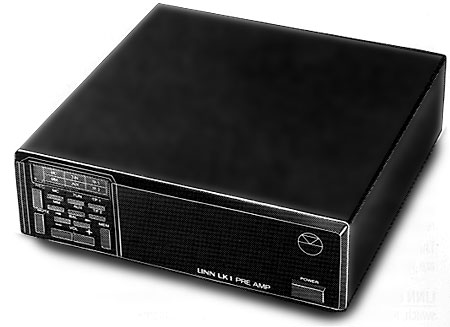
This review should have appeared more than a few months ago. When I reviewed Linn's">http://www.stereophile.com/phonocartridges/987linn">Linn's Troika cartridge back in the Fall of 1987, in Vol.10 No.6, Audiophile Systems also supplied me with a sample of the Linn LK1 preamplifier and the LK2 power amplifier, which I had intended to review in the due course of things. As it transpired, however, I was less than impressed with the LK2, finding, as did Alvin Gold back in Vol.9 No.2, that while it had a somewhat laid-back balance, it also suffered a pervasive "gray" coloration, which dried out recorded ambience and obscured fine detail.
Listening #36
"Not for pianists."—pianist Leopold Godowsky, at Jascha Heifetz's Carnegie Hall debut
Living Sounds Audio Discovery Warp-1 power amplifier
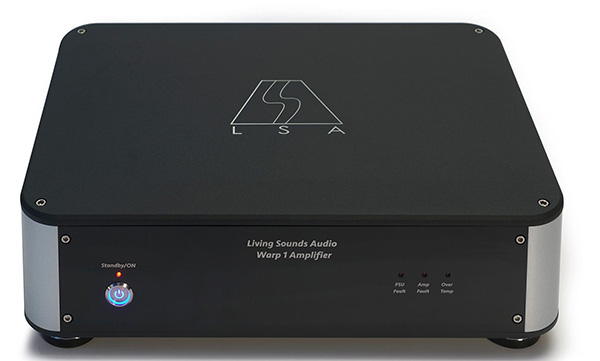
It takes a while for audio-related technologies to mature. Tubed amplifiers were invented by Lee de Forest in the nineteen-teens, but while there are still some adherents of early high-distortion triode designs, the age of mainstream high-fidelity amplification dawned with higher-power/lower-distortion amplifiers developed by Williamson and McIntosh followed by the Ultralinear take on the Williamson concept. That was 30+ years down the technology-evolution timeline after de Forest.
And when it comes to solid state amplifiersthe usual kinddoes anyone prefer the state of the (germanium) art circa early 1960s to modern silicon class-AB designs? I doubt it.
Now, decades into its own development, class-D amplification seems to have sea legs, even in the audiophile world.