

B&W John Bowers Silver Signature loudspeaker
In recent years, computer modeling, finite-element analysis, and laser interferometry have brought about a huge increase in our knowledge about what makes the moving-coil loudspeaker drive-unit work. Nevertheless, it has remained fundamentally unchanged since it was invented by Rice and Kellogg more than 60 years ago. That doesn't mean that it hasn't been refined considerably; in this review I examine the performance of a design whose drive-unit technology has been taken to the limit of what is currently possible, the B&W Silver Signature.
B&W Matrix 805 loudspeaker
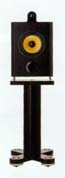
This compact, $1600/pair monitor employs many of the same design features found in the company's highly rated Matrix 801 system. Although the price is high for a two-way minimonitor, the 805 fits right into a growing high-end marketplace for such designs, one which emphasizes high quality in a small enclosure which will fit into most living-room environments without calling much attention to itself.
B&W Nautilus 805 loudspeaker
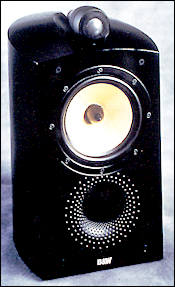
Unless you've recently returned from a five-year tour of Tibetan monasteries, the odds are pretty good you've heard about the Nautilus revision of B&W's classic three-way floorstanding monitor, the 801. Having sold 30,000 of the earlier 801, the Matrix, B&W recently revised this classic to incorporate some design features of its $40,000, four-way concept speaker, the Nautilus. Wes Phillips reviewed the new Nautilus 801 in the January 1999 Stereophile (p.107) and found it "incredibly dynamic, images and soundstages like crazy, and has that special magic that marks it as one of the great loudspeakers."
BBC LS3/5a loudspeaker
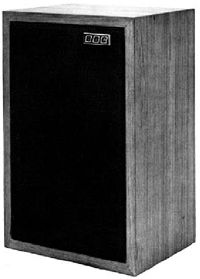
These diminutive little sleepers have been available in the US for quite some time but have attracted little attention because (1) they have never really been promoted and (2) they are just too small to look as if they could be worth $430 a pair.
BG Z1 loudspeaker
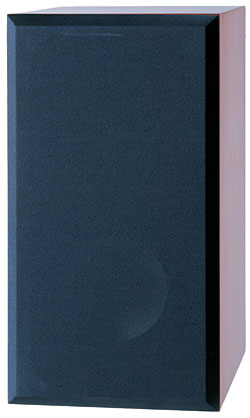
Last summer, John Atkinson and I were playing a jazz gig poolside at my local club, and during a break we began discussing equipment. As JA adjusted his microphones and I became increasingly nervous about the running, jumping kids splashing chlorinated water on his Nagra">http://www.stereophile.com/hirezplayers/461">Nagra digital recorder, he asked me if I'd like to review the Z1 loudspeaker from BG Corp. "It's an interesting little bookshelf speaker featuring a ribbon tweeter." Hmm—an affordable bookshelf speaker matching a ribbon tweeter to a dynamic woofer? Very interesting. "Sounds good," said I, and resumed my ivory duties.
Bose 901 loudspeaker
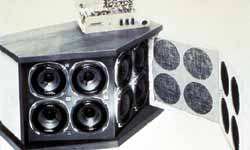
The Bose 901 has created more of a stir in audio circles than any other loudspeaker we can think of, with the possible exception of the original Acoustic Research system. Much of the 901's popularity is attributable to Julian Hirsch's rave report in Stereo Review, and there is no doubt but that Amar Bose's compellingly convincing ads had their effect, too. But these things alone could hardly account for the 901's popularity.
Boston Acoustics A 25 loudspeaker
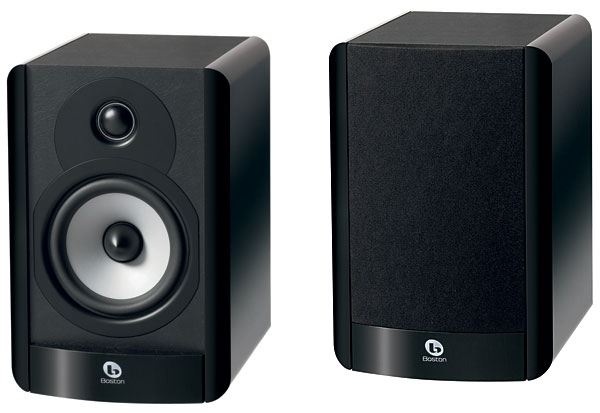
While listening to Boston Acoustics' A 25 loudspeaker ($299.98/pair), I kept thinking about magic.
Paul Messenger introduced Boston Acoustics' A Series in the April 2011 "Industry Update." With the creation of the A Series, Paul reported, BA wanted to create a "global loudspeaker," one that would be appreciated by music lovers worldwide.
Boston Acoustics A40 loudspeaker
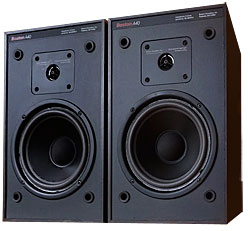 The Boston Acoustics A40 loudspeaker ($150/pair) has become "legendary" (ie, it's stayed around for a while), probably because a pair of them images as well as Rogers LS3/5As. Unfortunately, it is no match for the LS3/5A in terms of smooth midrange response. Of course, at $150/pair, it shouldn't be.
I was originally going to do a review comparing the Spectrum 108A ($200/pair) and the Boston Acoustics A40. On first listen, I was mightily impressed by the A40. But after Stereophile's Larry Archibald schlepped me out a pair of the 108As, I didn't much want to listen to the A40s.
The Boston Acoustics A40 loudspeaker ($150/pair) has become "legendary" (ie, it's stayed around for a while), probably because a pair of them images as well as Rogers LS3/5As. Unfortunately, it is no match for the LS3/5A in terms of smooth midrange response. Of course, at $150/pair, it shouldn't be.
I was originally going to do a review comparing the Spectrum 108A ($200/pair) and the Boston Acoustics A40. On first listen, I was mightily impressed by the A40. But after Stereophile's Larry Archibald schlepped me out a pair of the 108As, I didn't much want to listen to the A40s.Boston Acoustics Lynnfield 300L Series II loudspeaker
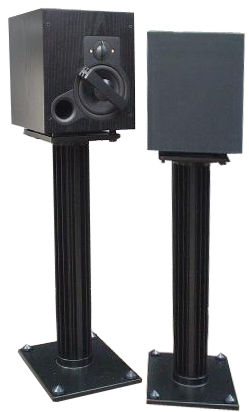
Loudspeaker manufacturer Boston Acoustics made its name—and its fortune—building high-performance but low-cost speakers. Indeed, I recently set up a modest system for my mother-in-law that was based on Boston's classic A-40—a two-way design that sold for just $160/pair back in 1986—and was very pleasantly surprised at the quality these little speakers offered. Back in the early '90s, however, the Massachusetts-based company announced that they were taking a step into the High End with a new loudspeaker line, the Lynnfields (see Thomas J. Norton's interview with Boston's Andy Kotsatos elsewhere in this issue). These were designed by expatriate British engineer Phil Jones, previously responsible for the impressive Acoustic Energy speakers.
Bowers & Wilkins 705 S3 loudspeaker
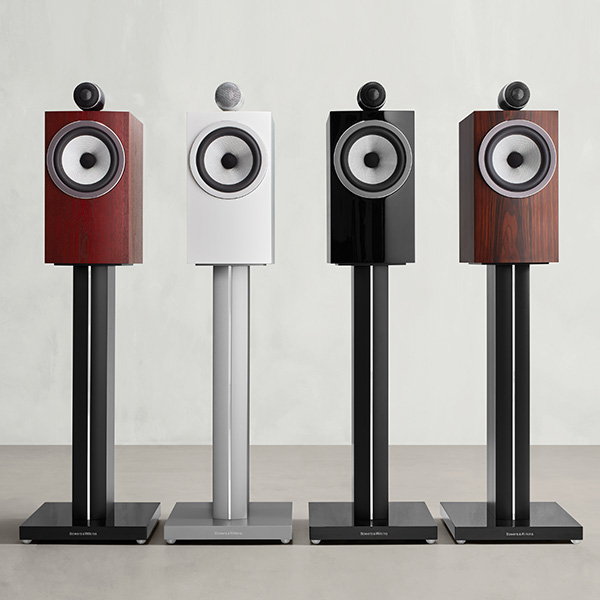
Over a lifetime of involvement in audio, I have had standmount speakersbookshelf speakers, as they were called back thenonly twice. My very first loudspeaker was a vinyl-wrapped fiberboard bookshelf box with no name. It lasted barely a year and was replaced with a two-way system I built with a 12" RCA woofer in a floorstanding bass-reflex cabinet. My second bookshelf system was a Weathers "Book" speaker lashed up to a University dual-voice-coil woofer. I was determined to try that new thing, stereo.
Since then, I've had only floorstanders, home-made and manufactured, and I never seriously considered owning small speakers again except, perhaps, as part of a surround sound system. With that bias, why am I reviewing the B&W 705 S3?