

Monitor Audio Silver 9i loudspeaker
English manufacturer Monitor Audio has been around for just about as long as people have been putting "high-end" and "audio" together—they opened their doors in 1972. Back in the mid '80s, when I was a young and carefree (and impoverished) consumer of hi-fi reviews, I'd read about the gold-deposited metal tweeters that Mo Iqbal was concocting and think, "Man, that's some exotic, far-out stuff!"
Monitor Audio Silver RS6 loudspeaker
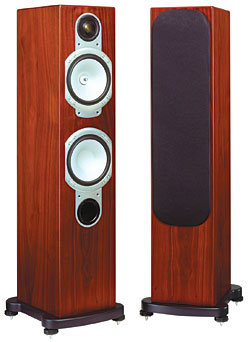
I was just about to wrap up my British Invasion Tour of affordable speakers when I got a call from Fearless Leader John Atkinson.
Monitor Audio Silver RX6 loudspeaker
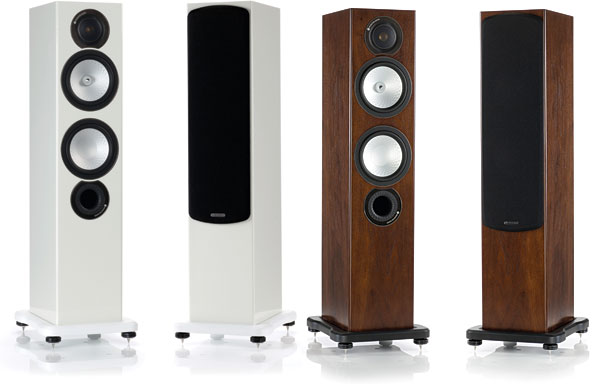
In March 2006 I wrote a very favorable review of Monitor Audio's Silver RS6 loudspeaker. At the time, I felt this $999/pair, small-footprint floorstander produced the greatest sound quality per dollar of any speaker I'd heard. Despite the proliferation of affordable speakers of increasing quality I've heard since then, I remained particularly impressed by the Silver RS6's clarity and lack of coloration and the speed of its midbass, all of which continued to exceed the performance of any other affordable speaker I've heard.
Monitor Audio Studio 20 loudspeaker
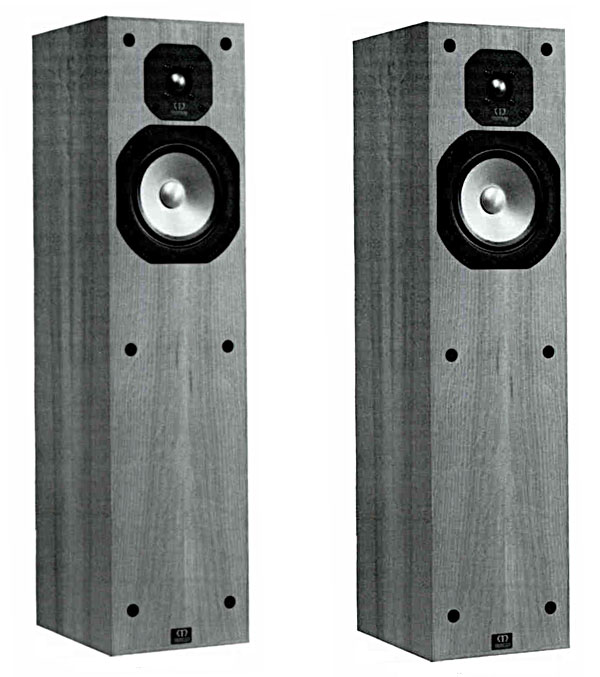
A review of the Monitor Audio Studio 20 loudspeaker is a study in contrasts. Compared with most other loudspeakers in the $4500/pair range, this 6.5" two-way from England is a mere pup. Perhaps this observation was sparked by the fact that I'd just finished reviewing the similarly priced Snell Type B, a huge, six-driver, four-way system. The two loudspeakers couldn't be more different, both in physical characteristics and sound.
Monitor Audio Studio 50 loudspeaker
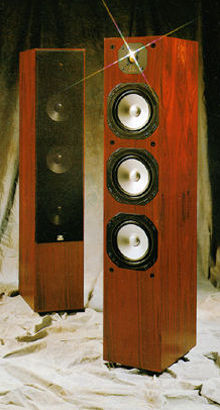
English loudspeaker manufacturer Monitor Audio has mined a rich vein with their exclusive 6½" metal-cone driver, which covers a range from the bass to the midrange. MA designs using this drive-unit have fared well in these pages, ranging from the Monitor Audio Studio 6 minimonitor (reviewed">http://www.stereophile.com/standloudspeakers/910">reviewed by JA in February '94, Vol.17 No.2) to the floorstanding Studio 20 (reviewed by RH in December '91, Vol.14 No.12, and by ST in April '92, Vol.15 No.4).
Monsoon Audio FPF-1000 loudspeaker
I used to be an audio cheapskate even worse than Sam Tellig. Anytime I saw an interesting device for sale, I immediately began to figure out how I might build it for myself for a fraction of the cost.
Mordaunt-Short Performance 6 loudspeaker
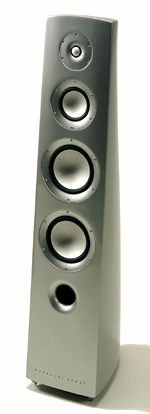
Wood is not an engineering material. It might look pretty, but it's inconsistent and therefore unpredictable. So we smash cheap wood into sawdust and then glue it all together again to create something that can be machined. This is called medium-density fiberboard, or MDF. We then thinly slice some classy hardwood—hopefully harvested from sustainable sources—and use it to cover the ugly MDF. This might have made sense back when Chippendale was making furniture, but it seems strangely old-fashioned in our age of plastics and composites. I haven't seen wood trim on a TV set for more than a decade. Why is it still the norm for loudspeakers?
Moth Audio Cicada loudspeaker
Like most people, I'm not interested in long, windy essays about audio reviewing, having barely enough time and interest for audio itself. But I do perk up when the debate turns to the audio reviewer's purpose in life: Should I write about everything that crosses my path, or should I limit my attention to those products that interest me, and that stand a chance of being good?
Museatex Hybrid 6 loudspeaker
I find quite appealing the image invoked by Museatex to describe its Real Time Ripple Effect (RTRE) loudspeaker line: a stone rippling the surface of a "still pond on a warm summer afternoon." Replace the stone with a voice-coil attached to the center of a stretched Mylar diaphragm and you begin to get a glimpse of the RTRE technology's conceptual beauty and promise. The idea of cohesively covering at least the midrange and treble with a single driver, without crossover filters, quickens my audio pulse.
Music in the Round #41
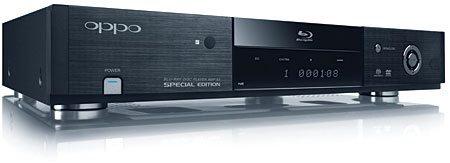
It was only a few">http://www.stereophile.com/musicintheround/music_in_the_round_37/index2… months ago that I greeted Oppo Digital's BDP-83 universal Blu-ray player as a breakthrough consumer component, and it became a Runner-Up for Stereophile's Budget Product of 2009. It now appears that Oppo is using the design as a base on which to develop similar and more advanced products, both for themselves and for a good many other manufacturers. Some may take exception to my use of the word manufacturers—if it's an Oppo under the skin, what, precisely, are these other "manufacturers" contributing? Well, that's hardly a new question.