

KEF Reference 207/2 loudspeaker
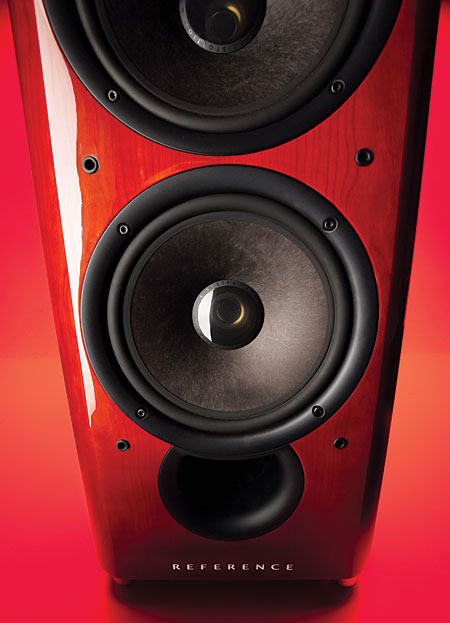
After reviewing a long series of minimonitors, I am now working on what may well be an equally varied selection of large floorstanding loudspeakers. This trend began with my">http://www.stereophile.com/floorloudspeakers/1207sonus">my review of the Sonus Faber Cremona Elipsa in the December 2007 issue, and continues this month with the Series 2 version of the KEF Reference 207, until recently the flagship model from this English manufacturer (footnote 1). I reviewedhttp://www.stereophile.com/floorloudspeakers/775">reviewed; the original Reference 207 in February 2003, and was very impressed by what I heard.
KEF Reference 5 loudspeaker
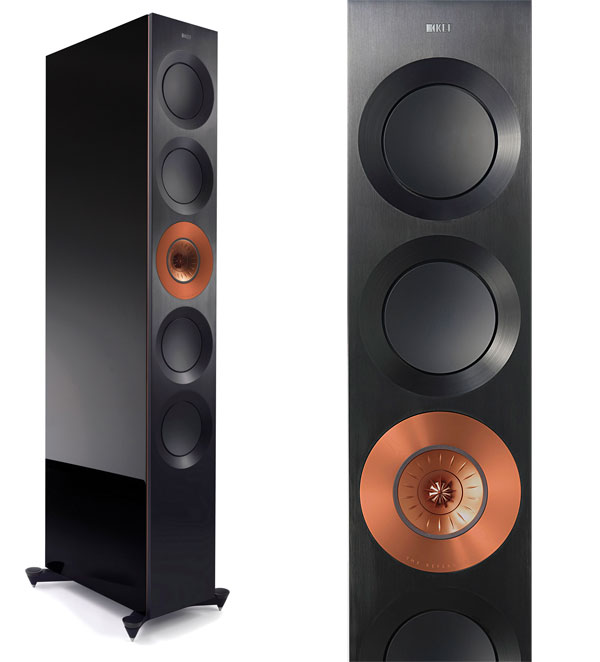
Of all the speakers I have most enjoyed in recent years, two were from British manufacturer KEF: the LS50 Anniversary Model ($1500/pair), which I reviewed in December 2012; and the Blade Two ($25,000/pair), which I reviewed in June 2015. Though these two speakers lie at opposite ends of the price scale, they have in common KEF's unique Uni-Q drive-unit, in which the tweeter is mounted on the front of the midrange unit's pole piece, so that the lower-frequency cone acts as a waveguide for the higher-frequency output.
KEF Reference Series 103/4 loudspeaker
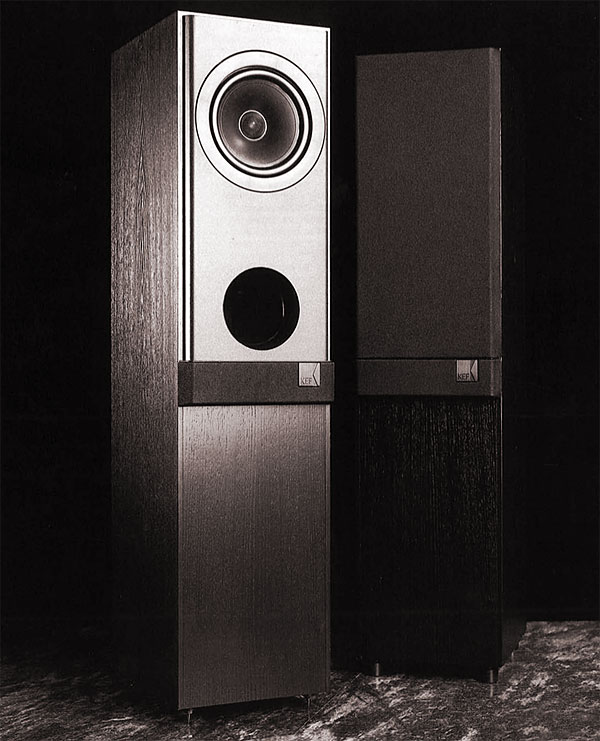
By now most readers will be familiar with the relatively new tuned-cavity method of low-frequency loading. Such designs have popped up all over the place of late, especially in those little satellite/woofer systems, but KEF can rightly lay claim to generating the design's theoretical basis, as JA described in his review of the KEF R107/2 loudspeaker in Vol.14 No.5 (May 1991). Essentially, the technique consists of loading the rear of a woofer in a conventional fashionusually a sealed boxbut also loading the front of the driver into another enclosure, ducted to the outside. Basically, the design acts as a bandpass filter with its response centered on the port-tuning frequency. The rolloff is smooth and rapid on either side of this frequency, providing a natural low-pass characteristic but thereby virtually mandating a three-way system. If properly designed, this configuration offers a number of theoretical advantages. The radiating element is actually the air in the port, which is low in mass. Low distortion is possible, as is relatively high sensitivity.
KEF Reference Series Model Four loudspeaker
The Model Four is the largest model in KEF's current Reference series of loudspeakers, discounting the R107/2 Raymond Cooke Special-Edition (reviewed in a follow-up in October '95). It's also the largest KEF model that uses their Uni-Q® loudspeaker configuration. When I visited the KEF factory last October with a group of audio journalists from the US, KEF emphasized the importance of Uni-Q technology to their future plans. They consider it proprietary, and intend to enforce the worldwide patents they hold on the design. One look at KEF's current line will be enough to tell you why they're so serious. Uni-Q drivers may be found not only in most of the Reference series, but in most of their other models as well. The most significant exceptions: the Raymond Cooke series, a few inexpensive models, and their THX-certified loudspeaker system.
Kharma Ceramique CE-2.0 loudspeaker
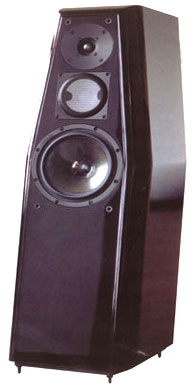
Oh boy! This was one of my most eagerly anticipated auditions. At my first demonstration of an OLS loudspeaker system several years ago, I was bowled over not only by the demo, but also by the idea that OLS's Kharma line was topped by the $1,000,000 Grand Enigma system!
Kharma Midi-Grand Ceramique 1.0 loudspeaker
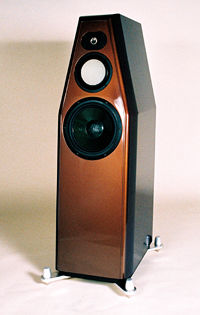
Not for nothing did I name the Kharma-Lamm room at Home Entertainment 2002 the "Best Sound in Show." Show attendees slotted it 17th best [see September 2002, p.59—Ed.], behind other rooms to which I also gave high marks—mostly larger rooms featuring far bigger loudspeakers—but to me, the sound emanating from the Kharma Ceramique 3.2 ($19,000/pair), driven by Lamm electronics, possessed a sublime balance of sonic qualities heard in few other rooms.
KLH Model Nine loudspeaker
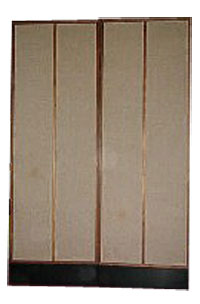
Editor's Note: Although this product has been available for several years, it is being reviewed in considerable detail because it is a strong contender for the title of "Best Available Loudspeaker System, Regardless of Cost," and because we plan to review some of the other contenders for the same title within the next few issues. We feel that since all of these systems represent a considerable outlay of money, prospective buyers should have a thorough understanding of the merits and demerits of each system, so they will know what to expect from them in the way of performyince capabilities and operational requirements.
KLH Model Twelve loudspeaker
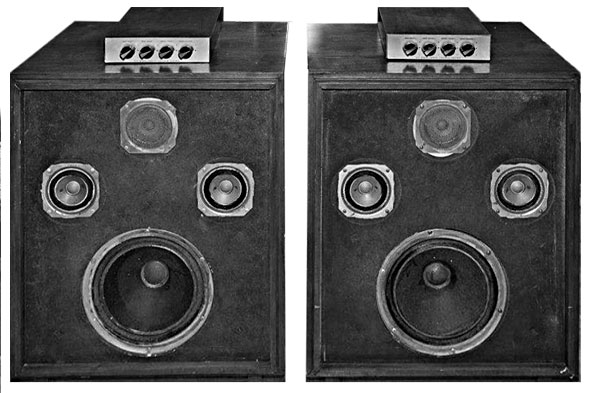
The idea of a loudspeaker system whose frequency response could be tailored to suit room acoustics and/or personal taste is one that has always appealed to the high-fidelity perfectionist. Ideally, such a loudspeaker would allow you to raise or lower the level of any part of the audio spectrum to correct for, say, a sharp 370Hz room resonance or a mild absorptive condition that weakens, say, the 800Hz3kHz range. Obviously, though, this kind of flexibility would require an infinite number of bandpass networks, each with its own volume controlwhich is an obvious impracticality.
Klipsch Forte III loudspeaker
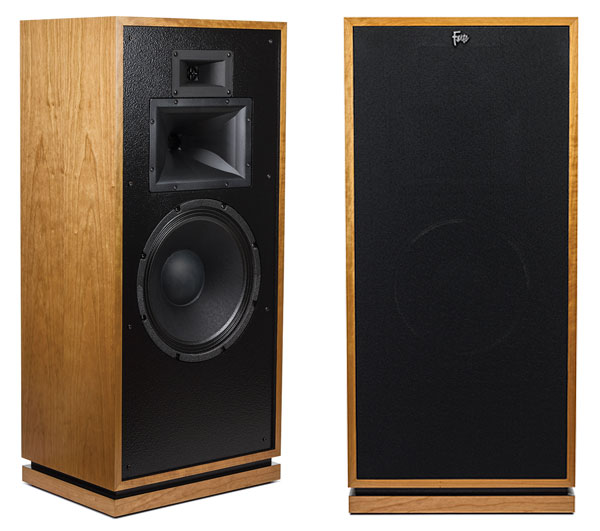
I'm fortunate to have reviewed in recent years not one but three different pairs of horn-loaded loudspeakers. My jaw dropped when I reviewed what would prove the finest loudspeaker to ever grace my home, the Volti Audio Rival. Second came a pricey but pleasing pair from handlebar-mustache king Gordon Burwell, the Burwell & Sons Homage. Then, at the urging of occasional Stereophile contributor Steve Guttenberg, I took on the fat-boy Klipsch Heresy III. As the Beatles used to say, I was dead-chuffed.
Klipsch Forte IV loudspeaker
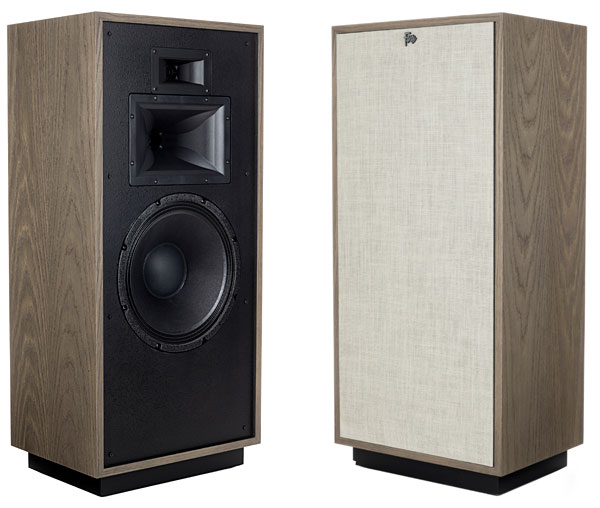
No one taught me more about the heralded tone of Ortofon SPU cartridges, the magical pacing of idler-drive turntables, or the dynamics and speed of horn-loaded speakers than Art Dudley, Stereophile's late deputy editor. His equipment reviews and monthly Listening columns weren't merely tutorials on how to review audio equipment with insight and an individual voice; they were also an entertaining, informative immersion into the kind of hi-fi he loved. We also shared many conversations, though too few.