To some, the measure of a company has less to do with the amount of money it makes than with the honesty of the things it sells: the assurance that every product in its line is designed not as a marketing exercise but as a straightforward and presumably unique answer to a real consumer need.
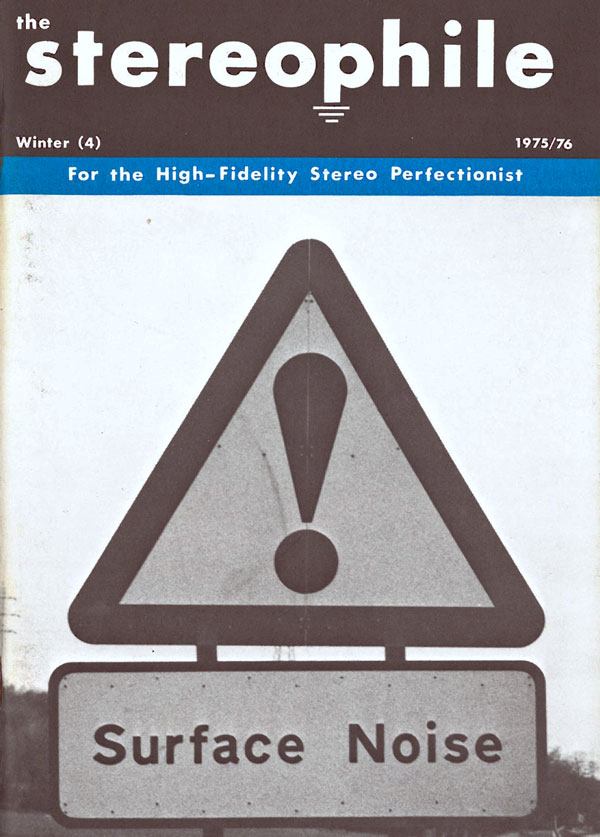
Editor's Note: In Stereophile's second decade of publication, things were starting to unravel, with long gaps between each issue. There were just seven issues published between January 1974 and January 1978. The late Harry Pearson has gone on record that he founded The Absolute Sound in 1973 part because he was tired of waiting for the next issue of Stereophile to reach his mailbox. In this "As We See It" essay from the "Surface Noise" issue in August 1976, founder J. Gordon Holt owns up to it appearing 8 months late!
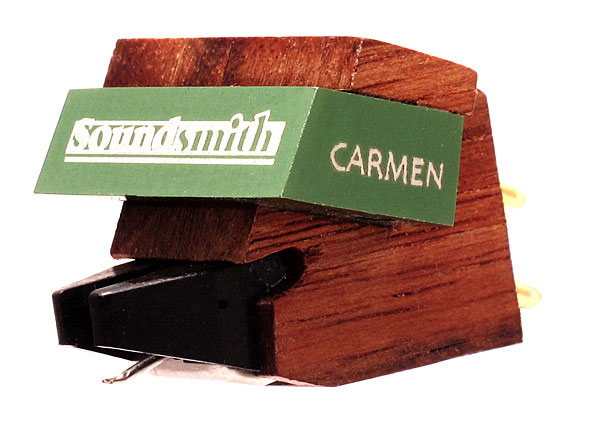
So, audiophiles, riddle me this: What does a DAC actually look like? I don't mean the box it hides inI mean the little doodad that does the actual converting from digital to analog. Is it bigger than a phono cartridge? Is it made of rain-forest wood, gemstone, or porcelain? Do people show it to their friends, who gawk in awe and envy? Does it have an exotic, geisha-sounding name like Jasmine Tiger, Koetsu Onyx, or Miyajima Takumi? When it breaks, does a watchmaker type rebuild it for a not-insubstantial fee? Do people hoard them in vaults, like NOS tubes? Can you trade a DAC for a rose-gold Rolex Oyster Bubbleback ca 1945?
The countdown to the start of THE Show Newport in Orange Country, California has begun. The largest three-day consumer audio show in America kicks off for the public on Friday, May 29 in the newly remodeled Hotel Irvine, with an optional trade day for press and invited guests the afternoon/eve before. With every exhibit space sold out, THE Show Newport promises to keep audiophiles busy with 406 exhibitors holding forth in 150 hotel rooms (including 10 larger suites), up to 25 larger rooms, 80 booths in a 6000 sq. ft. Headphonium Pavilion, and a packed Marketplace.
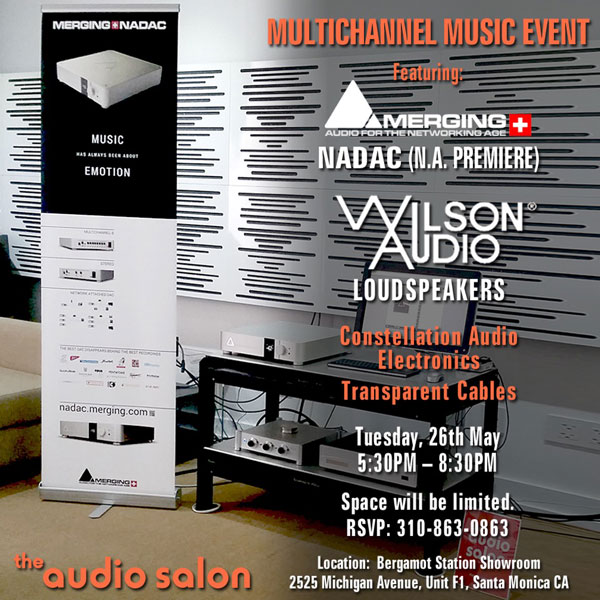
This coming Tuesday, May 26, The Audio Salon will host a special Multichannel Music Event. Peter McGrath of Wilson Audio Specialties will play a selection of his multichannel recordings on a system that features both the Alexia and Duette Series 2 loudspeakers...
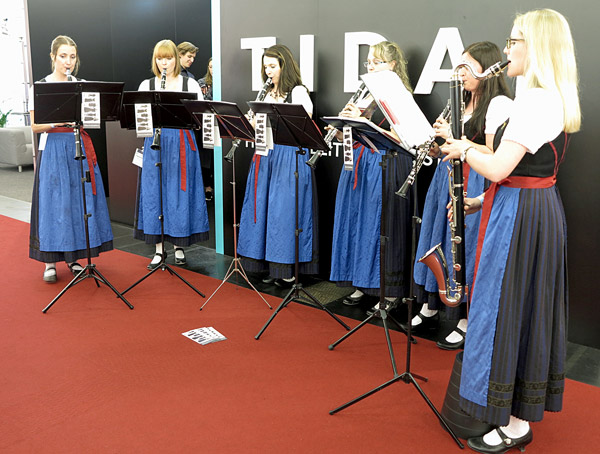
In addition to jazz chanteuse Lyn Stanley, who was sponsored by Purist Audio Design, the High End Society presented three quasi pop-up ensembles that, unless you followed the schedule, appeared without notice in hallways and at the top of stairways. Thus, while moving between Aurender and AudioQuest, did I encounter the Karinettensextett Karlischnättra. The six or eight bars of blessedly unamplified music I heard at the very end of their presentation sounded lovely...
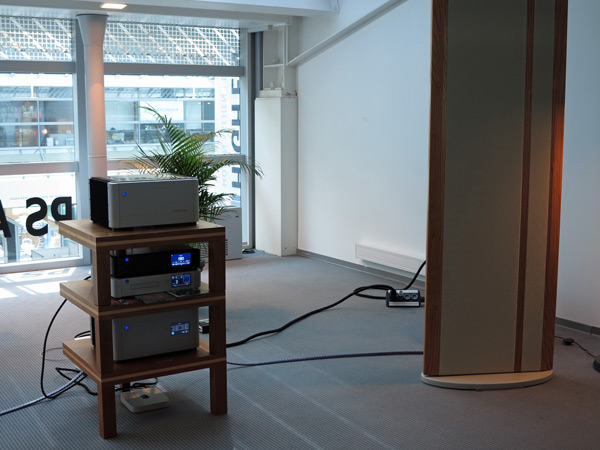
Just two weeks before PS Audio premieres the BHK Signature 300 mono amps at Newport Beach, the company showcased its BHK Signature 250 stereo amplifier ($7499) in Munich. This was my first opportunity to hear this Bascom H. King specialty in the context of an all-PS Audio system, and despite the sub-optimal room acoustics, it did not disappoint...