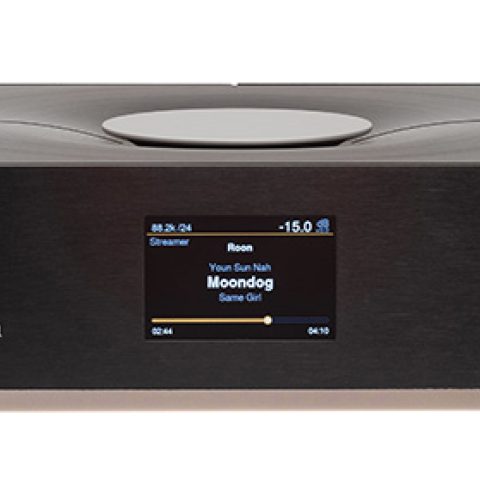
While I could have used virtually any good-sounding playback software with the Alpha 3 SX, Joe urged me to stick to the two music-server programs that he had thoroughly vetted: JRiver 24 and the latest version of Roon. He indicated that their sound was very close—depending upon their latest upgrades, sometimes Roon edged ahead by a few points, only to be surpassed by the next version of JRiver, which he ultimately preferred.
Not me. Beyond the sonic considerations—discussed below—JRiver doesn't thoroughly integrate Tidal and Qobuz, will neither decode nor render MQA (although it will pass it), can't access liner notes, and won't display resolution. If you've got two versions of the same album—eg, MQA and non-MQA—you can't distinguish between them without hitting "play" and then looking at your DAC's display. In order to easily find the MQA version of Will.i.am's title track from #thatPower, featuring Justin Bieber (16/44.1 FLAC, Interscope Records UICS-9136/7), it was necessary for Joe to remotely add "MQA" to its title so I could differentiate it from its non-MQA brother.
Roon is hardly perfect on the metadata front, but in many respects it tops JRiver, which can't, for example, display album tracks in numerical order if track numbers don't appear first in the data string. Of the tracks and albums on my four USB sticks, JRiver consigned many of them to "Unknown" and scrambled others. Remote data manipulation was required to organize my frequently used Lou Harrison tracks and the album Translations, recording engineer/technical editor John Atkinson's recent Portland State Chamber Choir recording of the music of Eriks Eenvalds. Roon displayed both just fine.
Ripping a CD using the server's Asunder app—the app amongst the several provided that Joe prefers for CD ripping—was fairly easy, went quite fast, and delivered sound consistent with Red Book downloads and streams of the same material.
 On to the music
I prefer my music neither warmed over nor darkened. If a recording is brash, let it be brash; I'll turn down the volume or hold my ears. If it's filled with foreboding and anguish, I can handle it, and if it's brilliantly illumined with color and happiness, I want to feel it all. In its ability to transmit music without undue coloration, the Wolf Alpha 3 SX was a winner. From the very first notes, the Alpha 3 SX's neutrality came as a breath of fresh air. Its basic tonality was essentially the same as that of the dCS Rossini DAC/clock/transport combination; it communicated the unique timbres of instruments and voices regardless of title or genre. The very different Rickie Lee and Norah Jones sounded like themselves, as did my beloved classical singers in all ranges. Violins sounded like violins, and deep bass drums were depicted with the correct tonality rather than imitating the sound of waves generated by a flock of motorized rubber ducks running around in circles in a bathtub.
There is, of course, far more to the musical experience than neutrality. During his visit, Joe speculated that because I pair the dCS Rossini DAC with its outboard Rossini Clock, the Alpha 3 SX's optional USB clock wouldn't make much difference, if any at all.
Not true. Using Roon, I compared the sound from Wolf's clocked and unclocked USB ports on the first track of Lou Harrison's color-rich, percussively complex Concerto for Violin with Percussion Orchestra, with solo violinist Tim Fain and Angel Gil-Ordóñez leading the PostClassical Ensemble (24/48 FLAC, Naxos 8.5598250). The unclocked port delivered grayer sound—percussion was less focused, colors less saturated, and timbres a bit off. Harrison's melding of Western instruments with gamelan and other Eastern-influenced percussion, both traditional and found, is magical; without the clock card, the magic was lessened.
With the USB clock card, depth was quite good, if not as deep as through my reference Nucleus + with external LPS, and the sense of space that defines the size and boundaries of a performance venue was also quite good, if less than totally distinct. Curiously, while highs were a little brighter and sharper-edged than my reference, bass was a mite less focused. These differences, while subtle, were brought into sharper relief when I turned to considerably higher resolution recordings with a far wider soundstage. These included Mahler's Symphony No.3 from Iván Fischer and the Budapest Festival Orchestra (DSD128, Channel Classics CCSA 38817/NativeDSD); Anna Thorvaldsdóttir's remarkable 13-minute Icelandic excursion, "Metacosmos," from Daniel Bjarnason and the Iceland Symphony Orchestra's Concurrence (Sono Luminus DSL-92237, 24/352.8 FLAC, footnote 2); and Ethan Sperry and the Portland State Chamber Choir on the above-mentioned Translations (Naxos 8.574124, 24/96 WAV).
I listened five ways: (1, 2) JRiver and then Roon on the Alpha 3 SX, (3) Roon on the Nucleus +, and (4, 5) Roon on both servers after switching supports from Grand Prix Apex to Stillpoints Ultra SS.
Compressing hours upon hours of back-and-forth listening, it went like this. No matter which playback software I used with the Alpha 3 SX, a metallic edge occasionally emerged that was exacerbated by my room's slap echo—on my end, an issue that will disappear once I find room treatment I can afford. The edge wasn't huge by any means; not only would it probably prove inconsequential in more damped environments, but it might in fact add life and excitement to the listening experience.
Through the Alpha 3 SX, Roon provided more focused images, a wider and deeper soundstage, better bass control, and more convincingly natural sound than JRiver. Roon also sounded most realistic when I switched to the Nucleus + with outboard LPS power supply. Without that LPS, the Alpha 3 SX with Roon was the clear winner.
A few minutes into Thorvaldsdóttir's "Metacosmos," deep groaning sounds emerge, which, in my imagination, represent huge chunks of ice fracturing, rubbing against each other, and falling into the ocean. Those lumbering sounds were not as massive through JRiver on the Alpha 3 SX as they were through Roon on the Nucleus +. The latter also gave greater emphasis to lower midrange fullness and undertones and ultimately seemed more refined. Nor did the deep percussive wallops that emerge later in "Metacosmos" seem as weighty on the Wolf as on the Roon server.
Dancing with Gustav Mahler while moving between both JRiver and Roon on the Alpha 3 SX and Nucleus + with LPS is not a guarantee of a happy evening, but it was revealing. When Symphony No.3's first notes emerged from instruments on the left side of the room, the right side of the soundstage seemed strangely silent, as though there was a discontinuity between channels. As soon as I switched to the Nucleus +, the resonance of those opening instruments delineated a huge, continuous soundstage that extended between and beyond both speakers. Air, space, and depth were more credible, and focus was tighter.
"Muse," the opening song on Patricia Barber's Jim Anderson–engineered Higher (ArtistShare AS0171, 16/44.1 FLAC)—our September 2019 Recording of the Month—proved most telling. About 60 seconds in, bassist Patrick Mulcahy initiates a series of quickly damped plucks that, on the Alpha 3 SX, often sounded like the click of a string on the bass's neck. When I switched servers, the pitch of that plucked string emerged with greater clarity. Opting for Stillpoints Ultra SS footers further improved focus, air, and soundstage credibility on both servers and left me wishing I'd used them from the get-go. Given the Alpha 3 SX's internal Stillpoints technology, attaching Ultra SS filters to the unit's bottom makes sense. If the Alpha 3 SX joins your system and your budget allows, I'd definitely spring for both the optional Stillpoints filters and DAC card.
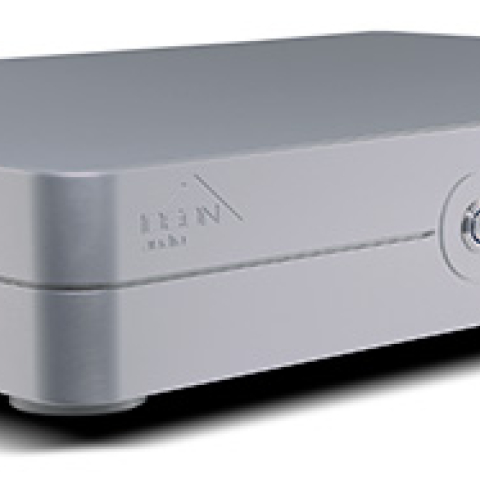
I performed yet one more switch, from the Rossini DAC/clock combo to the EMM Labs DV2 integrated DAC. On many tracks, the DV2's extra weight in the lower midrange and deeper, fuller bass seemed a better match for the Wolf Alpha 3 SX. The DV2's darker top, however, was less than ideal on Translations and rendered voices overly smooth and homogenized. Regardless, the comparison underscored that server preferences are ultimately DAC-dependent and may change as equipment (including cables and supports) changes.
Somewhere in the middle of my journey, I set critical listening aside. On a tip from Port Townsend's Tom Christopher, I enlisted the Alpha 3 SX, Roon, and Rossini to play Rosalia de Souza's "Banzo" from the album D'improvviso (Tidal or Qobuz, 16/44.1 FLAC). Cymbals sounded very natural if a little hot, percussion was quite good, and the voice was as relaxed, cool, and seductive as all get-out. I had a ball. Then, on a tip from Herb Reichert, I used the same configuration to visit the Ukraine's seven Dakh Daughters' If (Tidal, 16/44.1 FLAC) and went wild over its first four out-of-the-box tracks, each in a different language. Imagine, if you will, some crazy hodgepodge of Ukrainian-tinged hip-hop followed by quotes from Shakespeare. Colors, layering, the OMG thunder and rain on "Vi'zmy"—the level of involvement and sheer wonder I experienced is what high-end audio is all about. It was great to forget about good, better, and best and enjoy all that the Wolf Alpha 3 SX can deliver.
Conclusion
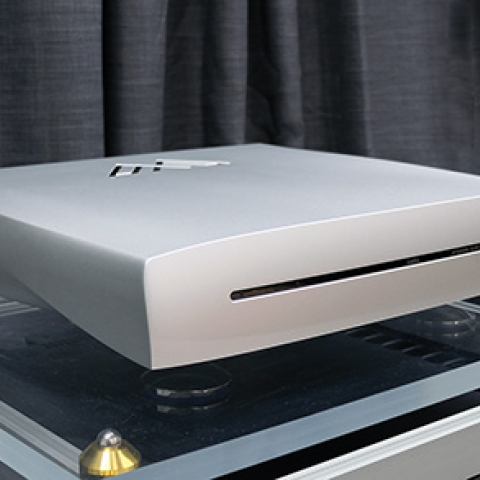
Once you learn the numerous ins and outs of Wolf Audio System's Alpha 3 SX music server and decide which software you're going to use, you'll likely discover that it can deliver one transcendent musical experience after the other. It's a decidedly neutral-sounding server whose versatility includes the ability to play sound and picture on DVD-Video and Blu-ray. Though I had no way to explore its multichannel options, their existence makes the Alpha 3 SX self-recommending for audiophiles with home-theater setups. Match the Wolf Alpha 3 SX with the right components, and you may end up howling for joy.
Footnote 2: Reviewed in the April 2020 issue.
On to the musicI prefer my music neither warmed over nor darkened. If a recording is brash, let it be brash; I'll turn down the volume or hold my ears. If it's filled with foreboding and anguish, I can handle it, and if it's brilliantly illumined with color and happiness, I want to feel it all. In its ability to transmit music without undue coloration, the Wolf Alpha 3 SX was a winner. From the very first notes, the Alpha 3 SX's neutrality came as a breath of fresh air. Its basic tonality was essentially the same as that of the dCS Rossini DAC/clock/transport combination; it communicated the unique timbres of instruments and voices regardless of title or genre. The very different Rickie Lee and Norah Jones sounded like themselves, as did my beloved classical singers in all ranges. Violins sounded like violins, and deep bass drums were depicted with the correct tonality rather than imitating the sound of waves generated by a flock of motorized rubber ducks running around in circles in a bathtub.
Once you learn the numerous ins and outs of Wolf Audio System's Alpha 3 SX music server and decide which software you're going to use, you'll likely discover that it can deliver one transcendent musical experience after the other. It's a decidedly neutral-sounding server whose versatility includes the ability to play sound and picture on DVD-Video and Blu-ray. Though I had no way to explore its multichannel options, their existence makes the Alpha 3 SX self-recommending for audiophiles with home-theater setups. Match the Wolf Alpha 3 SX with the right components, and you may end up howling for joy.
Footnote 2: Reviewed in the April 2020 issue.