 Alignment and optimization
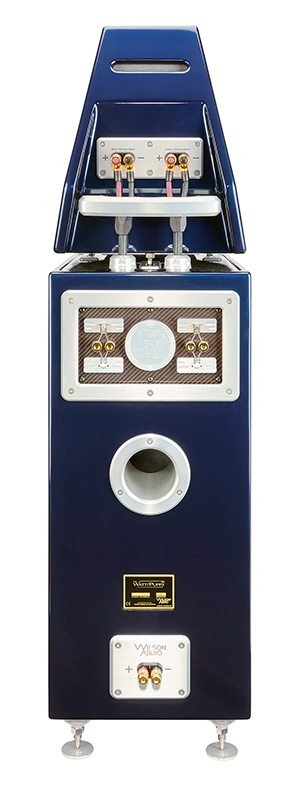
I asked Daryl Wilson about break-in: "We found playing any Wilson Audio loudspeaker for 25–50 hours gives 90%–95% of the 'break-in' time and the sound is very close to what it will be when fully settled. Further subtle and nuanced changes in the sound will be noticed after about 100 hours. A system is fully broken in after about 150 hours. The differences in sound between a system that has 50 hours break-in time and 150 hours break-in time is very small." After delivery and a basic install, here to my usual arrangements, and then after some moderately extended initial trials, the speakers were allowed to temperature-equalize and settle while playing a variety of music over a range of powers. To facilitate experimenting with positioning, I left the speakers on their castors. I did some preliminary listening with the WATT/Puppies in my usual calibrated room locations for a few days but became concerned about some excess upper bass, while the lowest octave, 20–40Hz, lacked authority. To begin with, my normal seat position was retained while further experiment with positioning continued for the enclosures. However, it became apparent that there was a clear disjoint between my target sound quality, in particular uniform bass tune playing down to 35Hz, which this presently wheeled WATT/Puppy could not satisfactorily address, despite extended interaction. While satisfactorily solid in the upper bass, the low bass was not fully weighted, while bass tunes were considered to be significantly uneven. The speakers ended up nearly 2' closer to the front wall than is customary, and for optimum stereo this required that my listening seat be moved 18" forward in compensation. I was aiming for uniform, extended, agile bass with deep, well-focused imaging and a broad soundstage. The bass was now well extended to 35Hz, also rich and informative, if not quite upbeat, perhaps still a little too reverberant. On rock, the full measure of pace and whip-crack syncopation was somewhat diluted.
With these install details in place, I could now better appreciate the many qualities on offer. Clarity was undoubtedly exceptional, while soundstages were presented on a generous, almost cinematic scale, filled with detail, and showed no hint of distortion or strain, at least up to my 600Wpc/4 ohm limit. Given the W/P has above-average voltage sensitivity, calculated sound levels were peaking at an impressive 112dBA in-room with no sign of mechanical overload. While it may rank as a junior in Wilson's "separated box" range, it punches well above its weight, easily capable of driving larger spaces. And that usefully high voltage sensitivity is certainly realized in practice, leading to an impressive dynamic range. Sounding notably uniform in frequency balance, the Wilson's coherent driver ensemble is easy on the ear, from the outset smooth-sounding and well-blended. Yet when explosive percussive information arrives, this new Wilson can certainly crack the whip. While this 4 ohm amplifier load is certainly not the most difficult I have encountered, towards its maximum rated power of 200Wpc into 4 ohms (and this was loud!), I suspected that my Naim NAP 250 was showing signs of mild dynamic compression when feeding really heavy, deep bass. I was confident that more was possible. Accordingly, I swapped in a Constellation Revelation 2 stereo power amplifier, specified at 300Wpc into 8 ohms and 600Wpc into 4 ohms. (This Constellation amplifier is justly acquiring something of a reputation for power and quality, if at two to three times the price of my Naim. My thanks to UK distributor Absolute Sounds for the loan.)
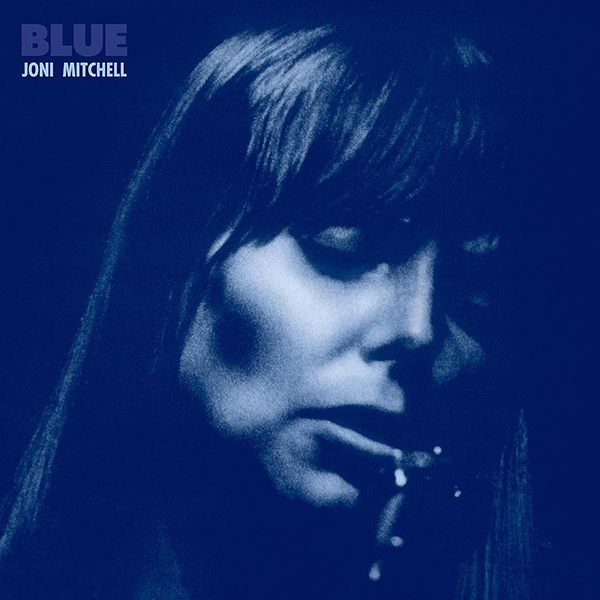 On LPs, the inherent quality of dynamic contrast brought older recordings to life. "Blue" on the Joni Mitchell LP of that name was rendered pure and expressive with excellent imaging. It all sounded very natural on this historic recording. Joni was also chosen for "The Beat of Black Wings" from Chalk Mark in a Rain Storm (CD), where a flowing, well-syncopated swing came to the fore, nicely satisfying my local audience.
Jazz pianist Abdullah Ibrahim Dollar Brand could stun on the Wilsons, commented my guest critic and jazz enthusiast Charlie Palmer, when I played The Pilgrim with its powerful dynamics with the big Constellation. This experience was close to live. With Dollar Brand's LP, Good News from Africa, the WATT/Puppies easily generated realistically live sound intensities. In complete contrast, we chose "Sunset (Bird of Prey)" from Fatboy Slim's Halfway Between the Gutter and the Stars. Here ex-Housemartins' sampling wizard Norman Cook reinvents the Doors single "Bird of Prey" from their An American Prayer. With Roon serving a CD-originated file from hard drive, the Wilsons exhibited a controlled explosion of explicit clarity, beat, and sheer sound power, though sounding more elegant and perhaps less rocking than it might.
On LPs, the inherent quality of dynamic contrast brought older recordings to life. "Blue" on the Joni Mitchell LP of that name was rendered pure and expressive with excellent imaging. It all sounded very natural on this historic recording. Joni was also chosen for "The Beat of Black Wings" from Chalk Mark in a Rain Storm (CD), where a flowing, well-syncopated swing came to the fore, nicely satisfying my local audience.
Jazz pianist Abdullah Ibrahim Dollar Brand could stun on the Wilsons, commented my guest critic and jazz enthusiast Charlie Palmer, when I played The Pilgrim with its powerful dynamics with the big Constellation. This experience was close to live. With Dollar Brand's LP, Good News from Africa, the WATT/Puppies easily generated realistically live sound intensities. In complete contrast, we chose "Sunset (Bird of Prey)" from Fatboy Slim's Halfway Between the Gutter and the Stars. Here ex-Housemartins' sampling wizard Norman Cook reinvents the Doors single "Bird of Prey" from their An American Prayer. With Roon serving a CD-originated file from hard drive, the Wilsons exhibited a controlled explosion of explicit clarity, beat, and sheer sound power, though sounding more elegant and perhaps less rocking than it might.
 Similarly on another audition with Chris Bryant and Jon Honeyball, here working with club dance material, the new Wilson was considered most impressive for impact and dynamic power but perhaps with some dilution of the bolder elements of rhythmic expression known to be present on these tracks. Here the Wilson leaned a little to steadier-paced classical music and folk than modern rock, and I include Coldplay in the latter category, though some may have differing opinions on this. Nevertheless, on Harry Connick Jr.'s We Are in Love (CBS 466736 2), a CD ripped to hard drive and accessed via Roon, the sound quality was undeniably stunning in timbre, focus, and presence on the track "A Nightingale Sang in Berkeley Square," with Branford Marsalis on sax; Peter McGrath enthusiastically concurred.
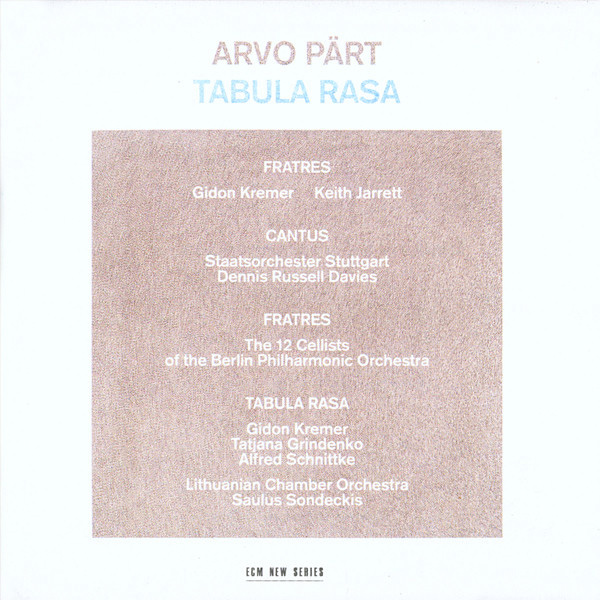
Streaming from the Net via Qobuz, the ECM 24/96 reissue of Arvo Pärt's Fratres with Gidon Kremer and Keith Jarrett proved captivating with the WATT/Puppies. I cross-checked with my 16/44.1 version ripped from CD, and this loudspeaker's fine subjective transparency readily illuminated the higher quality on the reissue—a mandatory listen to the end. I reached for Jean Guillou's recording on organ of Mozart Fantasy in F minor, K.608 (CD, Dorian). An old Ariston player was used as a transport and fed S/ PDIF data to my Naim ND 555 dual-supply streamer/DAC. The Wilsons succeeded in capturing much of the natural dynamics and the huge space of Saint-Eustache in Paris, nicely recreating the roar, growl, and physicality of the 32' pipes. The reproduced soundstage was massive, deep, and enveloping. And little change in sound quality was experienced over the review period, perhaps to be expected from capable drivers with inherently low distortion, and none could be heard even at realistically high sound levels.
Similarly on another audition with Chris Bryant and Jon Honeyball, here working with club dance material, the new Wilson was considered most impressive for impact and dynamic power but perhaps with some dilution of the bolder elements of rhythmic expression known to be present on these tracks. Here the Wilson leaned a little to steadier-paced classical music and folk than modern rock, and I include Coldplay in the latter category, though some may have differing opinions on this. Nevertheless, on Harry Connick Jr.'s We Are in Love (CBS 466736 2), a CD ripped to hard drive and accessed via Roon, the sound quality was undeniably stunning in timbre, focus, and presence on the track "A Nightingale Sang in Berkeley Square," with Branford Marsalis on sax; Peter McGrath enthusiastically concurred.
Streaming from the Net via Qobuz, the ECM 24/96 reissue of Arvo Pärt's Fratres with Gidon Kremer and Keith Jarrett proved captivating with the WATT/Puppies. I cross-checked with my 16/44.1 version ripped from CD, and this loudspeaker's fine subjective transparency readily illuminated the higher quality on the reissue—a mandatory listen to the end. I reached for Jean Guillou's recording on organ of Mozart Fantasy in F minor, K.608 (CD, Dorian). An old Ariston player was used as a transport and fed S/ PDIF data to my Naim ND 555 dual-supply streamer/DAC. The Wilsons succeeded in capturing much of the natural dynamics and the huge space of Saint-Eustache in Paris, nicely recreating the roar, growl, and physicality of the 32' pipes. The reproduced soundstage was massive, deep, and enveloping. And little change in sound quality was experienced over the review period, perhaps to be expected from capable drivers with inherently low distortion, and none could be heard even at realistically high sound levels.
 Paws and Diodes
The speakers are supplied with Wilson Paws, which are augmented, spiked floor couplers that take over where plain threaded spikes leave off. With a much larger footprint to couple to the enclosure baseplate, the subsequent floor coupling is much improved, resulting in better bass definition and deeper stereo imaging. If, at some cost, Wilson's Diode upgrade should direct loudspeaker vibrations down to the floor. The Diode uses dissimilar materials, "V-Material," and metal alloys that are stacked and interfaced to absorb vibration while avoiding hysteresis, which can be an enemy of perceived rhythm.
Wilson Audio has scored yet again with its policy of continual improvement and refinement of a concept that I first bought into in the 1980s. Some four decades on, in its latest superbly engineered and finished form, the WATT/Puppy remains a major contender. While leaning more to classical than fast-timed rock music, its many virtues are plain enough: excellent stereo imaging, extended powerful bass, highly natural timbre, high sensitivity, class-leading dynamic range, and low fatigue, not to forget the value of that inherent adjustability for room matching which is embedded in this classic design.